The world’s oldest cave paintings on the island of Sulawesi are under threat as heat and smoke from the country’s worst wildfires in more than a decade risk accelerating the deterioration of the more than 67,000-year-old works of art, researchers said.
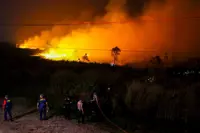
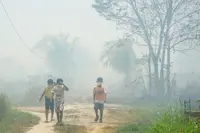
Indonesia is battling its most intense forest and land fires since 2015 as a severe El Nino drives up temperatures and reduces rainfall, leaving its forest and peatland vulnerable to fire.
While the islands of Sumatra and Borneo are the worst affected by the disaster, fires have also spread on the island of Sulawesi, including in South Sulawesi where limestone caves house the world’s oldest prehistoric art.
In a cave in South Sulawesi’s Maros-Pangkep, an artwork depicting human-like figures interacting with a pig was dated by researchers from Australia’s Griffith University to be at least 51,200 years old.
In a cave on Muna island, off Sulawesi, a reddish-coloured hand stencil was dated to at least 67,800 years.
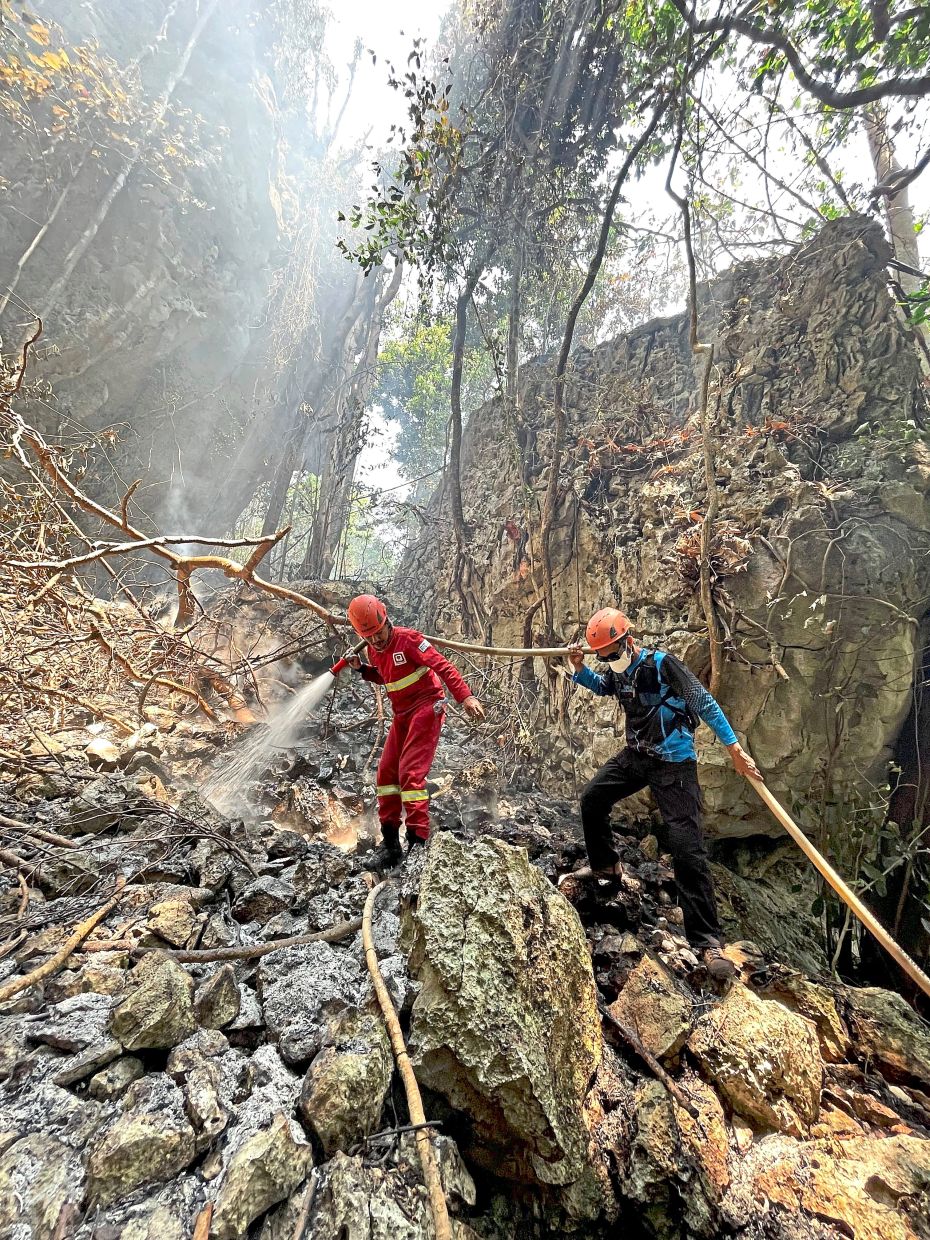
Near the Maros-Pangkep cave, firefighters worked to put out fires as smoke drifted over the dramatic karst landscape that is a defining feature of the national park and Unesco Global Geopark surrounding the cave.
Firefighter Muhammad Ikfar said fires burned near the site for more than a week earlier this month and came within 800m of the cave.
More than 270ha of the national park burned between Sept 30 and Oct 18, Ikfar said.
“The first and most destructive effect is the heat.
Even without direct fire touching the paintings, it could ruin them because it changes the temperature around the paintings and accelerates the process of corrosion,” said Griffith University archaeologist Basran Burhan.
The smoke also creates soot.
“They create soot on the paintings and cover them, so that the paintings will become blurred and difficult to identify,” he said.
On Thursday and yesterday, firefighters were working to put out fires in other parts of the park, firefighter Ikfar said, adding that the conditions were dry with no rain yet.
“If we don’t do something about this quick, if there isn’t any tactical mitigation efforts for this incident, we will lose one of the most amazing evidence of human history in Maros-Pangkep,” Burhan said.
“And that is a great shame.” – Reuters