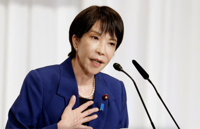
TOKYO: Arata Takebe, who took office as Agriculture, Forestry and Fisheries minister on Thursday (Oct 15), will now be put to the test as he faces a host of agricultural policy challenges, including stabilising the supply, demand and prices of rice.
Takebe will also be in charge of negotiations regarding lifting the ban on imports of fresh potatoes from the United States.
Takebe spoke to reporters on Thursday morning, after meeting with Prime Minister Sanae Takaichi at the Prime Minister’s Office.
“I intend to provide agriculture, forestry and fisheries governance that will earn the trust of the public,” said Takebe, who succeeded Kazuo Yana after Yana was forced to resign for reasons including remarks he made about “cutting the budgets” of municipalities that did not support him politically.
At a press conference that evening, Takebe said that the prime minister had given him instructions on eight key issues, including ensuring food security and a stable supply of rice.
Takebe’s political base is in Hokkaido, a region known for its rice production and thriving livestock industry.
He has served as chair of the Liberal Democratic Party’s Research Commission on Fishery Policies and director of the Agriculture and Forestry Division and is known as an expert on agricultural policy.
People within the ministry have voiced high expectations for his tenure.
“He’s ready to hit the ground running. He’s well-versed in agricultural policy and exudes a sense of stability,” a senior official said.
One of the first difficult challenges he will face is in crafting rice policy. Rice prices have continued to fall amid shifts in the supply-demand balance, heightening concerns among producers.
This represents a sharp reversal from the so-called Reiwa-era rice crisis of previous years, in which rice prices soared.
At the press conference, Takebe emphasised, “We will make thorough efforts to ensure that production is aligned with demand.”
The average retail price of rice at supermarkets nationwide has fallen below ¥3,000 per 5 kilogrammes for four consecutive weeks, and in some cases, a “reversal phenomenon” has been observed in which new-crop rice is being sold at prices lower than that of rice from the 2025 harvest.
Private sector inventories had piled up to a record high of 2.43 million tons as of the end of June, exceeding the appropriate level of 1.8 million to 2 million tons.
Although the agriculture ministry decided in September to buy back a portion of the 590,000 tons of rice it released from its staple food reserves last year, the downward trend in rice prices has continued.
Calls for additional buybacks are coming from farming organisations and LDP lawmakers affiliated with them, and the ministry is under pressure to make a decision on the timing and volume of such repurchases.
Takebe also seems likely to face difficult negotiations on allowing the importation of fresh US-grown potatoes.
Producers in Hokkaido — Japan’s largest potato production area — have expressed opposition to lifting the ban, citing concerns about pests and diseases.
At a press conference, the new minister said, “We will negotiate with the United States based on scientific evidence and take a firm stance.” - The Yomiuri Shimbun/ANN