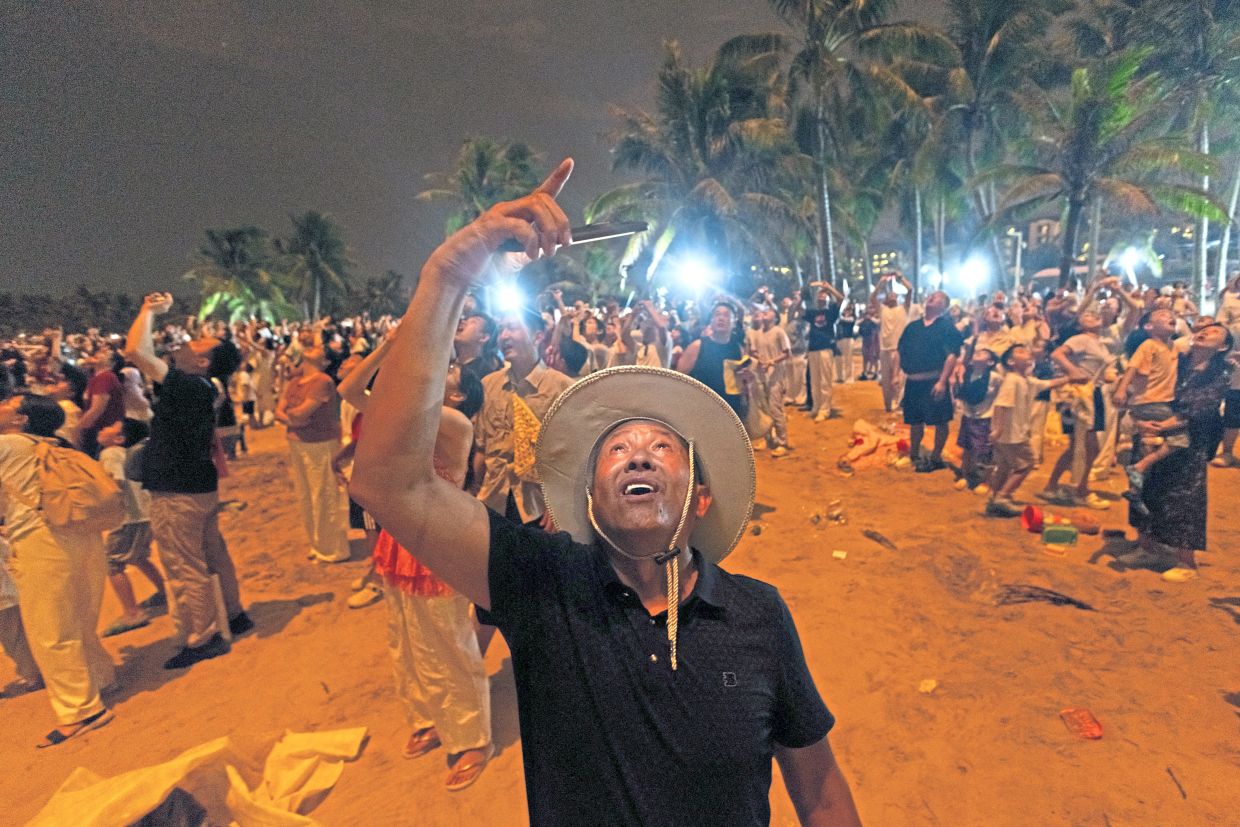
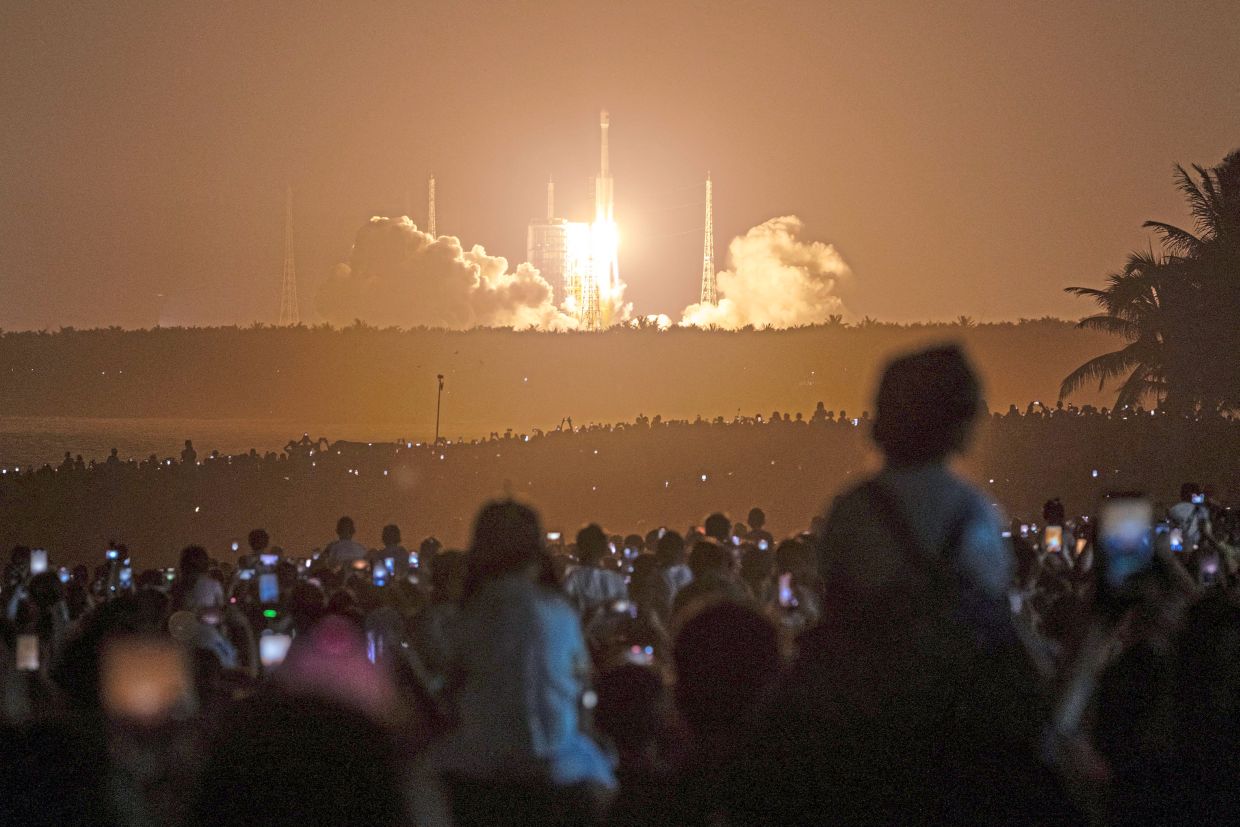
On a sweltering August night, thousands on the country’s Hainan island thronged the beaches around the Wenchang Space Launch Site, phones raised, waiting for a show.
Shortly after 8pm, the Long March 7A rocket blasted off.
The crowd roared as its ascent lit up the night sky.
Moments later, the uncrewed rocket turned into a ball of fire in midair, an unforeseen blast confirmed by Chinese state media a few hours afterwards.
Many appeared unaware of what had happened, as the fiery spectacle sent the beach crowd into a frenzy.
“Wow!” many people called out in a collective cheer.
Rocket launches are becoming both showcases of China’s space ambitions and holiday experiences, even when space missions do not always go as planned.
Among those watching was Fu Jinhua, a 38-year-old tourist from the southern province of Guangdong, who had brought along his parrot, Yangzai.
“Guangdong is subtropical and quite humid where we’re from, so I thought I’d let it soak up the atmosphere and watch the rocket too,” he said.
Fu said he expects that within 20 years, ordinary Chinese people would be able to go to space for fun, just like taking a high-speed train or plane.
“Maybe in 10 or 20 years, we’ll have our own version of Elon Musk, and we might even be able to move to Mars – who knows?” he said.
Once highly classified in remote deserts, China’s space launches have increasingly been open to public viewing as the country’s ambitions accelerate in a race with the United States.
Plans include a crewed moon landing by 2030 followed by a crewed mission to Mars.
Since launching its first rocket in 1960, China’s space programme has advanced through a series of milestones: crewed flight in 2003, a first spacewalk in 2008, and by 2022 a completed space station. Its lunar programme since delivered the world’s first far side landing and sample return.
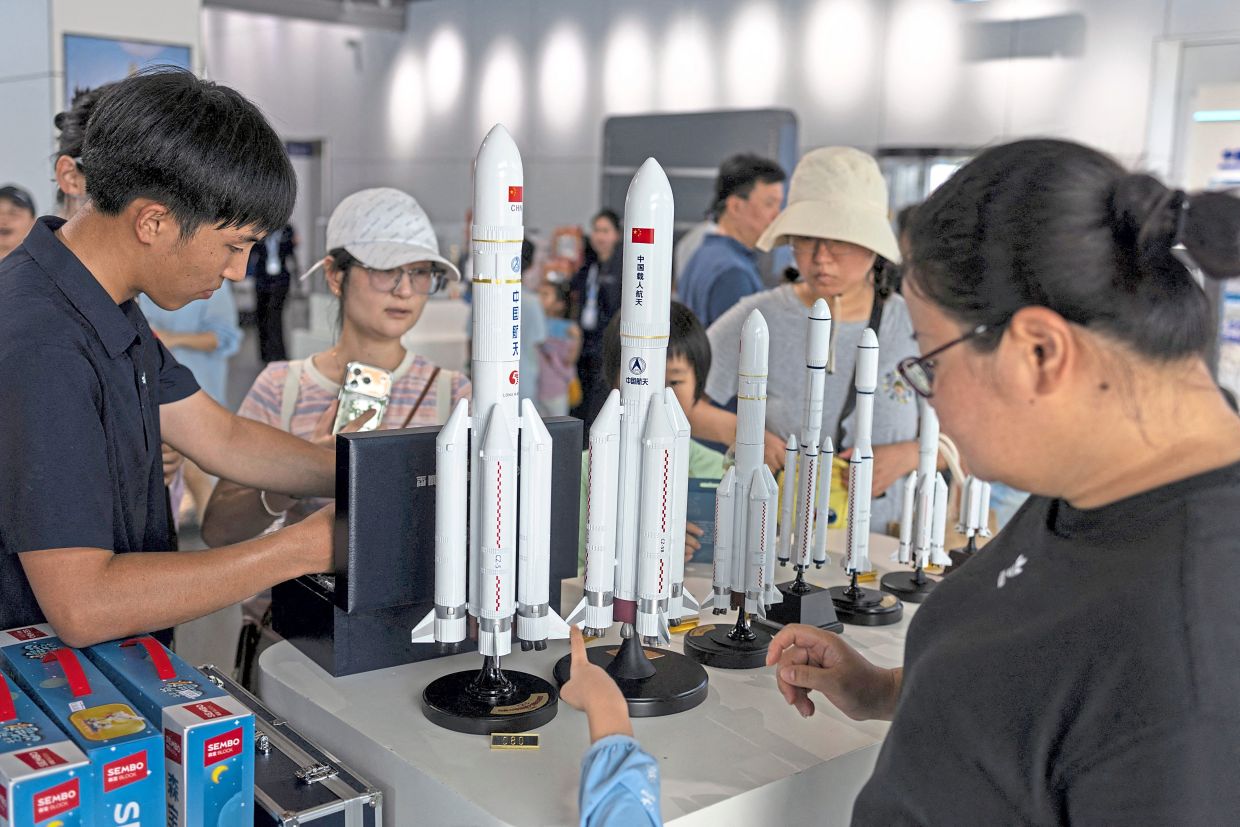
Those achievements are filtering into public life – retold in movies, presented through museum exhibitions and transformed into Instagram-worthy attractions.
Space has become a collective cultural experience, with tourism, art and commercial branding all playing a part.
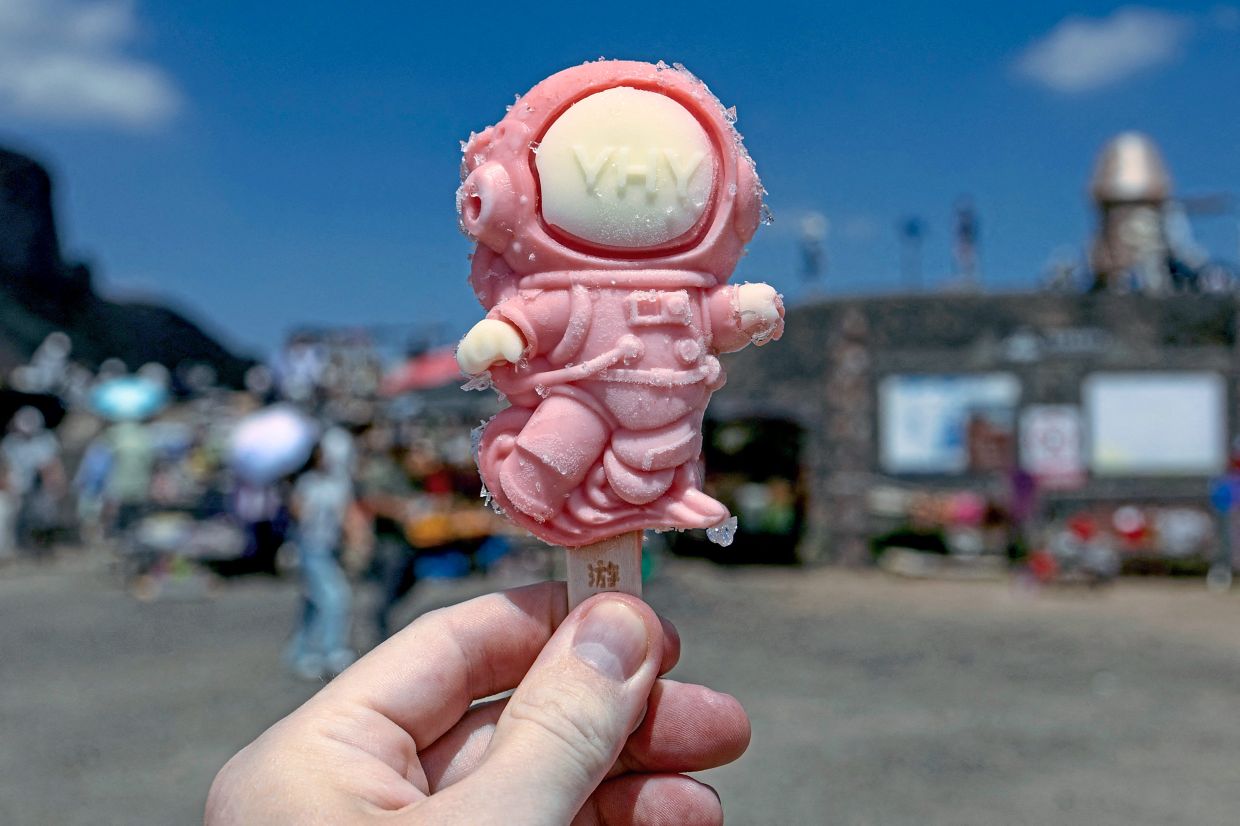
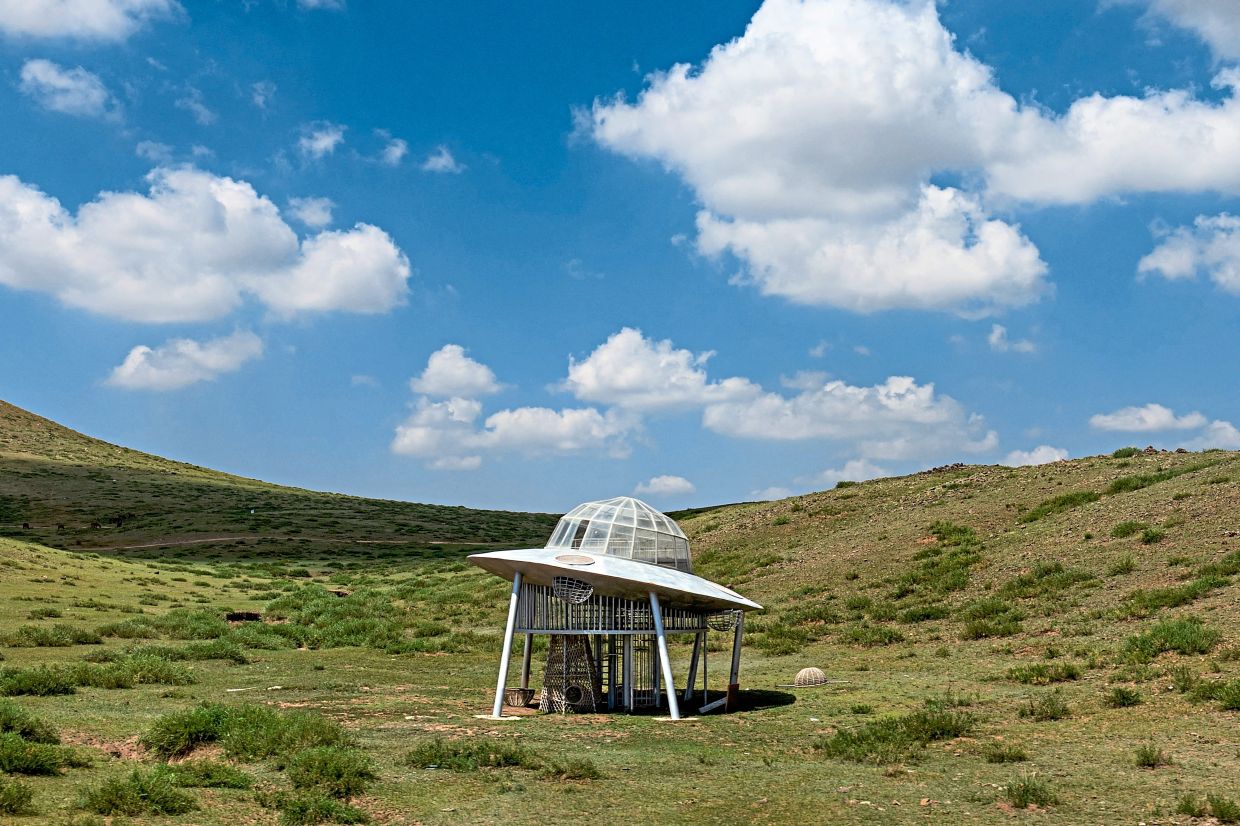
That effort is on full display at Wulanhada Volcano Geological Park in China’s northern region of Inner Mongolia, where black volcanic rock formations have become a Mars simulator.
Visitors rent white or pink spacesuit costumes to pose against the backdrop of barren terrain while food vendors sell astronaut-
shaped, strawberry-flavoured ice cream.
Tumuse, a 50-year-old rental shop owner, said she once charged 80 to 100 yuan (RM48.80 to RM61) for a set of spacesuit costumes, but prices have fallen to as little as 20 yuan (RM12.20) as more vendors have entered the market.
A former sheep herder, she opened the business in 2022 after photos of college students wearing spacesuits against a volcano at the park went viral.
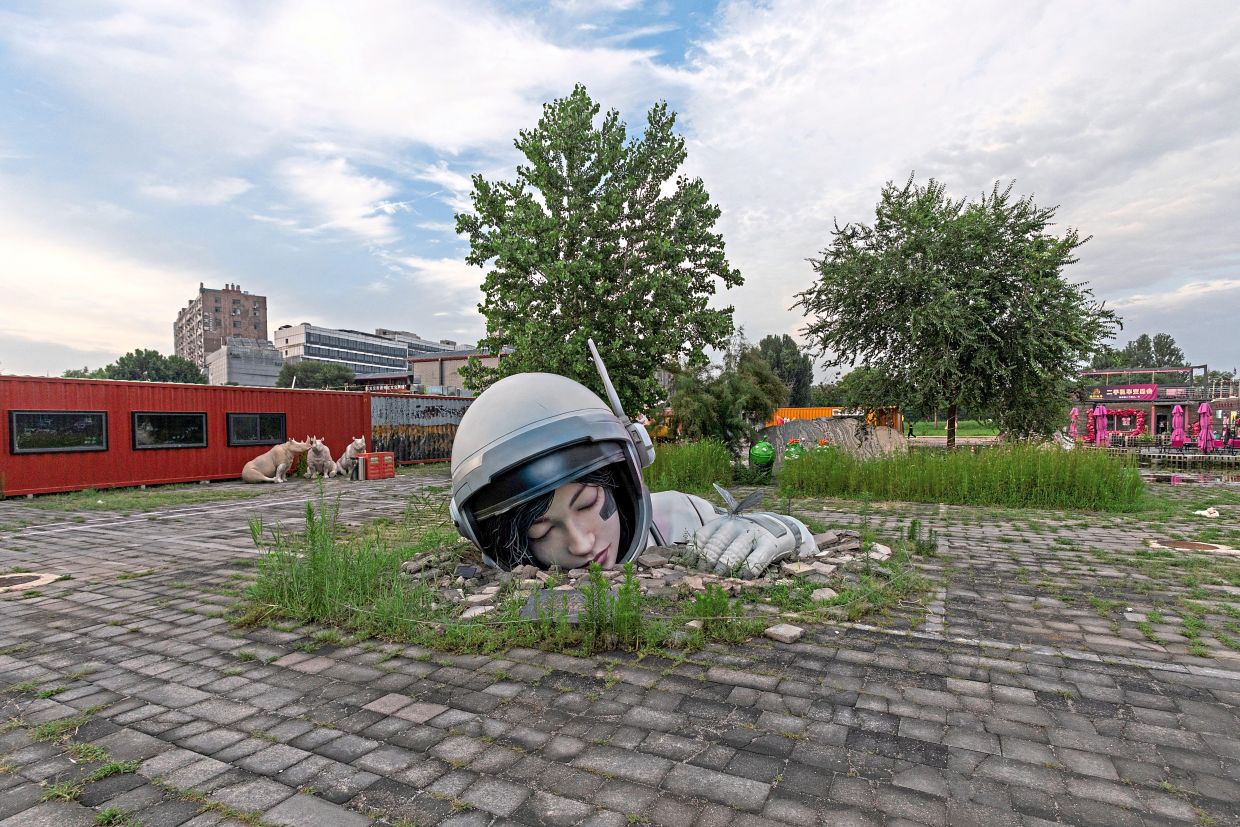
In Beijing’s Songzhuang art district, an overgrown lot draws photo-taking pedestrians to a giant sculpture of a sleeping female astronaut – an otherworldly work titled Resonance.
She is the protagonist of a novel by 33-year-old design artist and sci-fi author Yang Wanting.
The character, Chen Zilan, is to embark on a journey around the universe 100 years from now.
“Every person is very curious about space, and about what might exist in the universe,”
Wanting said, standing beside the sculpture.
Wanting said her earliest memory of space was in 2003, when she watched Yang Liwei become China’s first astronaut in space. Her grandfather, who usually talked to her only about food or joked around, suddenly asked her to watch the TV coverage with him.
“It felt like all other activities were cancelled,” Wanting said. She remembered his eyes were glued to the screen, hands on his hips, watching intently with excitement.
“The memory has stayed with me so vividly because of the love and concern I felt for my grandfather. I think the things we remember – and the impressions certain events leave on us – ultimately come back to people,” Wanting said.
Across town, to the west of Beijing, the space theme turns commercial and cute.
At Shougang Park – a former steel mill turned cultural park – a towering Pop Mart “Space Molly” sculpture, the toy company’s astronaut-helmeted doll, looms over visitors snapping photos.
For many in China, space is no longer only something encountered through official broadcasts or science-fiction films, but at the beach, in public art and even from an ice cream cart.
“Our previous generations would never have imagined sitting here, enjoying the sea breeze, watching our own country’s rocket launch,” said Fu back on the Hainan beach.
“I truly believe the future is not just a dream.” — Reuters