



When Kiran lost her father several years ago, she turned to prayer and searched for a meaningful way to honour his memory. Guided by the values he had instilled in her, she transformed her grief into service - a journey that eventually led to the establishment of KAJ Care Initiatives, which supports people facing hardship.
"My father was my guiding light, and losing him was devastating. But the strength he instilled in me gave me the courage to turn my grief into something meaningful and honour his memory," Kiran said.
Drawing on the Sikh tradition of selfless service, known as seva, Kiran began sponsoring monthly langar seva at gurdwaras in Malaysia and India in memory of her father. Langar is the Sikh tradition of providing free communal meals to everyone, regardless of background, while seva refers to selfless service performed without expectation of reward.
When Kiran's mother died in April this year, the loss prompted her to reflect more deeply on her values and consider how she could make her efforts more structured and lasting. This led to the creation of KAJ Care Initiatives.
In Punjabi, Kaj refers to a worthy purpose or good deed. For Kiran, however, the name carries an additional personal meaning: it combines her own name with those of her late parents, Amar and Jeswant. Through the initiative, she hopes to keep their memory alive by serving others in their name.
Kiran's commitment to helping those in need began more than three decades ago, when she started setting aside a portion of her monthly salary to assist others, particularly senior citizens and persons with disabilities.
Her giving was never motivated by recognition. She deliberately stayed out of the spotlight, preferring to let her actions speak for themselves.
"My father always reminded me to give without expecting anything in return. He taught me that the true value of giving lies in doing so freely, without waiting for recognition or reward. Those are the values I have tried to carry with me throughout my life," she said.
KAJ Care Initiatives is not a non-governmental organisation and does not seek donations from the public. It is a privately funded effort rooted in Kiran's belief that charity means sharing what she has been fortunate enough to earn.
This principle also reflects dasvandh, a Sikh practice that encourages individuals to set aside one-tenth of their earnings for the benefit of others and the wider community.
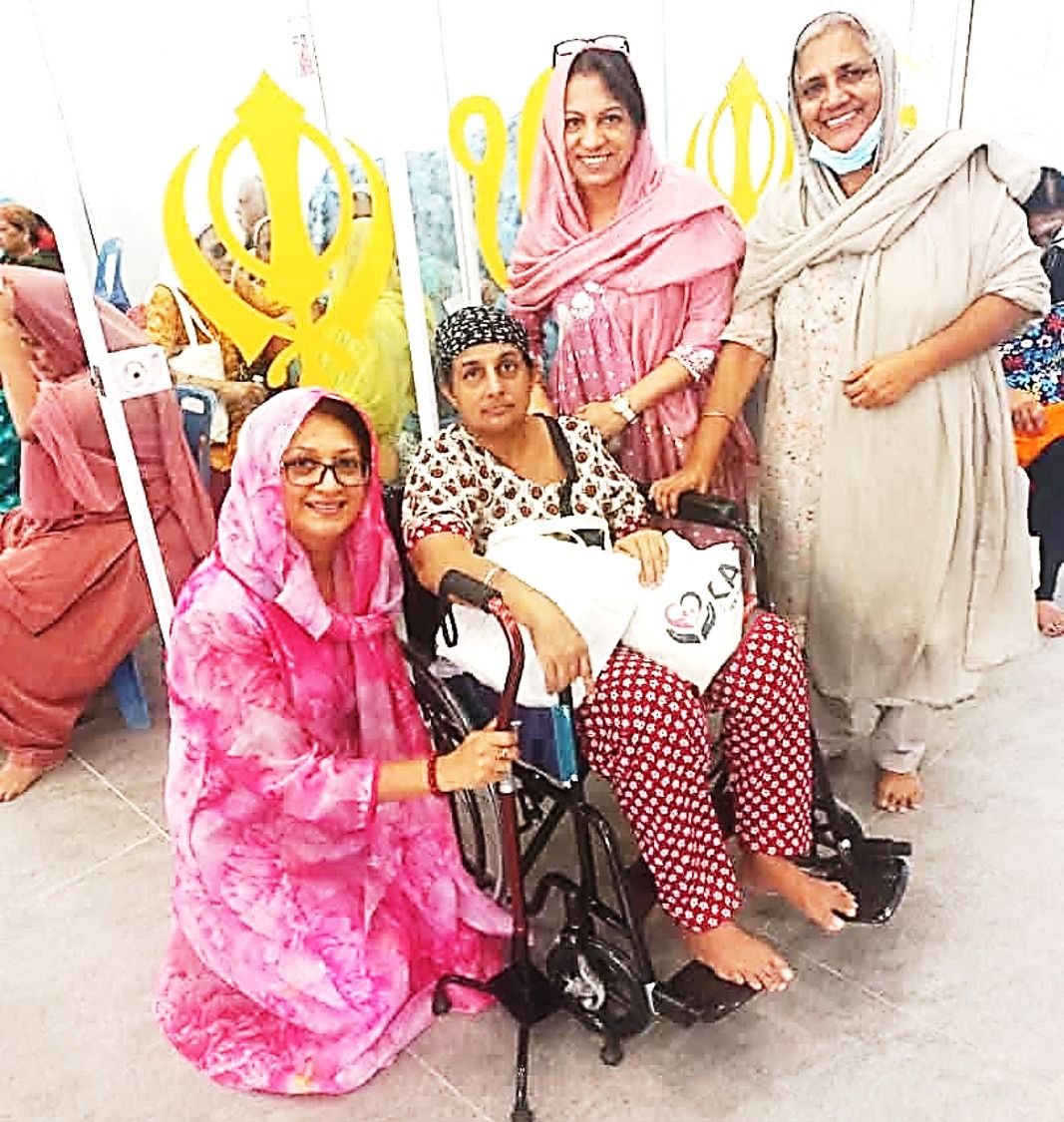
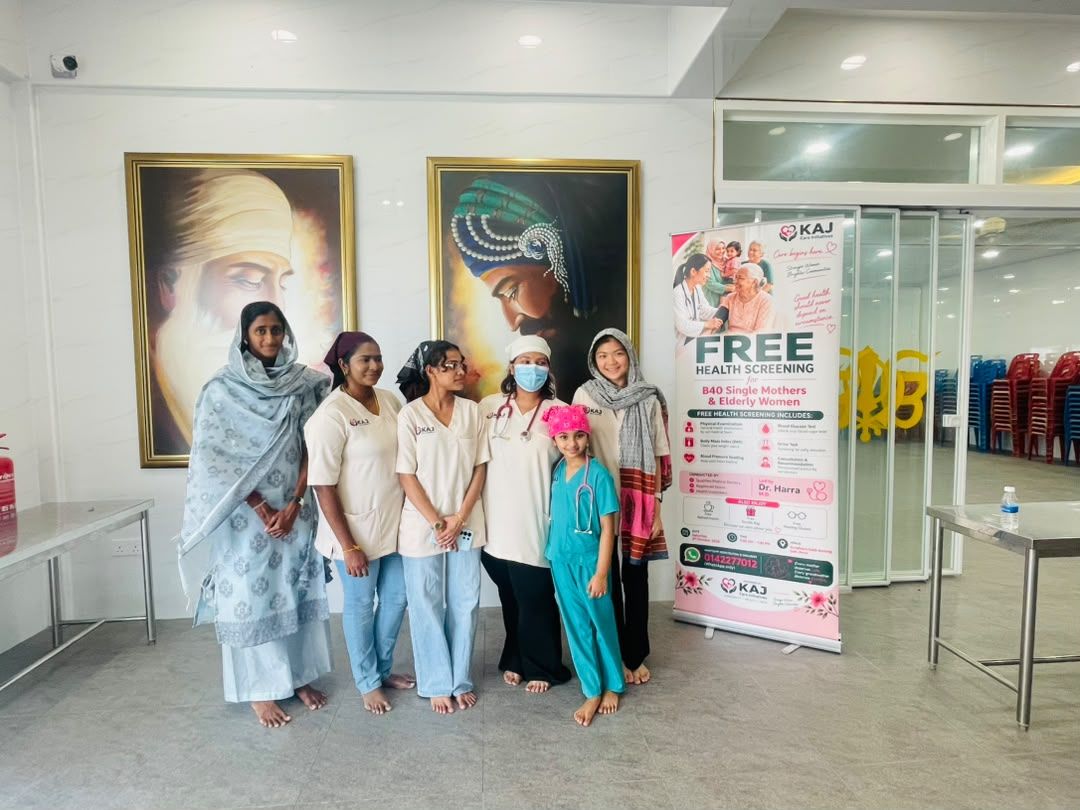
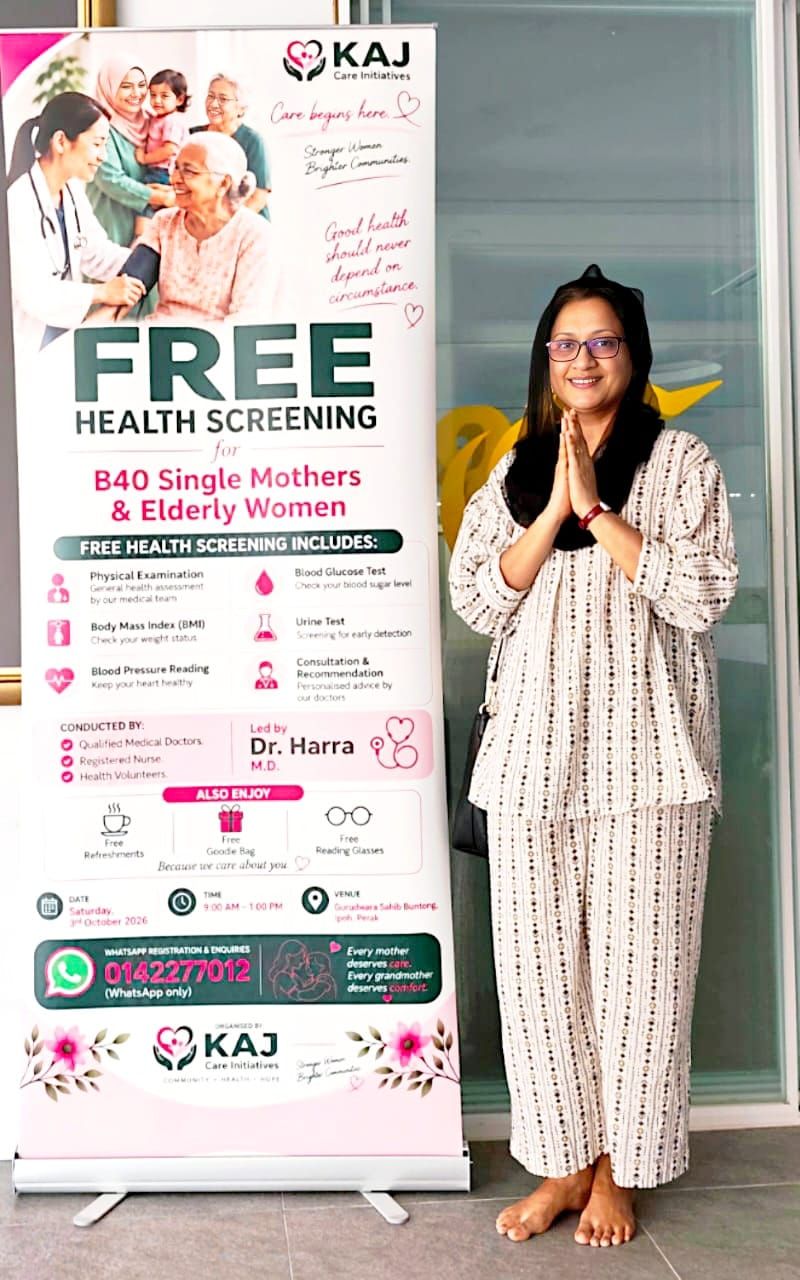
The first major programme organised by KAJ Care Initiatives was a free medical camp for single mothers and elderly women from the B40 community. Held at Gurdwara Sahib Buntong in Ipoh, the half-day programme attracted 98 participants.
The medical team was led by Kiran's niece, Dr Harravintha, who is based in Ipoh. Participants received basic health screenings and had the opportunity to speak directly with healthcare professionals about their individual concerns. The screenings included: Vital-sign checks, Blood glucose and urine tests, Lung assessments, and Eye examinations.
All participants received goodie bags containing everyday essentials, including handwash, face masks, soy drinks, balm, oats and lozenges. Selected participants also received medication, wheelchairs, walking aids and reading glasses according to their needs.
The programme was supported by the Gurdwara Sahib Buntong committee, which provided the function hall and sponsored breakfast and lunch. Committee members also assisted with preparations and arrangements throughout the event, helping ensure that the camp ran smoothly.
For Kiran, the initiative did not end when participants left the venue. She plans to remain in contact with them and check on their general well-being from time to time.
The medical camp marks the beginning of many more initiatives aimed at supporting senior citizens, single mothers, persons with disabilities and other members of the community who may be facing difficult circumstances. In addition, KAJ Care Initiatives also plans to extend its efforts to animal welfare by supporting the spaying, neutering and medical treatment of stray dogs, in collaboration with animal shelters and welfare organisations.
For Kiran, every initiative is also a tribute to the two people who shaped her life. Her father’s memory inspired her to begin her journey of monthly langgar seva, while her mother’s passing gave her further reason to turn that personal journey into something more structured and lasting.
"In doing this initiative, I hope my parents' legacy will live on, not simply in memory, but in every life touched, every person helped, and every act of seva carried forward in their name," she said.
