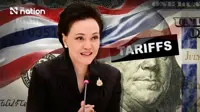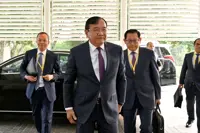
BANGKOK: No official date has been confirmed for tariff and trade talks between Thai Prime Minister Anutin Charnvirakul and US President Donald Trump ahead of Anutin’s September 21–27, 2026, visit to the United States.
Commerce Minister Suphajee said discussions between Anutin and Trump had previously been proposed for Sept 17 or 18.
Thailand wants officials to clarify the proposed Thailand-US Agreement on Reciprocal Trade (ART) as fully as possible before preparing briefing material and proposals for talks between the leaders.
Anutin’s US visit centres on the UN General Assembly
Anutin and his delegation are scheduled to visit the United States from Sept 21 to 27, primarily to attend the United Nations General Assembly (UNGA) in New York, Suphajee said. The prime minister will represent Thailand, deliver an address and take part in international engagements.
Suphajee said no official arrangements had been made for discussions with the US president on the sidelines of Anutin’s visit. Attendance at the General Assembly remains the delegation’s principal mission.
Thai-US trade negotiations reach final stages, Suphajee says
Suphajee said negotiations on the reciprocal trade agreement had made substantial progress and were now in their final stages.
Most major issues had been clarified, leaving revisions to the draft wording and some details that both sides still needed to resolve.
Thailand’s negotiating team, known as “Team Thailand”, continues to engage with the Office of the United States Trade Representative (USTR) through discussions between officials and videoconferences, according to Suphajee.
“Both sides have reached agreement on some substantive issues,” Suphajee said. Technical negotiators would now work to complete the remaining details as quickly as possible to prepare for subsequent discussions between the leaders.
Thailand targets 19% framework to limit tariff risks
Thailand wants to conclude the reciprocal trade agreement’s details before US proceedings under Section 301 advance to their next stage, Suphajee said. The aim is to limit tariff exposure and preserve the competitiveness of Thai products in the US market.
Suphajee said Thailand was working towards the previously discussed tariff framework of 19%, with terms no worse than those applied to regional competitors.
A substantially higher rate than competing countries would weaken Thai exporters’ position and put further pressure on manufacturers dependent on the US market, affecting orders and investment.
The United States is prioritising efforts to rebalance trade with its partners. Thailand’s sizeable bilateral trade imbalance with the United States makes the reciprocal trade agreement important to both sides.
Thailand has already provided information and supporting evidence to the USTR as part of the Section 301 proceedings, addressing US questions about enforcement of labour measures and the structure of Thai production.
Thailand must also monitor the outcome of US consideration of excess production capacity, which could become another factor shaping tariffs on Thai goods entering the American market. - The Nation/ANN