Roman Pathan and his wife Zakia Sultana were over the moon after the birth of their daughter Rokeya Jannat. The couple had gone through a miscarriage earlier.
Rokeya became the centre of their lives. But after just seven months, she was gone, becoming a victim of Bangladesh’s prolonged and devastating measles outbreak, a crisis that has now pushed the death toll past 1,000.
She died at the Infectious Diseases Hospital (IDH) in Dhaka on April 13.
Today, Roman watches videos of his daughter every day, especially around the time she used to sleep. Every one or two days, he travels 2.5km from his home in Panchgaon of Narayanganj’s Araihazar to see her grave, while his wife quietly cries at home.
“Whenever I remember her, I cry. What else can I do?”
The family’s tragedy is mirrored across the country, where a highly infectious, vaccine-preventable disease has spiralled into a severe public health and economic crisis.
Since March 15, over 187,000 people, mainly children, have fallen ill with measles or measles-like symptoms.
Over 147,000 have required hospitalisation, overwhelming local health infrastructure.
For thousands of homes, the prolonged illness has triggered severe financial distress, forcing families into a cycle of borrowing money, taking out high-interest loans, or liquidating assets to cover out-of-pocket medical expenses.
The current government has squarely blamed the previous interim administration led by Nobel laureate Prof Muhammad Yunus for the outbreak.
In a written submission to parliament, Health Minister Sardar Md Sakhawat Husain accused the Yunus-led administration of failing to procure vaccines on time, delaying a long-overdue special vaccination campaign and ignoring critical shortages despite warnings from Unicef.
However, public health experts argue the current government cannot evade responsibility, pointing to significant missteps in its own containment strategy.
While the BNP administration did launch an emergency measles-rubella vaccination drive on April 5, experts say authorities severely miscalculated the country’s demographic data and focused on immunisation at the expense of hospital preparedness and patient management.
The scale of this demographic blind spot was laid bare over the summer.
By its initial May 20 deadline, the emergency campaign reported vaccinating 18.4 million children aged six to 59 months, exceeding its stated target of 18 million. Following this, cases and fatalities saw a gradual decline in June and July.
But a nationwide Vitamin A Plus campaign on June 28 exposed a glaring data discrepancy.
That drive reached 22.3 million children in the exact same age bracket, revealing that nearly 3.88 million eligible children had fallen completely outside the government’s vaccination net.
Forced to acknowledge the underestimation, health authorities initiated a mop-up campaign in late July to track down the missed children.
The delay proved costly. Against expectations, the three primary indicators, infections, hospital admissions and fatalities, all rose again in August.
“The government initially started the vaccination campaign with whatever vaccines were available, which was a reasonable step,” said Mushtuq Husain, a public health expert and former principal scientific officer at the Institute of Epidemiology, Disease Control and Research.
Mushtuq criticised the state’s overreliance on tertiary care at the expense of early intervention.
“You cannot reduce deaths by focusing only on intensive care units (ICUs). Greater attention must be given to managing patients before they reach ICUs, particularly at the primary and secondary levels of healthcare,” he said.
“You have to ensure hygiene, handwashing, isolation, early detection, contact tracing, and separating suspected cases for observation.
“These interventions have not been properly implemented. The response should have been based on a pandemic-style approach, but that was not done.”
The trajectory of Rokeya’s illness underscores these bottlenecks. Initially treated for pneumonia, she spent around 15 days at a local hospital and then a hospital in Dhaka early this year.
She returned home, only to quickly develop a fever, cold symptoms, oral sores and a rash.
Suspecting measles after checking her symptoms online, her father took her to Dhaka Medical College Hospital. Doctors there confirmed the disease and referred her to the IDH.
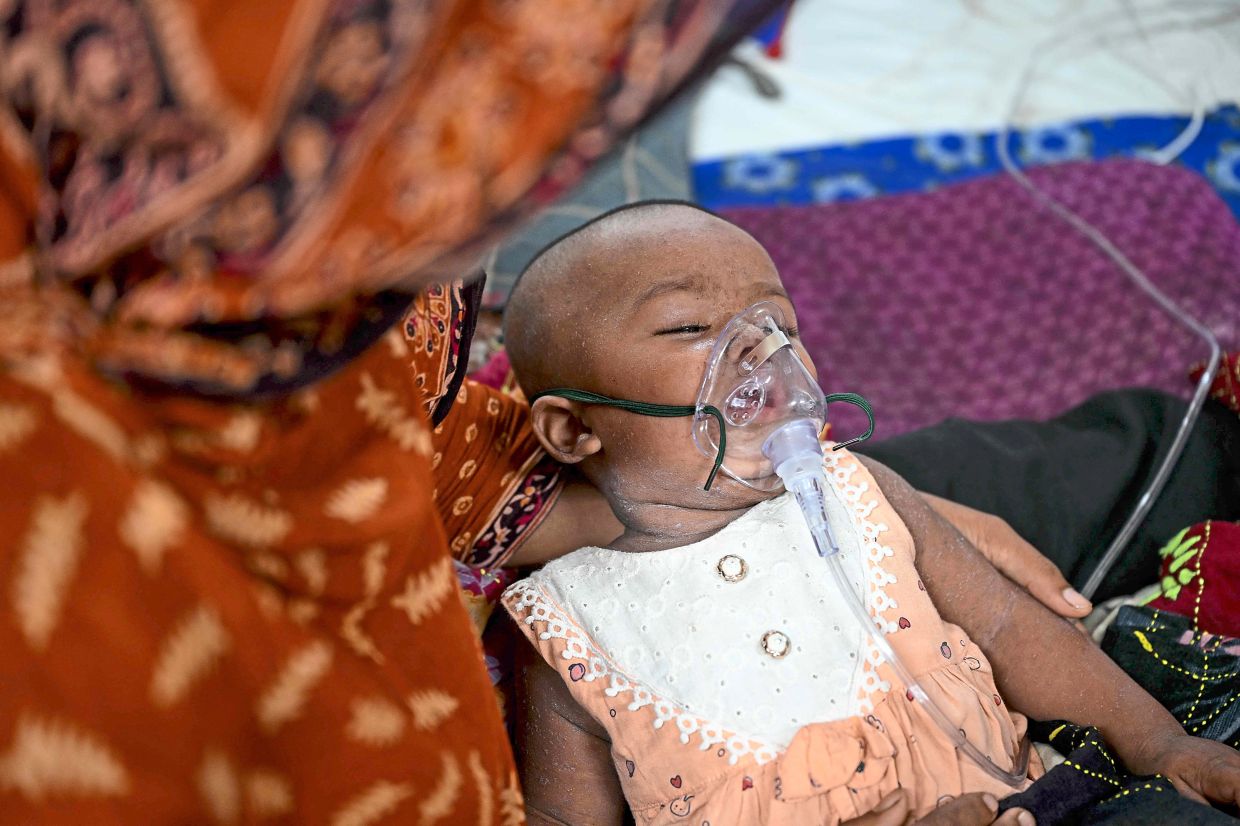
By the time she was admitted there on April 9, she had developed severe breathing difficulties and required immediate oxygen support. She died five days later.
Health officials and doctors note that this pattern of “hospital hopping” is widespread.
Because local hospitals outside Dhaka lack the doctors and equipment necessary to provide critical care, children are shunted between facilities, often arriving at specialised tertiary centres only when their conditions are terminal.
Despite these ongoing structural failures six months into the outbreak, Health Minister Sakhawat, who recently attended a WHO programme in Timor-Leste, rejected allegations of mismanagement.
“This is criticism for the sake of criticism. We have not neglected any aspect of disease management. We even arranged mobile hospitals and finely managed everything. Treatment protocols were followed, and beds were provided,” he told The Daily Star.
The government will launch another fully-fledged measles vaccination campaign on Sept 25, targeting newly eligible six-month-olds and those missed previously.
“Measles has never attacked in this way before. There is speculation that it could be a new variant, but it has not yet been identified,” he said.
The immediate reality, however, is a fundamental lack of herd immunity. “Most patients currently being treated for measles are unvaccinated. So new children are becoming vulnerable to the disease.” — The Daily Star/ANN