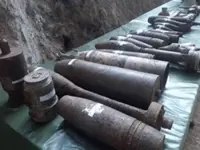
PHNOM PENH (Bernama): Children remain vulnerable to cluster munitions, which killed or injured 1,063 people in 2025, one of the highest annual casualties recorded since monitoring began.
The Switzerland-based global organisation Cluster Munition Coalition (CMC), in its latest report, said some 87 per cent of reported casualties were civilians, either killed or maimed by devices that remain deadly for decades even after conflicts have ended.
"Children are especially vulnerable to unexploded submunitions. The small size, distinctive shapes, and shine, or sometimes bright colouring, can make unexploded submunitions seem attractive or enticing to children.
"These explosives are often encountered in or near homes, schools, agricultural land where children herd, areas where they forage for family subsistence, and places where they play,” said CMC’s Cluster Munition Monitor 2026 report, released on Tuesday.
In the region, Laos, Vietnam and Cambodia were identified as countries that remain contaminated by cluster munition remnants.
According to the report, about US$116 million (RM472 million) in international and national funding was channelled towards addressing the impact of cluster munition contamination.
Laos, which has the highest levels of contamination, was the largest recipient of international funding in 2025.
It received a total of US$52 million (RM212 million) for land release, risk education, victim assistance and capacity-building, CMC said.
The Lao National Unexploded Ordnance Programme has said that over two million tonnes of ordnance were dropped over the country during the Indochina conflict between 1964 and 1973.
It is the most bombed country in history on a per-capita basis. -- BERNAMA