Seven airports, including two serving Jakarta, remained closed because of volcanic ash from eruptions at Mount Anak Krakatau as more than 270,000 travellers were affected by flight cancellations and delays, the transport minister said.
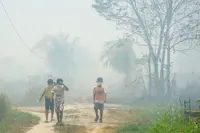
Ash from Anak Krakatau, which sits halfway between Java and Sumatra islands, has blanketed Jakarta and several surrounding areas since it erupted late on Friday, leading to the closure of the airports for safety reasons.
The transport ministry yesterday said more than 270,000 people have been affected by the delay, diversion, or cancellation of 2,300 flights.
Jakarta’s main airport will remain closed until 6pm local time, the ministry said, along with six other airports. One other airport in South Sumatra has been reopened.
“We cannot ascertain when this will end due to the dynamic weather,” Transport Minister Dudy Purwagandhi said in a statement.
Yesterday, passengers at Jakarta’s main airport, the Soekarno-Hatta, which is located in the city of Tangerang, adjacent to Jakarta, were scurrying around, frantically looking for the status of their flights on the information boards. Some were sleeping on benches.
Carlos Zabala, 24, was travelling to his native Spain after a vacation when he learned his flight was repeatedly delayed.
Expressing his frustration, he blamed operators for the lack of clarity.
“All we have to do is wait, and wait, and wait,” he said.
President Prabowo Subianto chaired a virtual meeting yesterday with authorities on the eruption, as well as an Aug 15 earthquake that killed more than 130 people in eastern Indonesia and the ongoing forest fires, saying that the disaster mitigation budget needs to rise significantly.
“This is our destiny, a country located in the ring of fire,” he said, adding that more helicopters and water pumps are needed to mitigate disasters.
“For the future, we will take anticipatory steps.”
At night, the lava from Anak Krakatau lit the sky red as it erupted. Residents were sweeping the dusty floors of their homes and the blackened walls of a nearby mosque, Reuters photographs showed.
Anak Krakatau is one of about 130 active volcanoes in Indonesia, which straddles the “Pacific Ring of Fire”, a highly seismically active zone where different plates on the earth’s crust meet to create a large number of earthquakes and volcanic eruptions.
Anak Krakatau, which means child of Krakatau, began emerging a century ago from the area previously occupied by Krakatau, then known as Krakatoa.
The older volcano destroyed itself in mass eruptions in 1883, which killed more than 36,000 people after triggering a series of tsunamis.
A tsunami after an eruption at Anak Krakatau in 2018 killed over 400 people.
Renowned volcano expert Surono said that it is dangerous to fly as sulphur and silica-laden ash could damage plane engines and visibility was low due to the ash spread, especially with a lack of rain.
“For Anak Krakatau, the recent eruption was unusual,” he said.
The volcano monitoring agency’s website showed the most recent Anak Krakatau eruption occurred on Sunday at 8.23pm local time.
The agency yesterday warned that “the probability of further eruptions in the coming periods remains high”. — Reuters