



HONG KONG: "From next year, children should spend more time living their lives, not scrolling through other people's."
With that kind of language now coming from ministers in capitals from Canberra to London, governments around the world are starting to tell teenagers to put their phones down – and, in some places, they soon won't have a choice.
From Australia, Brazil, Indonesia, Malaysia to the United Kingdom, sweeping bans and curbs on social media use for under‑16s are moving from debate to law, with France, Greece weighing similar steps.
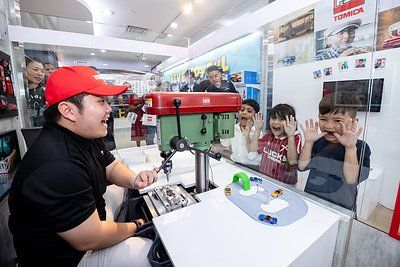
As anxiety over screen addiction and youth mental health mounts, the question is no longer whether we should limit time online, but what kind of childhood will replace it – and who is ready to offer an offline alternative.
Rebalancing Childhood and Daily Life
In this rapidly shifting digital landscape, we are being pushed to rethink not just how long children spend online, but how they can rediscover the joy of growing, learning and connecting through real‑world, physical play.

"As society sets new boundaries for screens, our mission is to provide children, families and the new generation of kidults with joyful, meaningful alternatives. Play is not just recreation, it is essential for learning, social connection, self‑expression and strengthening intergenerational bonds."
He adds, "A screen can never replace the joy created by hands‑on creation, exploration, and real‑world play, which are essential for sparking creativity, building resilience and nurturing confidence."
Over the past three years, Toys"R"Us Asia has quietly refreshed its brand around the idea of "Live Toyful", a simple ambition to weave plays back into everyday life, rather than treat it as an occasional reward. The shift reflects what many families are already feeling: that in an always‑online world, tangible, offline moments are starting to matter more, not less.
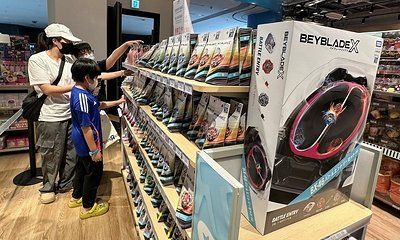
The renewed enthusiasm is not just about nostalgia; it is about parents rediscovering the power of play alongside their children. "At our Beyblade tournaments," says Johnny Mui, "it's common to see nine‑year‑olds and thirty‑nine‑year‑olds strategizing and enjoying together. This truly shows how play becomes a shared language and a bridge across generations."
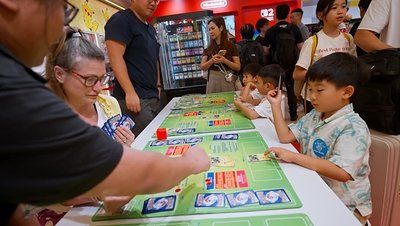
Blind boxes speak to another side of today's play culture: the excitement of not quite knowing what you will get.
For teenagers and young adults, part of the appeal lies in that small moment of suspense and reveal – a feeling not unlike opening a notification, but grounded in something you can hold, swap and display. When parents and children open them together, even this simple act can become a shared conversation rather than a solitary scroll.
The same cross‑generational pull can be seen in other cultural touchpoints. Take the anticipation around Disney's Toy Story 5: parents now return to cinemas with their children, sometimes joined by grandparents, to relive their memories while creating new ones.
When retailers build activities around these shared stories, they can turn moments of fandom into chances for families of different ages to reconnect through play.
Responding to shifts in both consumer values and digital habits, toy and lifestyle brands across Asia are rethinking what a "toy store" looks like. Smaller, more flexible formats – sometimes taking up less than a fifth of a traditional footprint – are emerging as adaptable neighbourhood hubs that can be tailored to local communities.
TOMICA BRAND STORES in multiple cities, South-East Asia's first TOMICA FACTORY in Malaysia and Pokémon Play Lab in Hong Kong, China all point to a wider move toward immersive, interactive environments where people can explore, build and play together.
Within this landscape, Toys"R"Us Asia is one of several players gradually positioning stores less as places to "grab a toy and go" and more as places where play, collectibles, fashion and creative hobbies overlap. Rather than pushing any single brand, the emphasis is on making room – in physical spaces and family routines – for tangible, shared play to sit alongside, and sometimes replace, time spent online.
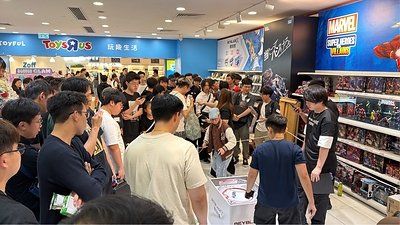
For the record, Toys"R"Us Asia's vision is to fuel imagination and inspire the next generation through the power of toys and play. Guided by its brand promise "Live Toyful", the company is committed to making play a lifestyle, encouraging kids, kidults and families to explore, imagine and celebrate the joy of play every day.
Headquartered in Hong Kong, Toys"R"Us Asia operates approximately 450 stores across Mainland China, Japan, Malaysia, Hong Kong, Singapore, Taiwan, Thailand and Brunei, with more than 90 sub-licensed stores in the Philippines and Macau, as well as leading eCommerce platforms and online stores in each market. Toys"R"Us Asia (Holding) Limited is an independent legal entity that operates separately from, and is not affiliated with, any other Toys"R"Us branded company worldwide.
