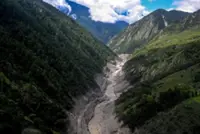
THE country is stepping up monitoring of its Himalayan regions bordering China and Nepal, days after deadly floods apparently triggered by a glacial collapse, authorities said.
The US Geological Survey said the disaster on the Tibet-Nepal border on Wednesday was caused by a glacial collapse that created a torrent of debris, with nearly 3,000 missing and over 600 confirmed dead.
While the exact cause of the collapse is unclear, climate change is causing glaciers to melt worldwide, increasing the risks of such disasters.
“Since we share a border with Nepal, as a neighbour, and also have a similar geographic situation... we have asked our department to monitor all the glaciers and known glacial lakes in the region,” said Madan Kaushik, state disaster management minister in India’s Himalayan state of Uttarakhand.
“We have asked our teams to be vigilant and monitor if a similar situation is emerging anywhere in the state,” he said.
Uttarakhand is one of the most ecologically-sensitive regions of India, with 1,266 glacial lakes, according to government figures.
Himalayan glaciers, which provide critical water to nearly two billion people, are melting faster than ever before due to climate change, exposing communities to unpredictable and costly disasters, scientists warn.
Melting glaciers and thawing permafrost can also destabilise mountain slopes and increase the risk of landslides.
Experts say climate change, coupled with poorly-planned development, is increasing the frequency, severity and impact of the disasters. — AFP