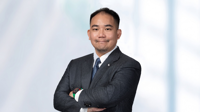
SINGAPORE: The Republic is putting in a bid to host a proposed international tribunal to settle disputes between foreign investors and sovereign states to meet the urgent need for a trusted investment dispute settlement system.
Announcing this on Aug 25, Law Minister Edwin Tong said the rules-based order, which has driven growth in global trade and investment over the past decades, has come under strain.
Multilateralism is being challenged, and there is growing concern over the potential erosion of the rule of law.
Tong said that as a small state whose prosperity depends on a stable, rules-based international order, Singapore has every interest in ensuring that the global system continues to command confidence.
“The alternative is a scenario where size and power make right, and that is completely untenable for a country like Singapore,” he added.
The Multilateral Investment Tribunal is currently being negotiated by member states of the United Nations Commission on International Trade Law (UNCITRAL), a body that develops the legal framework to facilitate international commerce.
“The need for a trusted investment dispute settlement system has never been more acute. More than half of all known treaty-based investor-state cases since 1987 have been initiated in the last decade.
“Yet the framework meant to resolve these very disputes has itself come under serious strain, marked by inconsistent decisions, concerns about regulatory interference and chill, and persistent questions about arbitrator independence and impartiality,” Tong said, adding that the legitimacy of the system is being strained at precisely the moment it is needed most.
In a speech to about 500 participants at the UNCITRAL Academy conference at the Shangri-la Singapore, Tong said the urgency is compounded by the fact that states today are intervening and regulating more actively than ever – in areas such as public health, energy security, climate change and national security.
“As states act, disputes will follow. The question is not whether investment disputes will arise, but whether there is a credible, trusted institution to resolve them,” he added.
Tong said Singapore has long sought not just to benefit from a strong multilateral system, but also to actively contribute to it.
He added: “Our bid reflects Singapore’s commitment to doing our part in building an institution that is credible, that is accessible, that evolves so that it is fit for purpose, and in doing so, play our part in strengthening the rules-based international order, which all of us around the world depend on.”
He said Singapore offers a neutral and stable jurisdiction that is firmly grounded in the rule of law, and is connected to the developed and developing worlds through trade and investment agreements, economic partnerships, and diplomatic presence.
The Government will anchor the bid with a tribunal building, fully equipped for hearings and to house tribunal members and support staff, the minister said, adding that it is also prepared to make financial contributions to a fund to boost access for developing and least developed countries, and underwrite translation and transcription services.
The tribunal is envisioned to be a permanent standing entity, like the International Court of Justice, comprising a bench of independent, elected members serving fixed terms, the Ministry of Law (MinLaw) said in a separate statement.
It was conceived as part of reforms to the existing mechanism in some international investment agreements that allows a foreign investor to bring a claim directly against a state without turning investment disputes into diplomatic spats.
The mechanism, known as investor-state dispute settlement (ISDS), has come under scrutiny as the number of cases grows.
Concerns have also been raised over the consistency of decisions, impartiality of arbitrators and hesitation by governments to pass public policies out of fear of claims being brought by investors.
Multinational tobacco company Philip Morris famously used ISDS mechanisms to challenge public health regulations on tobacco packaging in Australia and Uruguay.
Tong also announced an “ambitious” plan by MinLaw and the National University of Singapore (NUS) to set up the Centre for Arbitration and International Dispute Resolution (CAIDR).
The centre is focused on forward-thinking research on how to sustain the rules-based framework and will offer a programme of advanced studies in international arbitration for practitioners to deepen their expertise.
Led by Professor Stavros Brekoulakis, an international expert, academic and practitioner in international arbitration at the NUS law faculty, the centre aims to bring together leading academics, arbitrators, practitioners and policymakers from around the world.
Tong said the centre’s research on transparency and accountability, ethics and professional governance, and investor-state disputes will be grounded in practice and seek to inform policy.
He emphasised that this was not research for its own sake, but research that will improve practice and contribute to a stronger international dispute resolution framework.
In his speech, Tong said the system of international dispute resolution has evolved over decades in response to changes in global trade and commerce.
Today, it faces another period of change, with geopolitical tensions, shifting economic power, increasingly complex regulatory regimes, rapid advances in artificial intelligence, new forms of commerce and assets, and disputes that cut across jurisdictions, legal systems and areas of public policy.
Having benefited greatly from an international system in which disputes can be resolved according to rules, Singapore wants to contribute to keeping it strong, trusted and relevant.
Speaking to the media, Brekoulakis said that while Singapore is one of the leading centres in international arbitration, the next step was not just to administer more disputes, but to shape the future of international arbitration.
The professor said the centre’s purpose is to develop ideas on how a credible and fair system would operate to support businesses, and to sustain the international rule of law that is much needed in today’s disrupted environment.
The conference is one of the events of Singapore Convention Week, a signature event focusing on dispute resolution, arbitration, mediation and litigation. - The Straits Times/ANN