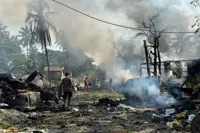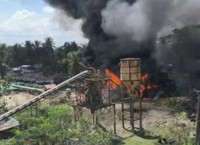
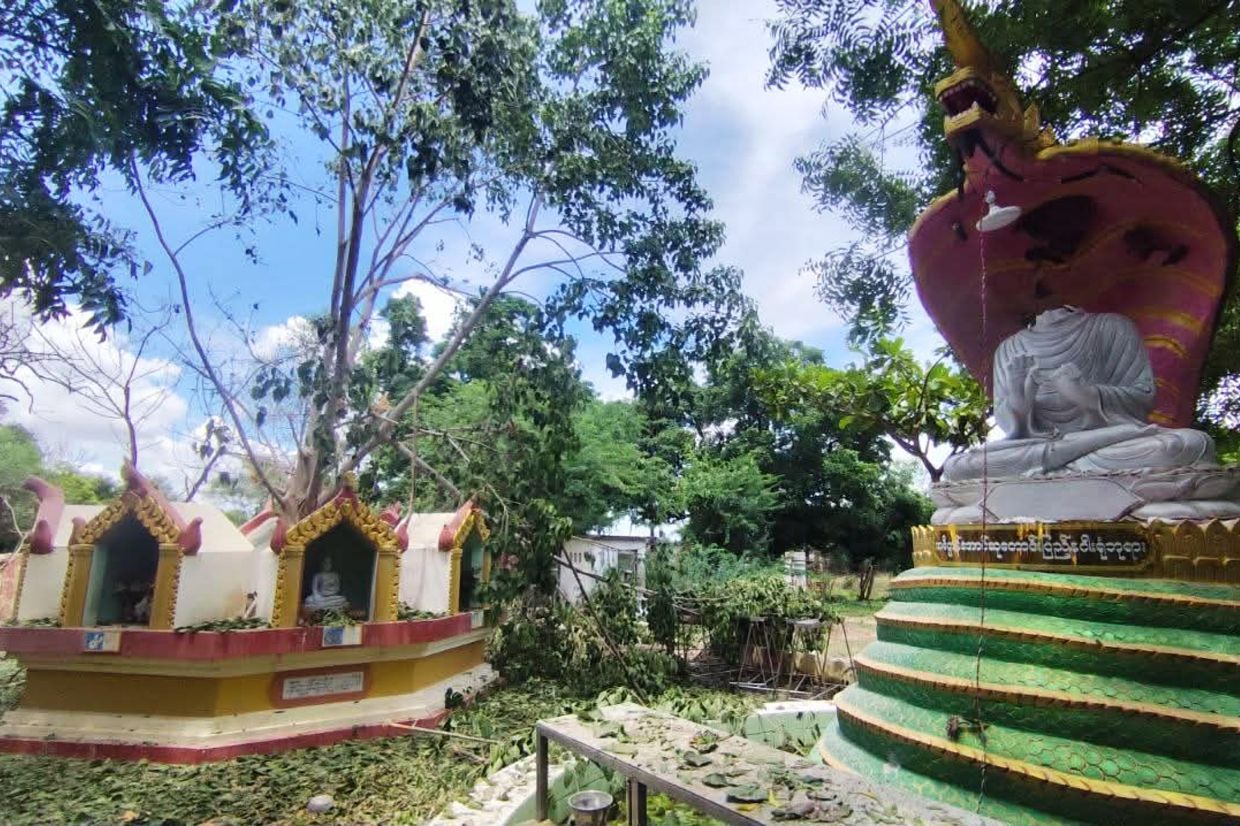
YANGON Myanmar, (AFP): A Myanmar military airstrike on a monastery where civilians were gathered for a meditation retreat marking Buddhist Lent killed 14 people, two rebel fighters who witnessed the aftermath said.
Myanmar has been consumed by civil war since the military staged a 2021 coup ousting the elected government of Aung San Suu Kyi and detaining the Nobel Peace Prize laureate.
Over the past five years, more than 100,000 people are estimated to have been killed across all sides as the military battles an array of pro-democracy and ethnic minority rebels.
The Friday airstrike hit a monastery hall around 9:00 am (0230 GMT) in Myaung township of central Sagaing region, killing 11 men and three women, according to Nway Oo Myaung, a pro-democracy rebel who helped clear bodies.
"Older people had entered the meditation centre for three months" to mark the period of Buddhist Lent, which roughly coincides with Myanmar's rainy season, he said on Friday.
"Those who were killed, their ages were between 50 and 70," Nway Oo Myaung added. "It wasn't a mistaken target, they intentionally attacked a monastery."
It was not immediately possible to contact the Myanmar military for comment.
But a second local opposition fighter, speaking on condition of anonymity, said on Saturday: "Five dead people were from our village and the other nine were from other villages."
"While we were trying to rescue people, the aircraft came to bomb a second time," he said.
- Strikes from above -
Myanmar's military often relies on its Chinese- and Russian-supplied jets to keep rebels at bay, analysts say.
UN investigators from the Independent Investigative Mechanism for Myanmar (IIMM) last week published a report accusing the military of "indiscriminate and intentional aerial attacks against civilians".
Public buildings, most often monasteries and schools, are frequently the sites of reported airstrikes.
Myanmar's government called the IIMM publication "one-sided allegations against Myanmar's security forces based on unverifiable and inaccurate information".
Conflict monitoring group ACLED said in a report last month that "the military's ongoing terror strategy includes a focus on civilian infrastructure and social gatherings, such as weddings and religious festivals, to maximize psychological impact".
After five years of martial rule, Myanmar's military staged elections around the start of 2026 -- touting the exercise as a return to normality.
The IIMM report said it "observed a notable escalation in aerial attacks in the months preceding the elections".
Democracy watchdogs derided the vote as a charade to rebrand military rule while excluding the popular Suu Kyi, sidelining her party and punishing dissenters with prison time.
It resulted in coup-leader Min Aung Hlaing taking over as civilian president in April -- surrendering the office of armed forces chief to a key aide.
Min Aung Hlaing is currently spearheading a diplomatic blitz to shake off Myanmar's post-coup pariah status and gain diplomatic recognition abroad.
India, China, Laos and Thailand have all openly embraced him with visits to their capitals -- drawing criticism from campaigners who complain they have granted him undue legitimacy.
This week, Min Aung Hlaing visited Russia and Belarus, which have remained steadfast allies with Myanmar since the coup.
Myanmar's military has in recent months made gains on the battlefield after peeling off some of the most powerful armed factions with China-backed truces. -- AFP