PHNOM PENH: A new music video by popular Vietnamese singer Phuong My Chi featuring traditional Khmer dress, wedding rituals, dance and community life has stirred mixed reactions among Cambodian social media users, but Khmer Krom beauty queen and model Chhon Sreynet has rejected claims of cultural theft, arguing that the production explicitly acknowledges the traditions as Khmer.
The music video for Thien Duong Voi Nguoi Thuong, roughly translated as “Paradise with the One You Love”, has attracted attention among Cambodian audiences for its extensive portrayal of Khmer culture, including traditional wedding ceremonies, costumes, dance, musical elements and scenes filmed in Khmer communities in southern Vietnam.
Sreynet, a Khmer Krom woman who was first runner-up at Miss Universe Cambodia 2021 and later represented Cambodia in numerous tourism pageants, said she was proud to see Khmer traditions given such prominent exposure in a production by a well-known Vietnamese artist.
“They haven’t stolen it from anywhere. In the song, they give credit and clearly identify it as Khmer culture,” she said in a social media video responding to the debate surrounding the video.
She noted that the video had gone viral among Cambodian social media users, prompting both positive and negative reactions, including concerns from some commenters that a Vietnamese production was using Khmer cultural heritage.
For Sreynet, however, the crucial distinction is whether the origin of the traditions is properly acknowledged.
She said the video contains scenes filled with recognisable Khmer cultural elements and even incorporates Khmer language, making clear to viewers that the traditions being portrayed belong to Khmer culture.
“What is special and most important in the clip is that the scenes and Khmer culture are everywhere in it,” she said.
Sreynet said she was particularly moved because scenes were filmed in Preah Trapeang – known officially as Tra Vinh province in Vietnam – where she was born and which is home to a large Khmer Krom community.
Proud example of Khmer Krom culture
She pointed to scenes at Khmer Buddhist temples and other locations associated with Khmer communities, including Srah Ku, saying the production had given wider audiences an opportunity to see the cultural traditions that Khmer Krom communities have continued to preserve.
“I am really proud that they filmed it in Preah Trapeang, which is my birthplace,” she said.
The video tells the story of childhood friends who grow up together in a Khmer community before their friendship gradually develops into romantic love.
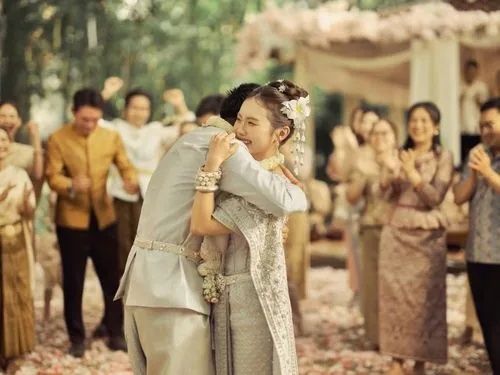
Its visual narrative moves through childhood, traditional activities and courtship before arriving at an elaborate Khmer-style wedding.
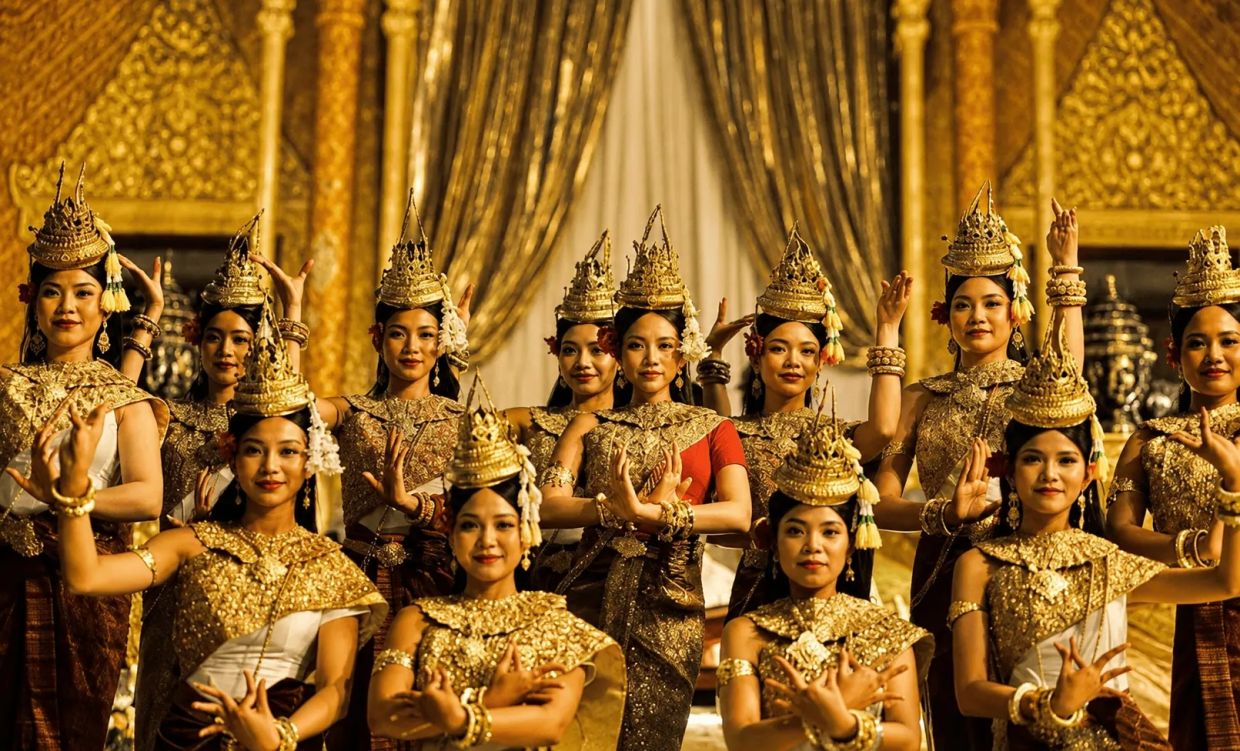
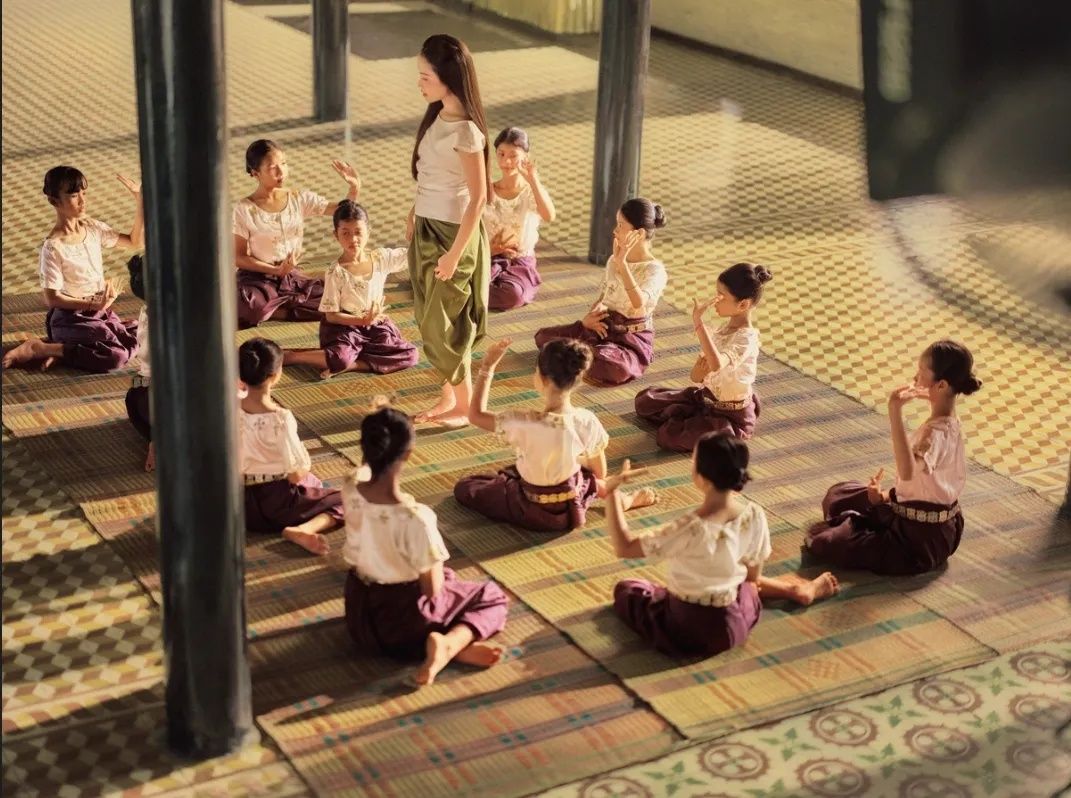
Among the most prominent cultural elements are traditional Khmer wedding clothing, hol and phamuong textiles, ceremonial practices, Khmer dance and a red-thread tying ritual associated with blessings for the newly married couple.
Scenes also show young women practising traditional dance, while other sequences depict a wedding party wearing elaborate Khmer ceremonial costumes and headdresses.
According to information circulated about the production, its cultural presentation was developed with advice from cultural specialists and Tra Vinh University.
The production team also conducted research and fieldwork in Khmer communities, while Thach Thi Ut Linh was reported to have directly assisted Phuong My Chi with traditional dance preparation.
Sreynet said such research was another reason she believed the production should not simply be characterised as cultural appropriation.
She acknowledged that the presentation may not be perfect in every detail, but said the important point was that the production identified the traditions as Khmer rather than attempting to claim them as belonging to another culture.
“I don’t think everything is necessarily completely perfect. There may be some points that are not perfect, but we can accept it because they make clear that it is Khmer culture,” she said.
“For those who comment that they stole it, the important thing is that they credit it as our Khmer culture. They haven’t stolen it,” she added.
She thanked Phương Mỹ Chi and the production team for investing money, time and effort in presenting Khmer traditions to a potentially much larger audience.
“This is also something that helps us. Our Khmer culture is being shared and promoted more widely,” she said. “I would also like to thank the owner of the song for spending money, time and effort to promote our Khmer culture and for loving our culture.”
Nationalist sentiments derail cultural exchange
The debate, however, has also exposed another sensitive issue for Sreynet – the distinction between Khmer Krom ethnic identity and Vietnamese nationality.
Because the video was produced by a Vietnamese singer and filmed in southern Vietnam, Sreynet said some Cambodian viewers could mistakenly assume that the Khmer people and cultural traditions depicted in the production were Vietnamese.
She strongly rejected such a conflation.
“Khmer Krom are Khmer. Vietnamese are Vietnamese,” she said, adding that the two communities have distinct cultural identities even though Khmer Krom people live within the borders of present-day Vietnam.
She said Khmer Krom communities had continued to maintain their language, religious traditions, clothing and other aspects of Khmer cultural identity and were capable of distinguishing between their own traditions and those of neighbouring communities.
“There is no need to be afraid that the cultures will become confused,” she said, stressing that Khmer Krom communities know “what belongs to others and what belongs to us”.
For Sreynet, the video could therefore have a second benefit beyond entertainment: Drawing greater attention to Khmer Krom people and their continuing cultural traditions.
She thanked Cambodian viewers who said the video had encouraged them to learn more about Khmer Krom communities.
“Our Khmer culture is one. There is no division between Khmer Krom and Khmer in Cambodia,” she said. “When others help promote our culture, we should also thank them. That is a good thing.”
Sreynet also referred to critical comments she said had been posted by Thai social media users on posts discussing the video.
She interpreted those reactions as reinforcing the importance of clearly identifying the traditions shown in the production as Khmer.
Her comments come amid frequent online disputes in Southeast Asia over the origins and ownership of traditional clothing, dance, food, architecture and ceremonial practices, particularly among countries whose cultures have interacted for centuries.
Such debates can become highly nationalistic on social media, where similarities between traditions are sometimes portrayed as evidence that one country has copied or claimed the heritage of another.
Sreynet’s argument takes a different approach: cultural elements can be presented by artists from another country, she said, provided their origin is acknowledged rather than misrepresented.
Phuong My Chi is a prominent young Vietnamese singer whose work has frequently drawn on traditional and regional cultural themes.
In Thien Duong Voi Nguoi Thuong, the Khmer setting forms the visual and cultural framework for a love story rather than the song making a historical claim over the traditions portrayed.
The chorus centres on the idea that paradise does not have to be somewhere distant when a person is together with the one they love.
Sreynet said that while only portions of the production were initially available when she recorded her reaction, she viewed its broader cultural impact positively.
For her, the debate should ultimately focus less on the nationality of the singer and more on whether Khmer culture is being represented respectfully and identified accurately.
“What is important is that we must distinguish clearly: Khmer is Khmer and Vietnamese is Vietnamese, because the cultures are different,” she said.
At the same time, she argued that cultural preservation does not necessarily mean preventing outsiders from presenting Khmer traditions.
Instead, she said wider exposure accompanied by clear acknowledgement of their origins could strengthen recognition of Khmer heritage and provide greater visibility to Khmer Krom communities that have maintained those traditions for generations.
“I think this video is beneficial to us in many ways,” she said. - The Phnom Penh Post/ANN