BEIJING: A father in southwestern China, who once dug a grave for his two-year-old ailing daughter, has transformed it into a flower garden after she made a remarkable recovery.
Zhang Xinlei, from Neijiang in Sichuan province, was born with severe thalassaemia, a blood disorder that requires lifelong transfusions and poses risks of developmental delays and heart complications.
The illness left the little girl largely isolated, often playing alone with her puppy or in a neighbour’s sand pile, as reported by the mainland media portal Guangming Net.
While a stem cell transplant can cure the condition, the challenge of finding a suitably matched donor remains a significant hurdle for many patients.
Xinlei’s father, Zhang Liyong, earned just 2,500 yuan (US$370) a month at a glass factory, and her medical bills exceeded 140,000 yuan (US$21,000) over two years, depleting the family’s savings despite generous donations from fellow villagers.
In June 2017, Zhang dug a grave on the family’s land, where he lay beside Xinlei and played with her.
He referred to it as her “final resting place,” hoping that by becoming familiar with the grave, she would no longer fear death. His wife placed a sign nearby, appealing for public assistance.
However, the story elicited mixed reactions from the public.
Supporters expressed sympathy for the family and urged government intervention, while critics accused Zhang of violating cultural taboos or exploiting his daughter’s suffering for attention.
One commenter expressed: “I could never lay my child in a grave. It is every parent’s worst nightmare.”
The nationwide attention eventually led to a breakthrough, with a crowdfunding campaign raising money for Xinlei, and the local government covering most of her medical expenses.
In August 2017, Xinlei’s younger sister was born, and her cord blood was preserved.
Later, Xinlei underwent an eight-hour cord blood stem cell transplant, regarded as the only potentially curative treatment for her condition.
Following a lengthy recovery, her blood test results reportedly returned to normal, and she no longer needed monthly transfusions, requiring only regular rehabilitation. A local entrepreneur later covered these costs, according to Marriage and Family magazine.
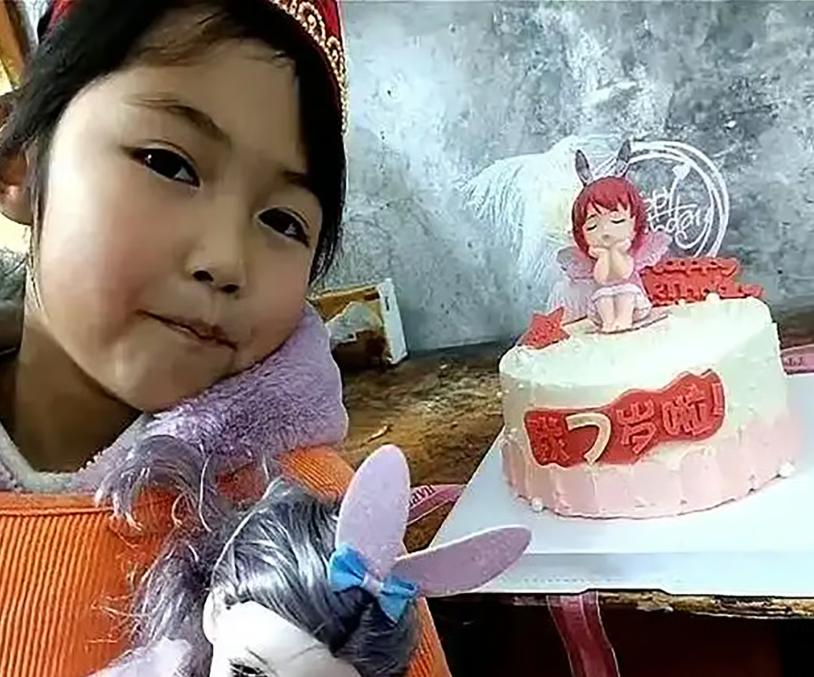
Recent photos shared online provide glimpses into Xinlei’s daily life. Her mother informed the media that medical checks confirmed she is in good health.
Now in primary school, Xinlei has blossomed into a cheerful girl who loves drawing and dancing and is excelling academically, according to mainland reports.
Her parents have turned her grave into a sunflower garden, which her mother affectionately calls Xinlei’s “magic garden,” believing it will bring the family good luck.
Updates on Xinlei’s story have recently reignited public interest online.
One netizen commented: “The girl has already been in the grave once, so that chapter is behind her. May little Xinlei have a smooth life from now on.”
Another user wrote: “This is the best news I have seen all year. This is what charity and social support should be about.”
China has nearly 300,000 people with moderate to severe thalassaemia, according to a 2020 official report.
Since 2015, authorities have implemented prevention programmes in high-risk provinces in southern China, including prenatal screening and medical subsidies.
Southern China is a high-risk area for thalassaemia, primarily due to historical evolutionary pressures linked to malaria, alongside geographic, climatic, and demographic factors. - South China Morning Post