JAKARTA: Concerns have arisen about the mounting volume of food waste generated by President Prabowo Subianto's flagship free nutritious meal programme, prompting calls for stricter waste management, an aspect critics argue has been overlooked since its rollout in 2025.
An assessment issued in April by Jakarta-based think tank Centre for Economic and Law Studies (CELIOS) estimated that between 62 million and 120 million meal packages prepared and distributed under the programme were wasted each week.
The weekly food waste included at least 7,700 tonnes of cooked rice and 3,400 tonnes of side dishes, causing the state to suffer up to Rp1.27 trillion (US$71 million) in economic losses.
According to the National Nutrition Agency (BGN), which manages the free meals programme, there are currently around 62 million beneficiaries across the country.
To address the problem, the Environment Ministry announced in early August its commitment to strengthening the circular economy approach to the free meals rollout, focusing on working with government-appointed kitchen partners nationwide to manage food waste.
Deputy Environment Minister Diaz Hendropriyono said some kitchens had already implemented the approach by turning leftover food and wastewater into livestock feed and other materials for agricultural purposes.
"What we may achieve quickly is to make food production become circular," Diaz said on Aug 1, as quoted in a statement issued by the Environment Ministry.
"We have the free meals programme with its kitchens everywhere, so our target is to support these kitchens in creating a circular ecosystem."
However, CELIOS researcher Isnawati Hidayah stressed that the circular approach would not solve the underlying problem of poor governance within the programme.
"The recently introduced circular economy approach will not erase the fact that the programme has produced a massive amount of waste," Isnawati said on Thursday.
"The free meals programme will continue to be a source of food waste because the government is unable to come up with a tangible solution to solve it," she continued.
Environmental group Greenpeace Indonesia has warned that the accumulation of organic waste in landfills could produce flammable methane gas and trigger various health hazards, while underlining that the huge volume of food waste represents "poor management of the free meals programme".
The high food waste from the free meals rollout has exacerbated a longstanding waste problem in the country.
Indonesia became the world's eighth-largest food waste producer in 2024, generating more than 14.7 million tonnes of food waste throughout the year, according to a United Nations report.
The BGN issued a regulation in March requiring kitchens to manage every leftover meal and all waste generated throughout the cycle of food planning, production and consumption.
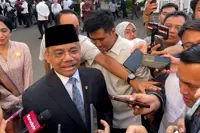
The agency will continue to monitor possible waste management breaches at kitchens nationwide, including those operating without adequate wastewater treatment facilities, BGN head Sudaryono said.
"We are encouraging [kitchens] to recycle large volumes of waste, such as turning used cooking oil into biodiesel," Sudaryono told The Jakarta Post after a press conference in South Jakarta on Wednesday.
Since its launch in January to reduce stunting rates, the free meals programme has also been plagued by repeated operational and governance challenges, including a string of foodborne illness incidents and an ongoing corruption investigation involving former senior BGN officials.
Sudaryono told Wednesday's press conference that the agency would continue monitoring possible breaches at kitchens nationwide, after mass food poisoning cases recently affected around 1,200 people in Semarang, Central Java, and Jayapura, Papua.
The BGN shut down the operations of nearly 900 kitchens across the country during Sudaryono's first week as the agency's chief.
He was appointed on July 22 by President Prabowo to replace former BGN head Nanik S. Deyang, who resigned citing health reasons.
Sudaryono, a politician from Prabowo's Gerindra Party, said violations of hygiene and operational standards, as well as insufficient wastewater treatment facilities, led to the closure of 883 out of 28,000 free meal kitchens nationwide. - Jakarta Post/ANN