PHNOM PENH: The Cambodia Minister of Information has renewed calls for the safe return home of more than 20,000 civilians still displaced by last year’s border conflict with Thailand.
He cited recent comments by the UN special rapporteur on the situation of human rights in Cambodia and the Chinese ambassador to reinforce the kingdom’s position that those forced from their homes have a right to return under international law.
Minister Neth Pheaktra noted that more than seven months after Cambodia and Thailand signed the Joint Statement of the Extraordinary General Border Committee (GBC) on Dec 27, 2025, the agreement had yet to be fully implemented because thousands of Cambodian civilians remain unable to return to their villages and farmland.
In an Aug 6 social media post, Pheaktra said the ceasefire agreement committed both governments not only to ending armed hostilities but also to ensuring that civilians affected by the conflict could return to their homes “safely, voluntarily and with dignity”.
“True peace cannot be measured merely by the silence of the guns,” he wrote.
“It must be measured by the day when more than 20,000 displaced Cambodian civilians can finally return to their homes and land safely, voluntarily, and with dignity. Until that happens, the commitments embodied in the Joint Statement of December 27 remain unfulfilled,” he added.
The minister argued that Thailand continues to obstruct the return of displaced Cambodians by maintaining military positions in areas Cambodia considers part of its sovereign territory, alleging that Thai troops have installed razor wire and placed shipping containers across access roads, preventing villagers from returning to their homes.
He also accused Thai forces of destroying civilian houses and infrastructure while creating what he described as “new facts on the ground” that contradict the commitments contained in the bilateral ceasefire agreement.
Thailand has consistently rejected Cambodia’s allegations that it is illegally occupying Cambodian territory and has maintained that its actions are consistent with its own interpretation of the border.
The renewed statement comes as Cambodia continues to frame the humanitarian consequences of the border conflict as an international law issue, rather than solely a bilateral territorial dispute.
During his first official mission to Cambodia last week, UN special rapporteur Thomas Andrews visited displacement sites along the Cambodia-Thailand border and called on both governments to expedite the return of civilians still unable to go home.
He stressed that people displaced by armed conflict have a right to return under international law and urged both countries to remove remaining obstacles preventing their return.
Earlier this week, Chinese ambassador Wang Wenbin also expressed confidence that the remaining displaced Cambodians would eventually be able to return home, describing their current hardship as temporary while reaffirming support for peace and stability along the border.
According to Cambodian authorities, approximately 650,000 civilians were displaced during the border conflict that escalated in 2025.
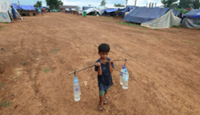
While the vast majority have since returned, more than 20,000 people continue to live in temporary shelters because they are unable to safely access their homes.
The conflict, which involved artillery exchanges, air strikes and ground fighting along several sections of the frontier, left both military personnel and civilians dead and injured, damaged homes, schools, pagodas and other civilian infrastructure, and triggered one of Cambodia’s largest internal displacements in recent years.
Pheaktra highlighted that the Dec 27 Joint Statement clearly stipulated that implementation of the ceasefire should not prejudice the international boundary between the two countries, while assigning the Joint Boundary Commission (JBC) responsibility for continuing border demarcation in accordance with existing treaties and agreements.
He said border issues should therefore be resolved through international law and established bilateral mechanisms rather than through military force or unilateral actions on the ground.
The minister called on Thailand to honour the commitments it accepted under the Joint Statement by removing obstacles preventing displaced civilians from returning, withdrawing from what Cambodia describes as unlawfully occupied territory and cooperating with the JBC to restore conditions that would allow affected communities to return home safely.
“The UN special rapporteur and the Chinese ambassador have both emphasised that the displaced Cambodian civilians must be able to return to their homes in accordance with international law,” Pheaktra wrote, adding their remarks reinforced Cambodia’s position that lasting peace requires more than a ceasefire.
“Peace cannot be complete until all civilians are able to return home,” he added. - The Phnom Penh Post/ANN