An elderly woman who developed heat stroke while taking shelter in a car is the latest fatality from a powerful earthquake that struck the southwestern prefecture of Kumamoto last week, officials said as concerns over heat-related illnesses grow in an area that is also suffering extreme temperatures.
The woman in her 70s with apparent heat stroke was found in a car, Kumamoto officials said, as they raised the death toll from the quake to 36.
The magnitude 7.1 hit Kumamoto Prefecture on Japan’s southern main island of Kyushu on Tuesday.
This latest death was what officials and experts had worried about amid high temperatures.
Kumamoto authorities were to start delivering leaflets to those taking shelter in their cars, urging them to stay in cool places and take sufficient liquids, and regularly take exercise to avoid blood clotting risks.
NHK public television said the woman was found dead on Thursday in a car without gas.
”It’s heartbreaking,” said Kumamoto governor Takashi Kimura, as he called on evacuees taking shelter in their cars to keep refueling their vehicles to run air-conditioning, or consider moving to air-conditioned evacuation centres to avoid similar risks.
The prefecture’s main challenge is the lack of fresh water still affecting nearly 47,000 homes, and fuel shortages as Japan suffers sweltering heat, stoking fears of heat-related illness.
The Japan Meteorological Agency said temperatures reached an “extreme heat” level of 36.6°C in Kumamoto city on Saturday and that they could go higher yesterday.
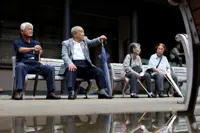
More than 9,000 people remain at crowded shelters, such as converted community centres, school gyms and classrooms, many of them lacking air-conditioning.
Many others slept in cars parked at town hall parking lots and parks, or outside of their homes, for privacy.
Experts have long criticised Japan’s crowded conditions at emergency shelters, arguing that a lack of sanitation and privacy creates additional stress and increases the risk of health problems for disaster-hit people.
Water, food and other necessities, including portable toilets, as well as air conditioners and partitions, were being delivered to improve conditions at the evacuation centres, Prime Minister Sanae Takaichi told a government task force meeting on Saturday.
“The government is determined to do everything we can,” she said.
On Saturday, authorities ended a massive dayslong search-and-rescue operation at the Aeon Mall, in the town of Kashima, after extracting five people and the bodies of seven others.
The site was one of the hardest-hit sites, after an explosion that followed the quake caused the walls and a floor to collapse.
The explosion, which the company said it believes was due to a gas leak, occurred after about 3,000 shoppers had been evacuated to a parking lot following the quake, but some employees remained inside. The mall’s second floor collapsed.
The overall number of missing in the hit prefecture remains unknown, and search operations pressed on, with thousands of Self Defence troops, police, rescue workers and sniffing dogs deployed.
The earthquake has left 105 people injured in Kumamoto, authorities said, and two in addition to the reported deaths are being investigated to determine if they are quake-related.
Over 180 homes were destroyed and more than 3,800 buildings were damaged, according to Kumamoto prefectural assessments. — AP