
For decades, Western carmakers complained that China forced them to hand over technology in exchange for access to the world’s largest auto market.
Now the tables have turned.
As Chinese carmakers capture global market share with cheaper, high-quality electric vehicles, countries including Canada and members of the European Union are embracing a “reverse tech transfer” strategy – by seeking Chinese investment and technology to strengthen their own industries.
The United States, however, is taking the opposite approach.
Tariffs on Chinese EVs have expanded, Chinese-owned auto companies are being banned or put on notice, and lawmakers are weighing new legislation to block the new global leader in electric vehicles.
Analysts say despite abundant scope for reverse tech transfer that could improve American carmakers’ competitiveness, Chinese companies would likely remain locked out of the market due to deep-seated barriers: geopolitical tensions, espionage concerns, economic protectionism, bipartisan opposition in Congress and resistance in local communities.
“The political aperture for such transfers has shrunk and is very narrow,” said Sourabh Gupta, resident senior fellow at the Institute for China-America Studies.
“There are meaningful opportunities for technology transfer from Chinese to American firms,” noted John Minnich, assistant professor at the London School of Economics.
“I remain sceptical that Washington will allow significant Chinese greenfield manufacturing investment in the US in the foreseeable future.”
Chinese EV technology faces steep barriers in the US
While US President Donald Trump has repeatedly suggested allowing Chinese carmakers to build manufacturing facilities in the US, his administration has aggressively moved to block their entry, citing espionage concerns, Beijing’s state subsidies and unfair competition.
It has maintained tariffs of more than 120 per cent on Chinese vehicles and tightened restrictions on US-assembled EVs containing Chinese software and hardware due to data security concerns.
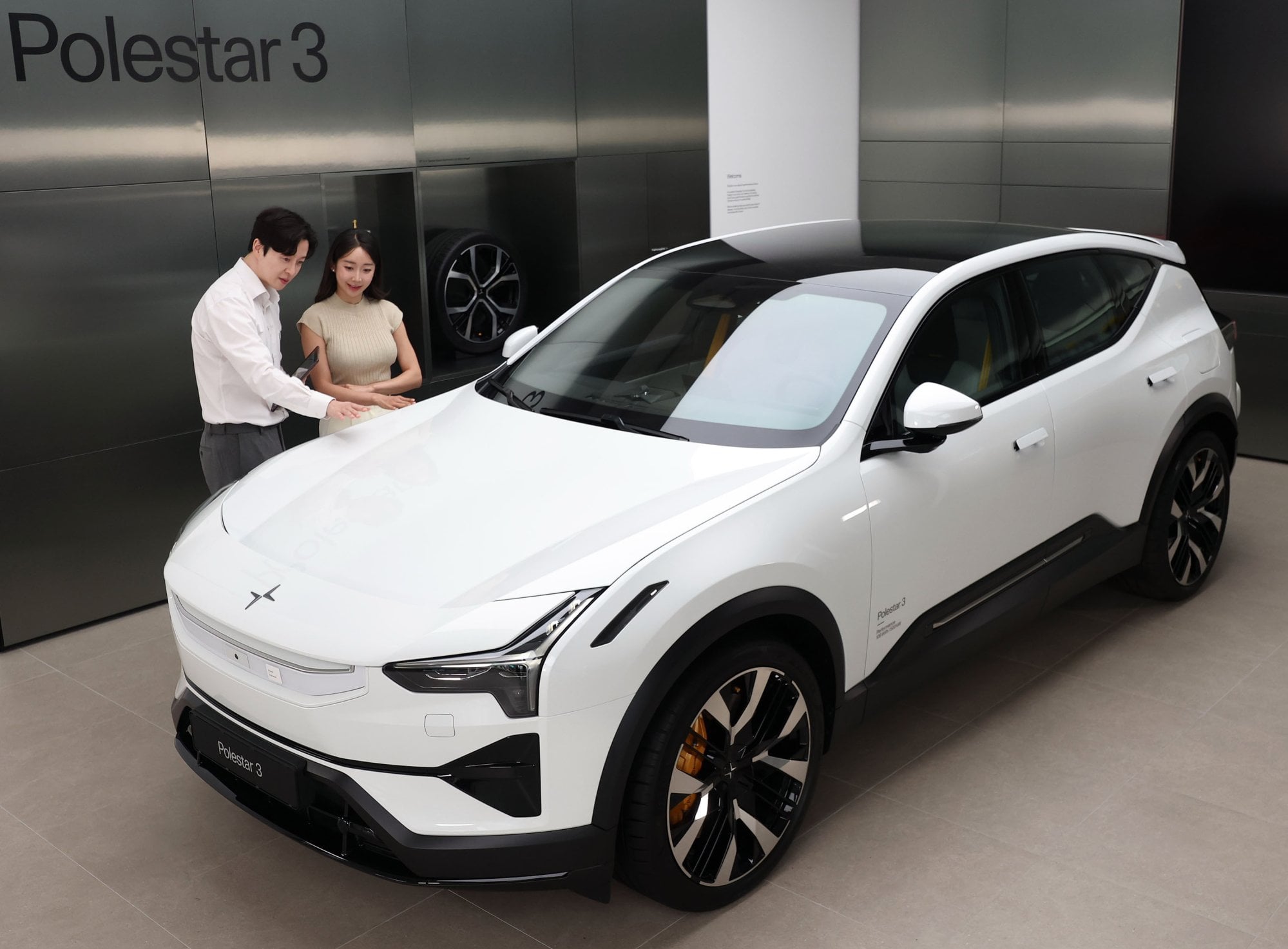
Last month, the Trump administration banned Chinese-owned EV brand Polestar from selling new vehicles in the US under the Commerce Department’s Connected Vehicle Rule, finalised in the final days of the Joe Biden administration.
The rule prohibits the import and sale of vehicles containing China-linked hardware or software, including Bluetooth, Wi-fi, cellular connectivity and certain satellite communication technologies, citing national security concerns over data collection.
Polestar, owned by China’s Geely Holding Group, assembles vehicles in the US. Its sister brands, Volvo and Lotus, have so far been allowed to continue operating under heightened government scrutiny.
In response to the ban, Polestar said it would increase its “strategic focus” on Europe by localising the manufacturing of future car models.
“Forget about Chinese technology; even US-assembled, Chinese-owned EVs may never make it onto US roads for any durable period of time, as the recent case with Polestar demonstrates,” said Gupta of the Institute for China-America Studies.
In April, the US Trade Representative Jamieson Greer ruled out any relaxation in regulations even if Chinese auto companies attempt to invest in the United States.
“Those rules are effective,” Greer said.
Despite the recent improvement in bilateral ties following Trump’s visit to China, the administration has kept the strategic auto sector out of the newly created Board of Investment framework.
Congress has also moved to pursue tougher measures, with lawmakers from both parties introducing multiple House and Senate bills to shut out China-linked electric vehicles.
Republican Senator Bernie Moreno and House Select Committee on China chairman John Moolenaar have introduced identical versions of the “Connected Vehicle Security Act” in the Senate and House, which would “prohibit the importation, manufacture, and sale of connected vehicles, software, and hardware linked to China”.
On Monday, both lawmakers opposed joint ventures with Chinese automakers and dismissed the idea that their presence could drive innovation in the US market.
“If you have a joint venture between, for example, BYD and Ford ... you would have a situation where you have an unbalanced deal because Ford has to live by US law and order, meaning private companies have to behave a certain way,” Moreno said at an event at the American Enterprise Institute.
“The Chinese model is very different. The Chinese government has the ability to dictate to BYD what to do.”
Moolenaar described the United States as an “innovator” and warned that Chinese companies would access American technology “legally or illegally” and use forced labour and unfair trade practices to drive US companies out of business.
“Not only is that an economic issue, but it’s also a national defence issue because you think of the arsenal of democracy – the manufacturing that we need for our defences,” he said.
“If we lose that capability in the United States, that puts our national security at risk.”
The Republican lawmaker from Michigan has also targeted Ford’s licencing agreement with China’s Contemporary Amperex Technology Co Ltd (CATL) – the world’s biggest battery maker – to manufacture energy storage systems in the state.
One of the few surviving US-China battery partnerships, the Ford-CATL plant in Marshall, Michigan, has also faced intense local opposition since its announcement in 2023.
Meanwhile, another multibillion-dollar EV battery plant proposed by Chinese company Gotion was abandoned in Michigan after years of persistent protests.
The Chinese embassy in Washington accused the lawmakers of overstretching “the concept of national security” to target Chinese companies, saying they had “politicised and instrumentalised” economic, trade and technology issues while making “fabricated allegations” such as forced labour claims.
“China firmly opposes such moves, will closely follow relevant developments, and will resolutely safeguard the legitimate rights and interests of Chinese companies,” embassy spokesman Liu Chang told the South China Morning Post.
Gupta said that a “China Derangement Syndrome”, stemming from Chinese auto leadership in the EV sector, was “compounding the stakes and incentivising short-term approaches”.
“It has less to do with revitalising manufacturing in the auto sector and more to do with politicians’ instinctive recourse to manufacture jobs behind protectionist barriers,” he added.
US legacy carmakers too have joined the political push to keep Chinese EV makers out. In March, five industry groups representing carmakers, including the Detroit Three – General Motors, Ford and Stellantis – as well as Volkswagen, Hyundai and Toyota, urged the Trump administration to act, calling Chinese EV companies’ presence in the US “a direct threat to America’s global competitiveness, national security and automotive industrial base”.
On Tuesday, Ford executive chair Bill Ford said China’s EV exports were rising because “they’re being subsidised by the Chinese government”, but acknowledged that keeping Chinese automakers out of the US market indefinitely was unrealistic.
“We have to go toe to toe with China. We can’t expect to keep them out forever, and we have to be able to beat them at their own game, even though we don’t have some of the advantages,” he said at an Axios event in Washington.
Protectionism may weaken American carmakers’ global competitiveness
Industry experts cautioned that this blanket isolationism could undercut the long-term global competitiveness of legacy carmakers and hurt consumers.
“If we protect the market for the next three years, I don’t think that the automakers will feel the urgency to have to reinvent themselves or disrupt themselves in a way that would be meaningful for their global competitiveness,” said Tu Le, founder of consultancy Sino Auto Insights.
Western carmakers are steadily losing ground in once-lucrative Chinese and European markets as domestic rivals gain traction, consumers shift towards EVs, and affordable non-Chinese alternatives remain limited.
Le also suggested that the Trump administration could address cybersecurity risks through a “data sovereignty framework” with adequate guard rails.
“If we want to force or restrict the use of Chinese suppliers on the connected hardware and software side, let’s do that,” he said.
“But if we are going to restrict certain components that might not pose a risk, then that’s unnecessary.”
The Trump administration’s rollback of electric vehicle tax incentives under the Inflation Reduction Act is also fuelling domestic complacency, according to Ilaria Mazzocco, a senior fellow at the Centre for Strategic and International Studies.
“Shielding from competition without creating pressure to innovate tends to create stagnant industries,” she emphasised.
To avoid stagnation, John Minnich of the London School of Economics noted that China introduced the so-called catfish effect policy in 2018 by allowing Elon Musk’s Tesla to build a wholly owned Gigafactory in Shanghai – a rare exception to its usual requirement that foreign companies partner with domestic firms.
He said the idea was to bring in a hypercompetitive foreign firm to both stimulate competition for local original equipment manufacturers and help nurture supplier ecosystems.
“It worked extremely well in China’s case and could probably benefit American automakers in the long run,” Minnich added.
According to Le, Canada’s approach of allowing limited Chinese EV imports offers a viable model for the US, though he conceded that it remains politically difficult.
“You can have them trickle in over a period of time,” he said.
“If they can give a financial commitment, let’s identify a handful of companies that want some sort of contract to build locally. Trump is going to force them to build in the United States, which is not necessarily a bad thing.”
But Gupta contended that intense political resistance and espionage concerns would prevent Chinese carmakers from entering the US market for the foreseeable future.
“The Chinese auto industry will essentially find itself on the outside, perpetually looking in, and excluded from the US market via both the direct and indirect routes.” -- SOUTH CHINA MORNING POST