




A decade after Beijing rejected a ruling on its South China Sea claims by an arbitral tribunal in The Hague formed under the United Nations Convention on the Law of the Sea, rival nations continue to manoeuvre for control. In the third of our series on the anniversary, Laura Zhou looks at why the gap between international law and geopolitical reality on the water has never been wider.
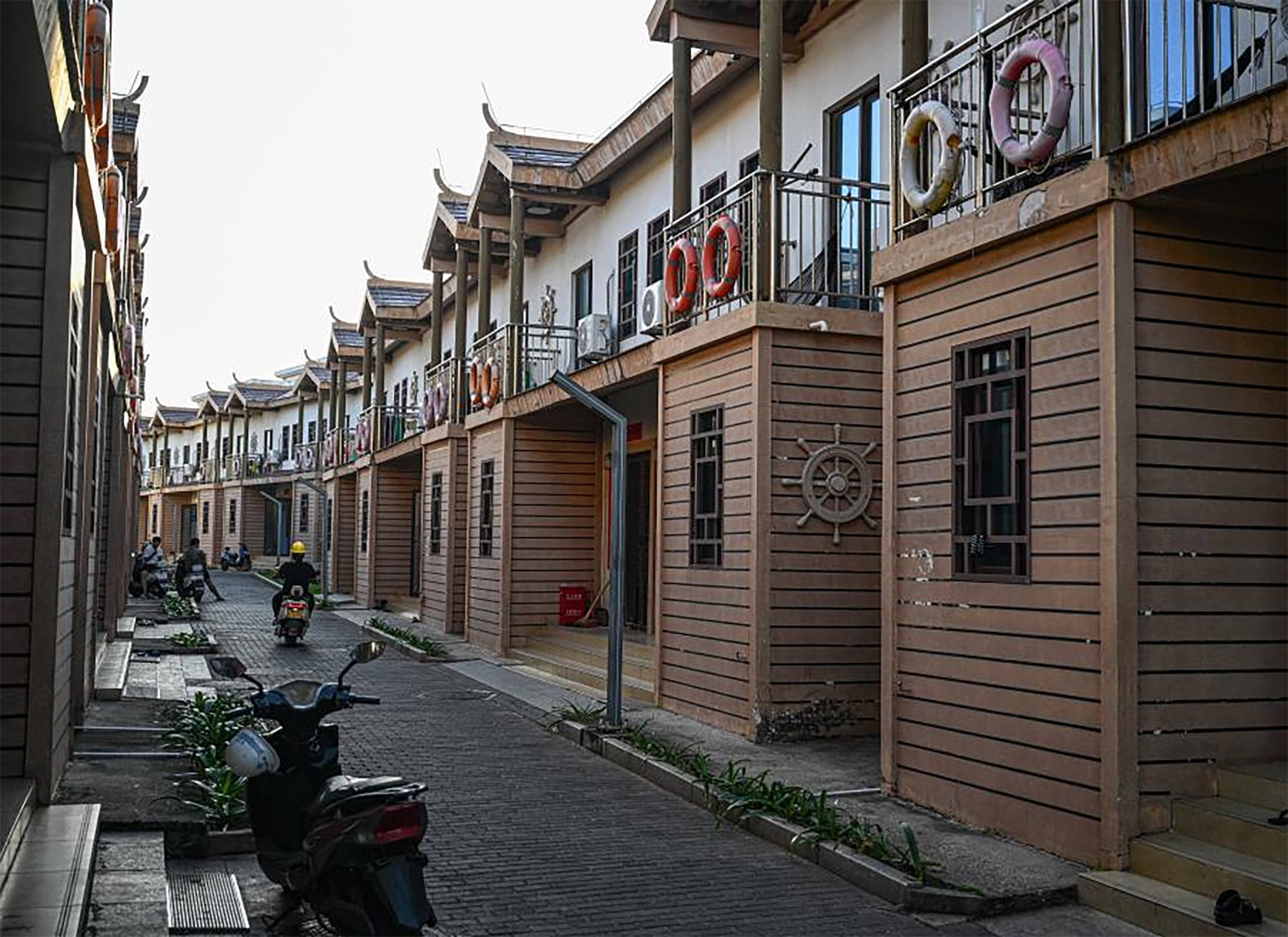
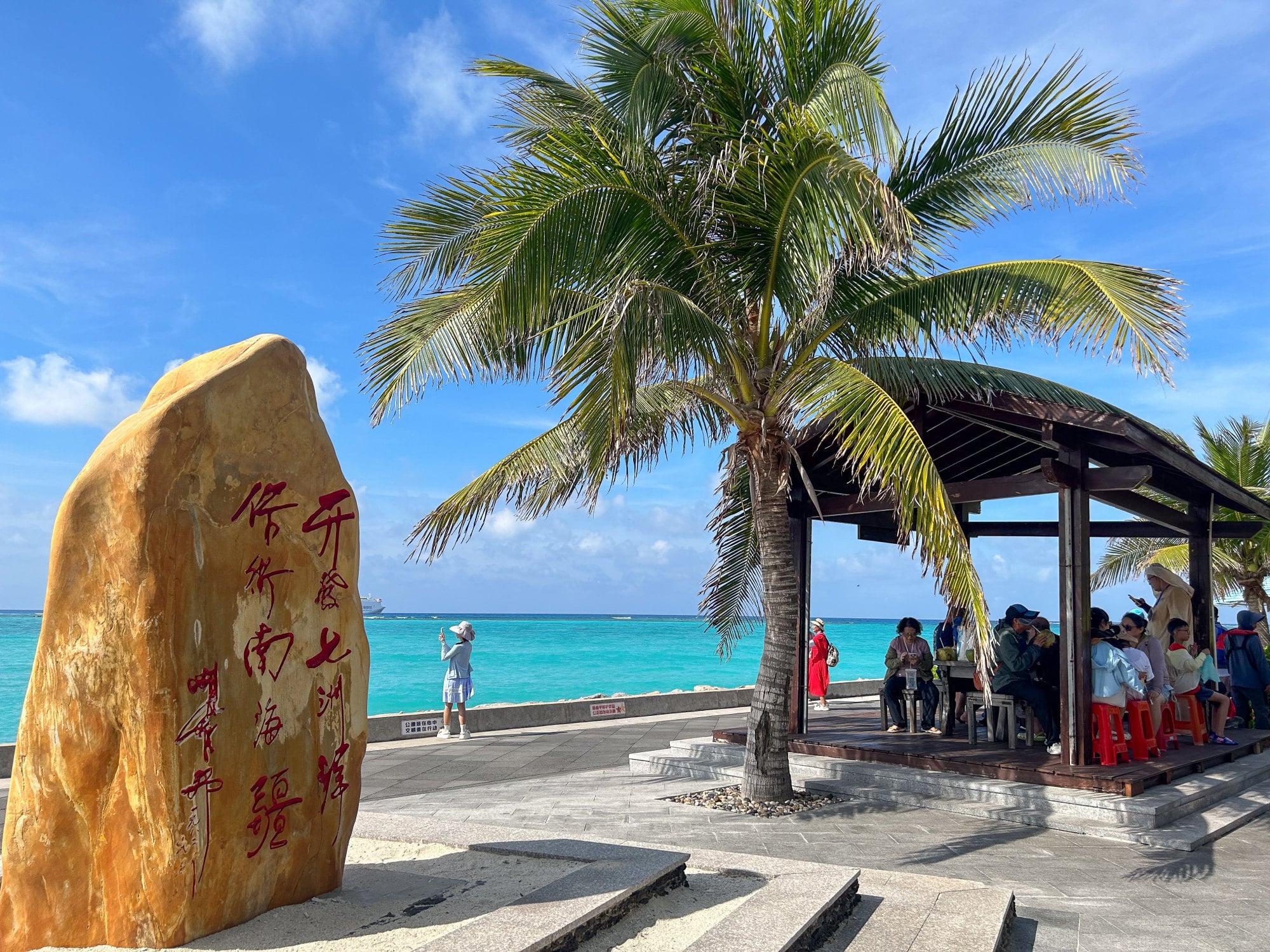
On a scorching morning this summer, more than a hundred Chinese tourists stepped ashore on Tree Island in the hotly contested Paracels.
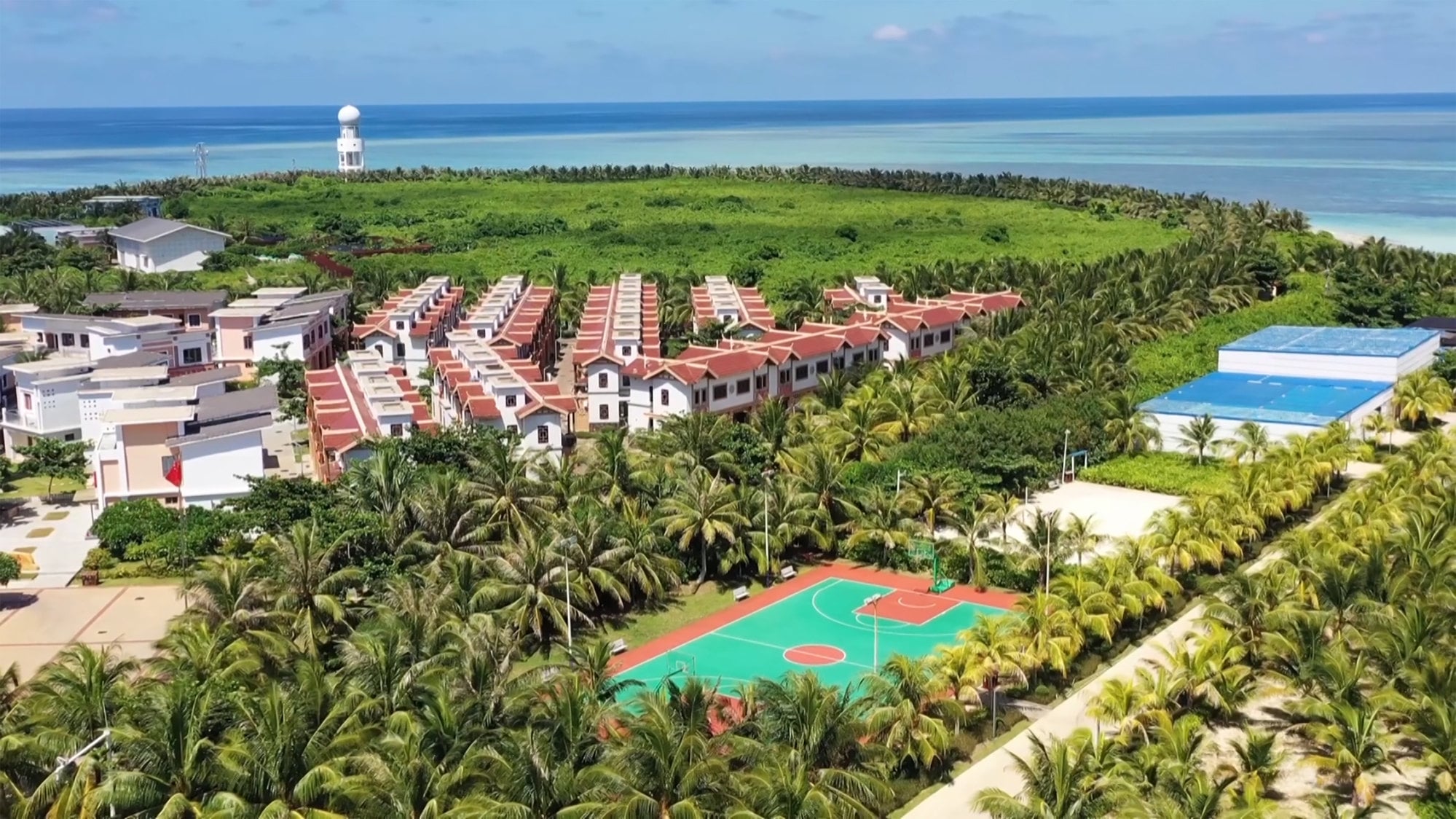
They were greeted not only by blue skies and turquoise waters, but also a sprawling array of modern infrastructure: gardens, two-storey houses and air-conditioned government offices to handle the administration of the island and some of those nearby.
On the clean, well-paved roads, electric sightseeing buggies carried visitors on tours that last only a few minutes.
There were also supermarkets, a helicopter pad, a waste-water plant, power stations and even a prison on the island, which is also known as Zhaoshu in China and Dao Cay in Vietnam.
“The island is 90 per cent covered in vegetation,” an island-based guide told the visitors.
Among them were schoolchildren who had just started their summer holidays and a retired teacher travelling alone.
A middle-aged businessman had come from Shenzhen and an elderly couple were accompanying their only son, who made last-minute work calls right up until departure.
They shared one goal: to witness the furthest frontier Chinese civilians could reach in the South China Sea.
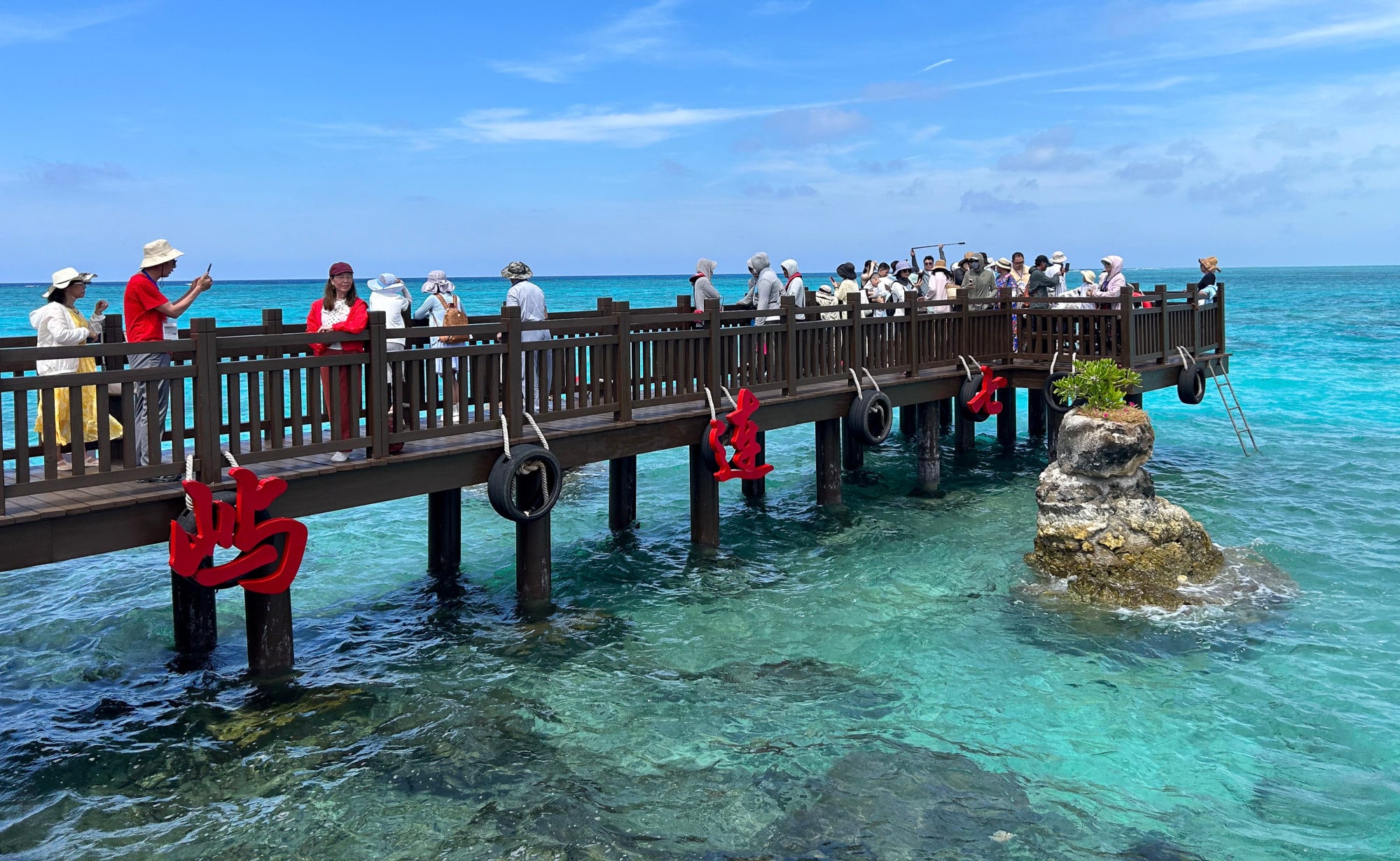
“No matter how remote the Paracels are, and no matter how difficult they are to reach, a journey to these islands is a solemn declaration of sovereignty over our motherland,” a guide said as the cruise, Nanhai Dream, or Dream of the South China Sea, weighed anchor.
Hearing this, the tourists packed inside the cabin spontaneously erupted into applause.
Once a small and remotely isolated outpost, Tree Island, which sits about 180 nautical miles (330km) from the port city of Sanya, underwent extensive land reclamation from 2016 to host new modern infrastructure – an effort forming part of Beijing’s broader island-building campaign in the South China Sea.
It is also a microcosm of Beijing’s more-than-a-decade-long campaign to cement its sovereignty and de facto control over the disputed waters through island-building – a strategy that observers say has effectively eclipsed a 2016 legal ruling that denied China’s expansive maritime claims.
This month marks the 10th anniversary of that ruling and in that time the gap between international law and geopolitical reality on the water has never been wider.
“There are a lot of people who say that international law is [only] as good as you are able to enforce it – but the problem is, despite the binding nature of the award, if there’s no way to enforce it, then what was the use of it?” said Collin Koh, a senior fellow at the Institute of Defence and Strategic Studies at the S. Rajaratnam School of International Studies in Singapore.
“What China is doing now is [exercising] physical control in the area, so that is the foremost impact.”
Some 200 fishermen are now living in new houses on Tree Island. Most are from Tanmen, a town in Hainan province where generations of residents have fished in the South China Sea.
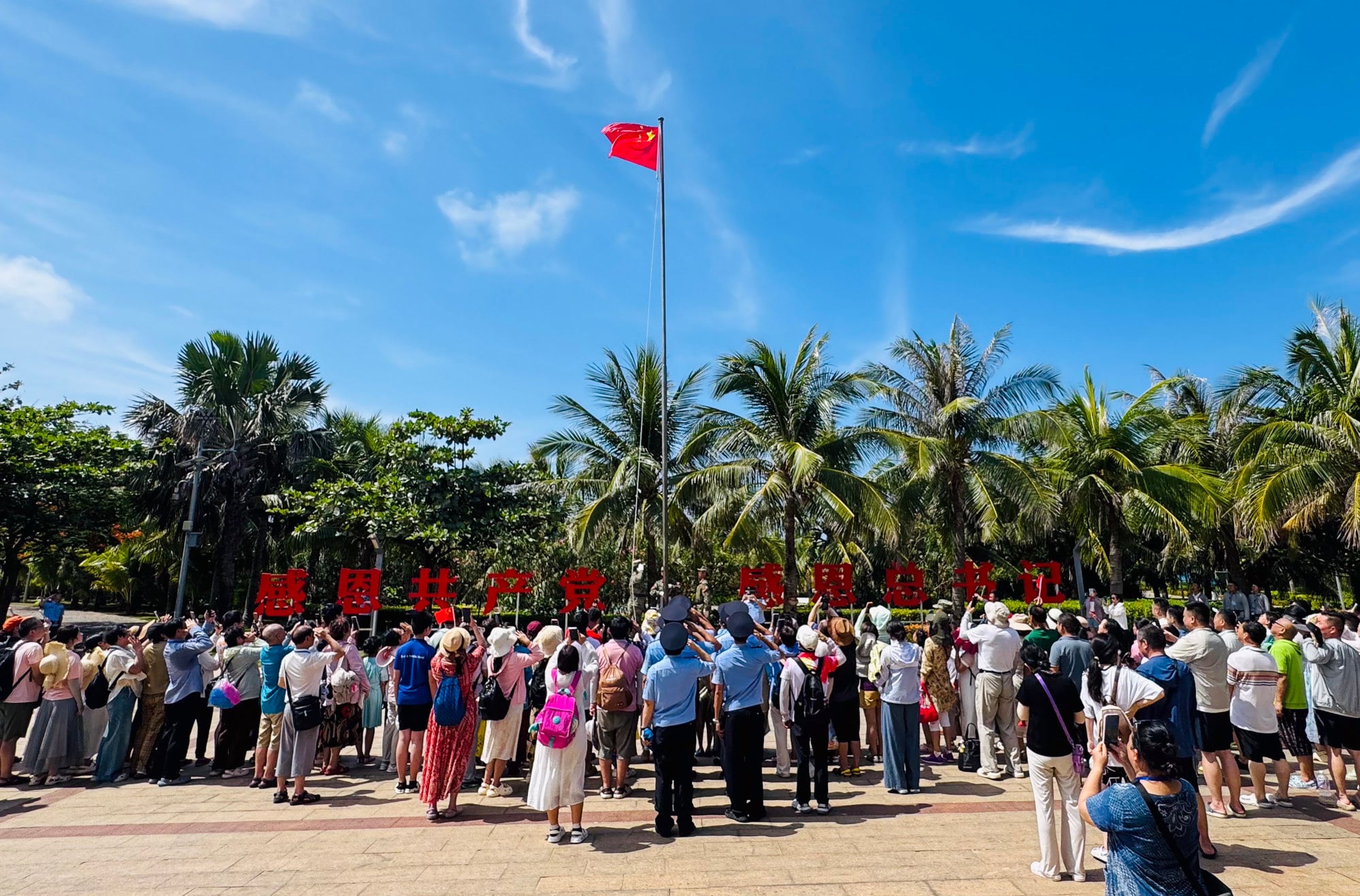
According to a local tour guide, the fishermen must live on the island for at least 180 days a year and go out fishing whenever the authorities require it.
About 8 nautical miles’ (15km) sail southeast of the bustling tourist docks of Tree Island lies Woody Island, or Yongxing Island, the political and administrative hub of the Paracels and home to the Sansha city government, established in 2012 to administer Beijing’s claims over important areas of the disputed waters.
With some 2,200 residents, the island is equipped with an airport, a cinema, banks, hospitals, post offices, a stadium and, since the end of last year, a shopping centre.
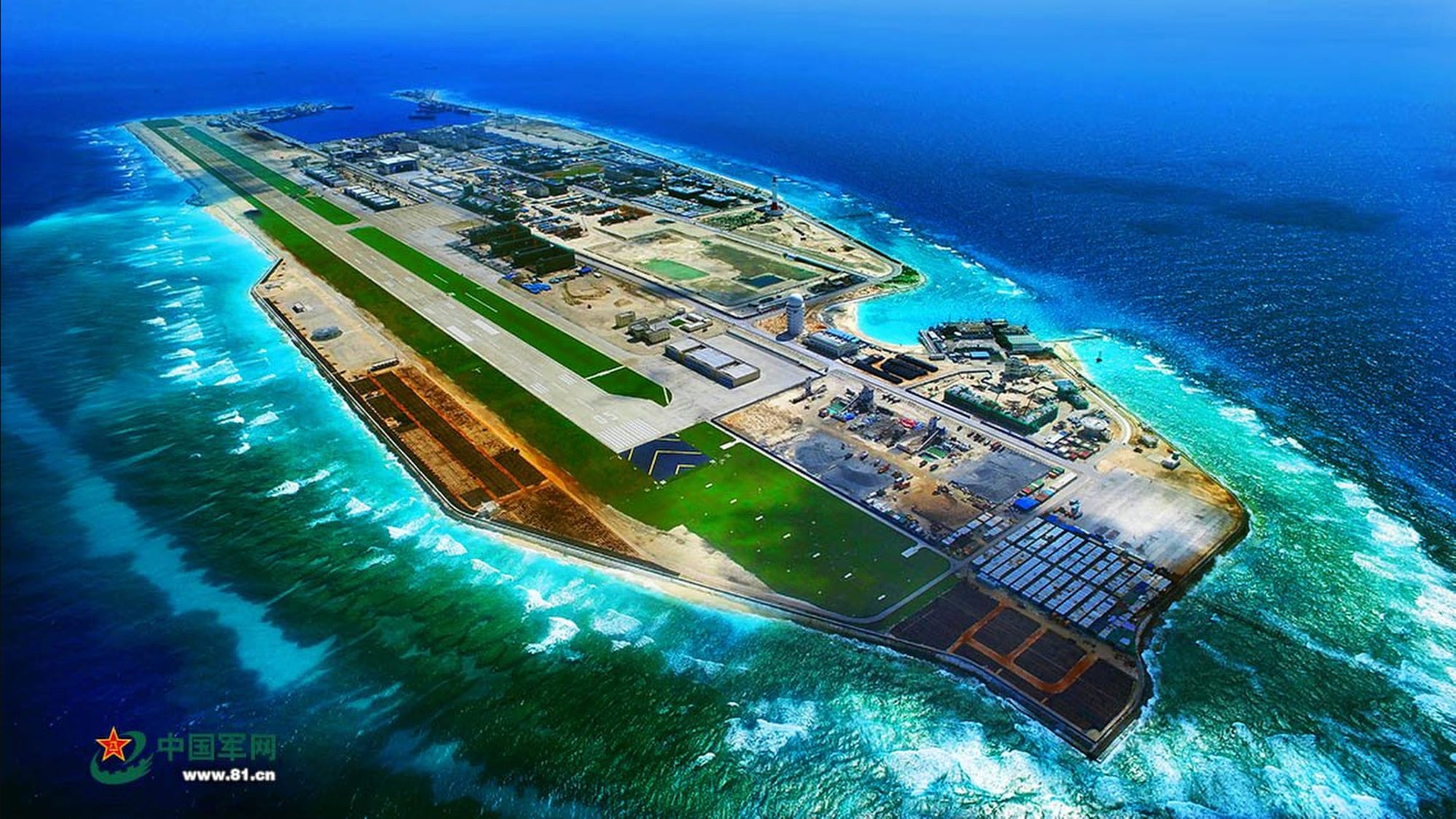
Further south, China has taken this strategy to an even grander scale, constructing artificial islands on at least seven coral reefs it occupies in the Spratlys, which are known as the Nansha Islands in China and are also claimed by Vietnam, as well as the Philippines, Malaysia and Brunei.
Among them, a trio of features – Fiery Cross Reef, Mischief Reef and Subi Reef, collectively known as the Big Three – have been fully militarised and equipped with naval berths, missile batteries and military-grade runways.
With the support of an aggressively expanding navy and coastguard and this network of infrastructure and military installations, Beijing could now exert unprecedented dominance over the South China Sea, said Alexander Vuving, a professor at the Daniel K. Inouye Asia-Pacific Centre for Security Studies in Honolulu.
“China’s building of artificial islands in the South China Sea is a game-changer. It kicked off a new type of activity never seen before, which has transformed both the geographical and geopolitical landscape in the region,” he said.
“With this enlarged maritime control, China now has huge geopolitical leverage in the region. China is approaching the point where it can close the South China Sea at will,” he added.
Beijing began its massive land reclamation campaign around 2013, soon after Manila submitted a case to an arbitral tribunal to challenge China’s claims in the South China Sea.
With the help of huge dredgers and bulldozers, more than 10 sq km (3.9 square miles) of land was created, seemingly out of thin air.
At first, China’s activities at sea appeared to go largely unnoticed. It was not until March 2015 that Admiral Harry B. Harris Jnr, the US Pacific Fleet commander at the time, publicly criticised China for creating a “Great Wall of Sand” in the South China Sea.
Beijing, meanwhile, scrambled to finish the core dredging of its major outposts by late 2015, months before the arbitral tribunal handed Manila a sweeping legal victory on July 12, 2016.
By the time the tribunal ruled that China’s artificial islands violated international law and had damaged the marine environment, the concrete had already cured – the legal verdict effectively met with a fait accompli on the water.
Since then, the Great Wall of Sand has proved its strategic value.
In 2019, for instance, China’s base on Fiery Cross Reef allowed its survey vessel Haiyang Dizhi 8 and its escorts to resupply and rest, enabling them to sustain a months-long deployment that ultimately outlasted Vietnam’s own vessels in the tense stand-off at Vanguard Bank, an oil-and-gas-rich reef controlled by Hanoi.
“Can you imagine if they had to go back to [their] home port and come back again?” Koh said.
Still, such strategic advantages could quickly erode in wartime, observers warned.
One limitation is the distance from the Big Three to the mainland – some 1,300km – according to Carlyle Thayer, a Southeast Asia specialist and emeritus professor at the University of New South Wales.
In a high-intensity conflict, these forward bases would find themselves directly under the shadow of US power projection, with the closest Philippine base accessible to the US military on Balabac Island in Palawan, a mere 260km from Mischief Reef.
Another challenge is the marine environment.
“Fiery Cross Reef, Mischief Reef and Subi Reef are all subject to the depredations of the marine environment such as corrosive salt water, heat and typhoons that cause military hardware, electronic systems and concrete structures to deteriorate and thus require continuous maintenance,” Thayer said.
While Beijing had significantly advanced its military capabilities over the past decade, these advancements could “only partially” mitigate the strategic limitations of the three forward operating bases, he added.
Vuving said technology could help mitigate the impact of climate change and rising sea levels on China’s island bases. But he added that at a strategic level, “nuclear deterrence can help China overcome its vulnerability in wartime”.
Yet, Beijing is not the only power reshaping the geography of the South China Sea.
Beginning in 2021, Vietnam raced to match Beijing’s playbook with a massive, accelerated dredging campaign of its own, transforming tiny reefs in the Spratlys into outposts with military runways and capable of hosting big ships.
According to a May report by the Washington-based Centre for Strategic and International Studies’ Asia Maritime Transparency Initiative, Vietnam had created an additional 216 hectares (534 acres) of land across the Spratlys since March last year, and landfill operations had been completed at several features, including Barque Canada Reef, now Vietnam’s largest base in the region.
Meanwhile, Beijing has jump-started new reclamation activities.
About 90km southwest of Tree Island, a massive artificial island is taking shape at Antelope Reef, a once mostly submerged coral feature in the Paracel Islands that is about 400km from Da Nang on Vietnam’s central coast.
Hanoi and Beijing have both said their new facilities are for civilian purposes.
Wu Shicun, founding president of the government-backed National Institute for South China Sea Studies in Hainan, said Vietnam’s land reclamation efforts were unlikely to significantly alter China’s position at sea in the short term.
“If Vietnam opens these expanding outposts to military and intelligence sharing with the US and Japan, it could pose a direct security threat to Chinese personnel and installations in the Spratlys,” he said.
“However, such a move is unlikely to disrupt Beijing’s long-term maritime dominance, law enforcement capabilities, or power projection in the region any time soon.”
Wu said it was unlikely that Beijing would build an artificial island at Scarborough Shoal, a triangular-shaped reef formation about 230km off the Philippine coast that is now at the centre of a maritime confrontation with the Philippines.
Philippine officials and regional analysts warned that Beijing could seek to build permanent facilities at the shoal, after Manila said last month that a floating platform, which appeared to be an antenna, was detected at the entrance to the lagoon.
Beijing later said it had carried out a scientific expedition in the area and described the platform as a temporary research installation.
Wu said any decision to build permanent facilities would depend on two factors: the level of security threat Beijing perceived from Washington, and its ongoing maritime law enforcement demands.
“If our law enforcement capabilities struggle to cope with so many maritime intrusions, we cannot rule out the possibility of building permanent facilities in the future to meet the replenishment needs of our coastguard vessels,” he said.
These could include medical and humanitarian facilities, Wu added.
“Ultimately, this does not depend on China: it hinges on whether Scarborough Shoal faces escalating security threats in the future. We simply cannot rule out that possibility.”
Meanwhile, regional observers are closely watching Antelope Reef to see whether it becomes the next focus of Beijing’s island-building playbook.
Vuving noted that with its major Spratly features built out, Beijing was likely to turn its attention back to the Paracels.
A Chinese reclamation attempt at Scarborough Shoal would risk pulling in the US under Washington’s defence treaty with Manila; the Paracels, however, faced no such tripwire, he said.
“Vietnam, the other claimant of the Paracel Islands, has no mutual defence treaty with any great power, and Hanoi has proven unable or unwilling to deter Beijing from enlarging its outposts in the Paracel Islands.”
Thayer said US President Donald Trump might not draw a hard line against China’s expanding presence in the South China Sea.
“Trump is unlikely to set any red lines regarding the construction of artificial islands because he views his relations with China in transactional terms. At present, the focus is on Taiwan and its future.”
Beijing sees Taiwan as part of China to be reunited by force if necessary.
Most countries, including the US, do not recognise Taiwan as an independent state, but Washington is opposed to any attempt to take the self-ruled island by force and is committed to supplying it with weapons. -- SOUTH CHINA MORNING POST


