BANGKOK: Thai health authorities are reviewing six private hospitals after 200 birth records involving foreign mothers and claimed Thai fathers were flagged for possible false registration.
The Public Health Ministry is examining birth and medical records at six private hospitals as part of a widening investigation into an alleged network that used Thai men as false fathers to help children of foreign mothers obtain Thai nationality.
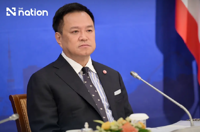
Public Health Minister Pattana Promphat said on Wednesday (July 15) that the Department of Health Service Support had requested records from the hospitals following a police investigation into birth registrations suspected of containing false information.
The department has so far received documents from two hospitals, with officials identifying 196 potentially suspicious cases at one hospital and four at the other. Records from the remaining four hospitals are expected to be obtained and initially reviewed by July 17.
Pattana stressed that the request for information did not mean the hospitals had committed offences. The department is currently gathering evidence and will determine responsibility separately in each case.
Two hospitals yield 200 records for review
Dr Phuwadet Surakot, director-general of the Department of Health Service Support, said officials were focusing on birth notifications involving foreign mothers and men recorded as Thai fathers because the claimed paternity could affect the children’s eligibility for Thai nationality.
A hospital-issued birth notification normally records the baby’s sex, date and time of birth, birth weight and the names of the parents. It must be signed by the person who delivered or witnessed the birth, the attending doctor and the hospital director responsible for the premises.
Officials will compare those documents with medical records, the parents’ identity documents and information used to place the child on a household registration.
Cases that remain suspicious could be referred for forensic examination and DNA testing to establish whether the man named in the documents is the biological father, Phuwadet said. A child’s nationality status could be reviewed if the claimed Thai paternity is disproved.
The department said the cases under examination appeared to involve conventional deliveries rather than in-vitro fertilisation. Officials therefore do not currently regard illegal surrogacy as the central issue.
Hospitals could face criminal and licence penalties
Pattana said knowingly submitting false information could constitute an offence under Section 73 of the Health Facility Act of 1998, carrying a maximum sentence of two years’ imprisonment, a fine of up to 40,000 baht, or both.
Investigators must establish who prepared, checked and approved each document and whether hospital owners, doctors, directors or other employees knew that any information was false.
Phuwadet said a private hospital has two principal responsible parties: the licence holder or owner and the medical operator. If either was found to have knowingly participated in wrongdoing, the findings could affect the hospital’s licence, including possible suspension or revocation.
Authorities will also examine whether hospital directors signing birth notifications conducted appropriate checks or were aware of irregularities involving the men identified as fathers.
Probe follows arrests in Operation Dragon Scale
The hospital inspections follow a multi-agency police crackdown known as Operation Dragon Scale, launched on July 9 against an alleged network arranging false paternity declarations for children of Chinese nationals.
The initial arrests included a medical-records employee at a private hospital in Bangkok’s Thonburi area and a district-office official. Police accused the hospital employee of helping Chinese clients arrange deliveries and prepare documents, while the district official allegedly assisted with subsequent birth registration.
Investigators alleged that the network advertised childbirth packages in China for about 70,000 baht and arranged for Thai men to acknowledge children with whom they had no biological relationship. Police believe some clients sought Thai nationality for their children to facilitate future ownership or control of assets in Thailand.
By July 12, authorities had reported the arrest of 33 suspects in the core investigation. Those under investigation included alleged proxy fathers, Chinese parents and people suspected of facilitating the registrations.
The investigation grew out of a broader inquiry into Chinese-linked scam and money-laundering networks. Suspicious financial transactions involving a Chinese woman whose children held Thai nationality prompted authorities to examine how the births and paternity had been registered.
The suspects have not been convicted, and the allegations remain subject to further investigation and court proceedings. - The Nation/ANN