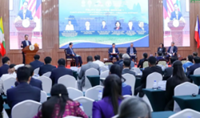
PHNOM PENH: The US and Cambodia have signed a new five-year memorandum of understanding (MoU) to expand cooperation on infectious disease research, reinforcing a scientific partnership that has grown over more than two decades.
The agreement, which took effect on June 3, was signed between the US National Institute of Allergy and Infectious Diseases (NIAID), part of the National Institutes of Health (NIH), and Cambodia’s Ministry of Health. It established a framework for continuing and broadening joint biomedical research aimed at strengthening both countries’ capacity to respond to emerging infectious diseases.
Under the MoU, NIAID will work closely with four Cambodian public health institutions: the National Centre for Parasitology, Entomology and Malaria Control (CNM), the National Institute of Public Health (NIPH), the Communicable Disease Control Department (CCDC) and the University of Health Sciences (UHS).
The agreement builds on longstanding cooperation that began in 2005 with research into drug-resistant malaria. Since then, the partnership has expanded to cover a much broader range of infectious diseases affecting both Cambodia and the wider region.
The renewed collaboration will support clinical, laboratory and translational research into parasitic, bacterial and viral diseases, while also focusing on improving diagnostic tools, treatments and disease prevention strategies. Researchers from both countries will also cooperate through joint scientific projects, workshops, researcher exchanges and training programmes for scientists, public health professionals and students.
US officials said the partnership supports efforts to strengthen global health security by improving preparedness for diseases with the potential to spread internationally.
Priority research areas include mosquito-borne illnesses such as dengue, chikungunya and Zika, as well as avian influenza (H5N1) and antimicrobial-resistant bacterial infections.
By studying these diseases in real-world clinical settings, researchers aim to generate evidence that can improve early detection, strengthen outbreak response and support the development of more effective public health interventions before diseases spread more widely.
Scientific findings generated through the collaboration will be shared with the international research community through publications and open-access data, supporting broader global efforts to combat infectious diseases. - The Phnom Penh Post/ANN