




Taiwan gained critical information about Beijing’s ballistic missile launch this week thanks to the island’s long-range early-warning radar system and intelligence sharing with Washington.
The island’s AN/FPS-115 Pave Paws long-range early-warning radar detected the missile soon after it was launched from a nuclear-powered submarine in the South China Sea, the Liberty Times reported on Wednesday, quoting a senior Taiwanese official.
The system tracked the missile’s trajectory during the initial phase of flight while it remained within the radar’s coverage, the official said.
The giant radar is housed at the Leshan Radar Station in northern Taiwan’s Hsinchu county and was bought from the United States.
At 2,600 metres above sea level, it can detect missile launches up to 5,000km (3,100 miles) away, making it a cornerstone of Taiwan’s early-warning network.
The radar’s range allows it to monitor a wide area covering mainland China, the South China Sea and the Korean peninsula. Taiwan’s customised version of the system has also been upgraded to improve detection of low-altitude cruise missiles and tactical ballistic missiles.
The official said that as the missile travelled eastward, Taiwan shared intelligence with the United States.
During the later phase of the flight, after the missile moved beyond the coverage of Taiwan’s radar, US satellites and long-range early-warning radars supported tracking and monitoring, the official was quoted as saying.
After Beijing announced the launch, Joseph Wu, secretary general of Taiwan’s National Security Council, posted a map on social media showing the missile’s trajectory.
According to the map, the missile was launched from waters near the mainland’s southern coast, flew over the northern Philippines, and eventually landed in international waters between Nauru and Tonga. Wu also said the missile was a JL-2, a second-generation intercontinental-range submarine-launched ballistic weapon.
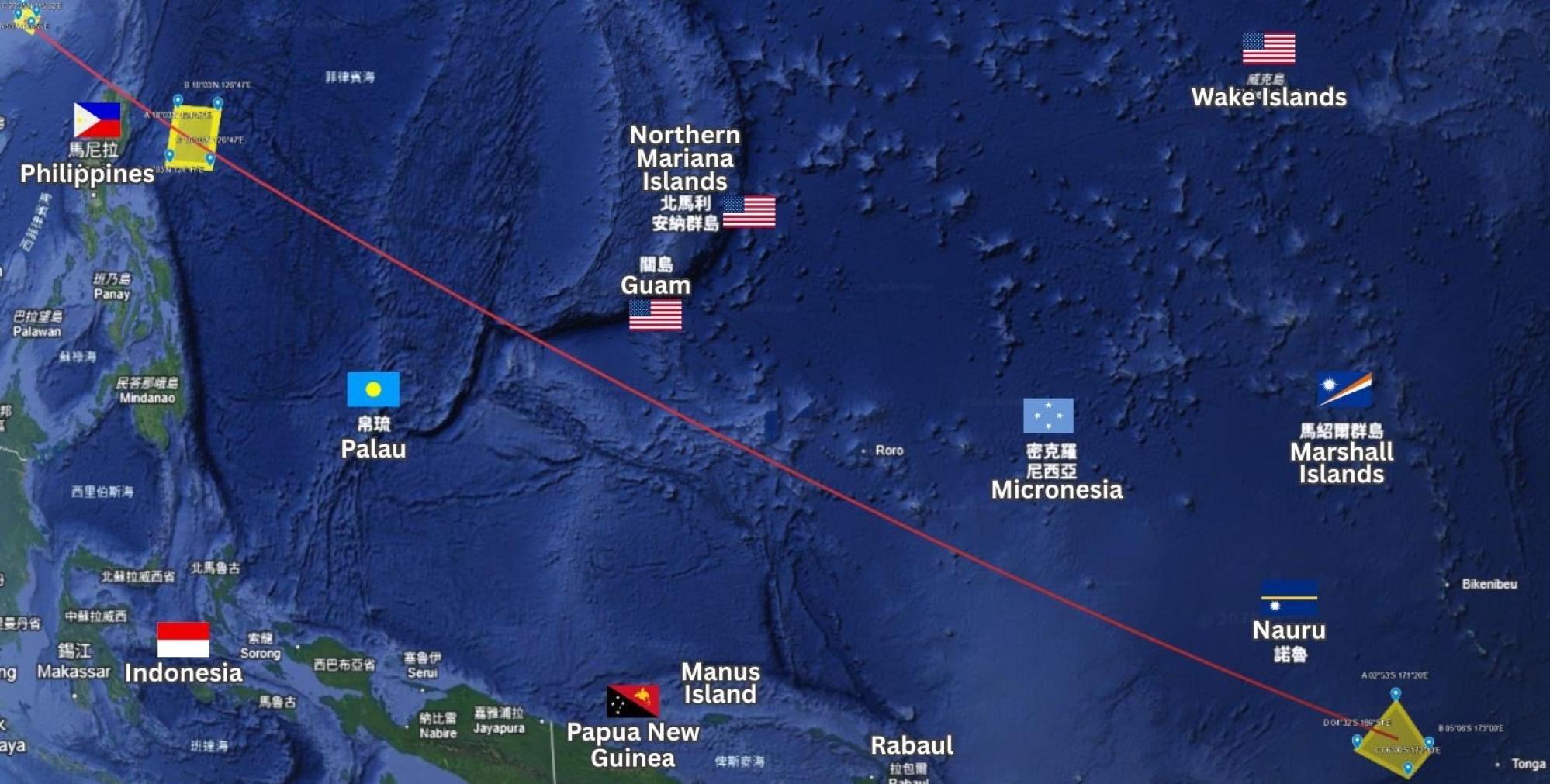
Such information is rarely made public and – as tensions rise across the Taiwan Strait – appears to show the extent of the island’s ability to detect Beijing’s missile activities in real time.
Senior Taiwanese officials previously said the Pave Paws system also monitored People’s Liberation Army activities such as missile launches into waters east of Taiwan.
The island is seeking to deepen defence cooperation with Washington, including in intelligence sharing, according to a report released by Taiwan’s defence ministry last year. Beijing has long opposed military cooperation between Taiwan and Washington.
Beijing has not revealed the missile type or the exact launch route in the test on Monday.
Military analysts have debated whether the test involved the JL-2, or the more advanced and longer-range JL-3 submarine-launched ballistic missile, and whether it was launched from waters such as the Bohai Sea in the country’s north.
The AN/FPS-115 radar, developed by US defence contractor Raytheon, became fully operational in 2013 and is believed to play a critical role in Taiwan’s early-warning architecture in the event of a conflict with the People’s Liberation Army.
Independent security news outlet The Defence Blog reported that the system could detect ballistic missile launches shortly after they rose above the radar horizon. It could also monitor air-breathing targets, including aircraft and cruise missiles, as well as maritime activity in the Taiwan Strait, it said.
However, concerns have grown in Taiwan that the radar, which cost about US$1.4 billion, could become a major PLA target in a conflict.
Those concerns gained further attention after reports that the AN/FPS-132 Block 5 upgraded early-warning radar in Qatar was damaged during an Iranian attack earlier this year. Taiwanese military experts have said the island should draw lessons from the incident and strengthen defences around the Leshan site.
Beijing sees Taiwan as part of China and has not ruled out the use of force to achieve reunification. Most countries, including the United States, Taiwan’s top international backer, do not recognise the self-governed island as an independent state. However, Washington is opposed to any attempt to take Taiwan by force and is committed to supplying it with weapons for its defence. -- SOUTH CHINA MORNING POST


