The US share of Brazilian exports fell to its lowest level since 1997 in the first half of 2026, while China widened its lead as the country’s top trading partner, according to the American Chamber of Commerce for Brazil, whose report landed as Washington held public hearings on a proposed new round of tariffs against Brazilian goods.
American buyers took 9.4 per cent of Brazilian exports between January and June, down from 12.1 per cent a year earlier and the smallest share in the chamber’s records. China’s share rose to 31.5 per cent from 28.9 per cent, nearly a third of everything Brazil sells abroad.
Brazilian exports to the US fell 13 per cent in the half, to US$17.4 billion, while shipments to China jumped 21.9 per cent, the chamber’s report showed.
The decline pushed total trade between the two countries down 12.8 per cent, to US$36.4 billion, with goods subject to American surtaxes dropping 20.5 per cent in the 12 months through June.
China now ranks as the top trading partner for 14 Brazilian states, according to ApexBrasil, the government trade promotion agency. The shift reverses the map from two decades ago, when 17 states counted the US as their largest market, compared with six today.
Brazilian exporters have responded by hunting for new buyers, with 72 per cent of the companies assisted by the agency opening at least one market since the tariffs were imposed.
Fruit growers turned to India and Southeast Asia, while coffee exporters shifted volume to Europe, where Germany replaced the US as the top buyer of Brazilian beans, according to industry group Cecafe.
Figures revealed one year after Trump’s 50 per cent tariff on Brazilian goods
The figures arrive one year after US President Donald Trump announced a 50 per cent tariff on Brazilian goods on July 9, 2025, citing among other reasons the prosecution of former president Jair Bolsonaro.
The US Supreme Court struck down the original levies in February, and Washington replaced them with a 10 per cent global tariff under a different legal basis. Sector tariffs of up to 50 per cent on steel, aluminium, copper and vehicles remain in place.
Washington’s US Trade Representative (USTR) held public hearings on Monday and Tuesday on its proposal of an additional 25 per cent tariff on Brazilian goods.
The measure came out of a year-long investigation under Section 301 of the 1974 Trade Act, covering six areas from digital trade and ethanol to intellectual property, anti-corruption enforcement, preferential tariffs and deforestation.
A separate investigation into forced labour produced a proposed 12.5 per cent levy in June, and both decisions now rest with Trump, with a final recommendation due by July 15.
Lula attacked for his trade ties with Beijing
Senator Flavio Bolsonaro, son of Brazil’s former president and a presidential candidate, testified at the sessions against new tariffs while attacking Brazilian President Luiz Inacio Lula da Silva over his ties with Beijing.
“At every moment he licks China’s boots and throws stones at the United States,” the senator said in a social media broadcast after his testimony on Tuesday. “He puts ideology above the interests of the Brazilian people.”
Flavio Bolsonaro asked the agency to drop the 25 per cent tariff and any measure against Pix, Brazil’s instant payment system.
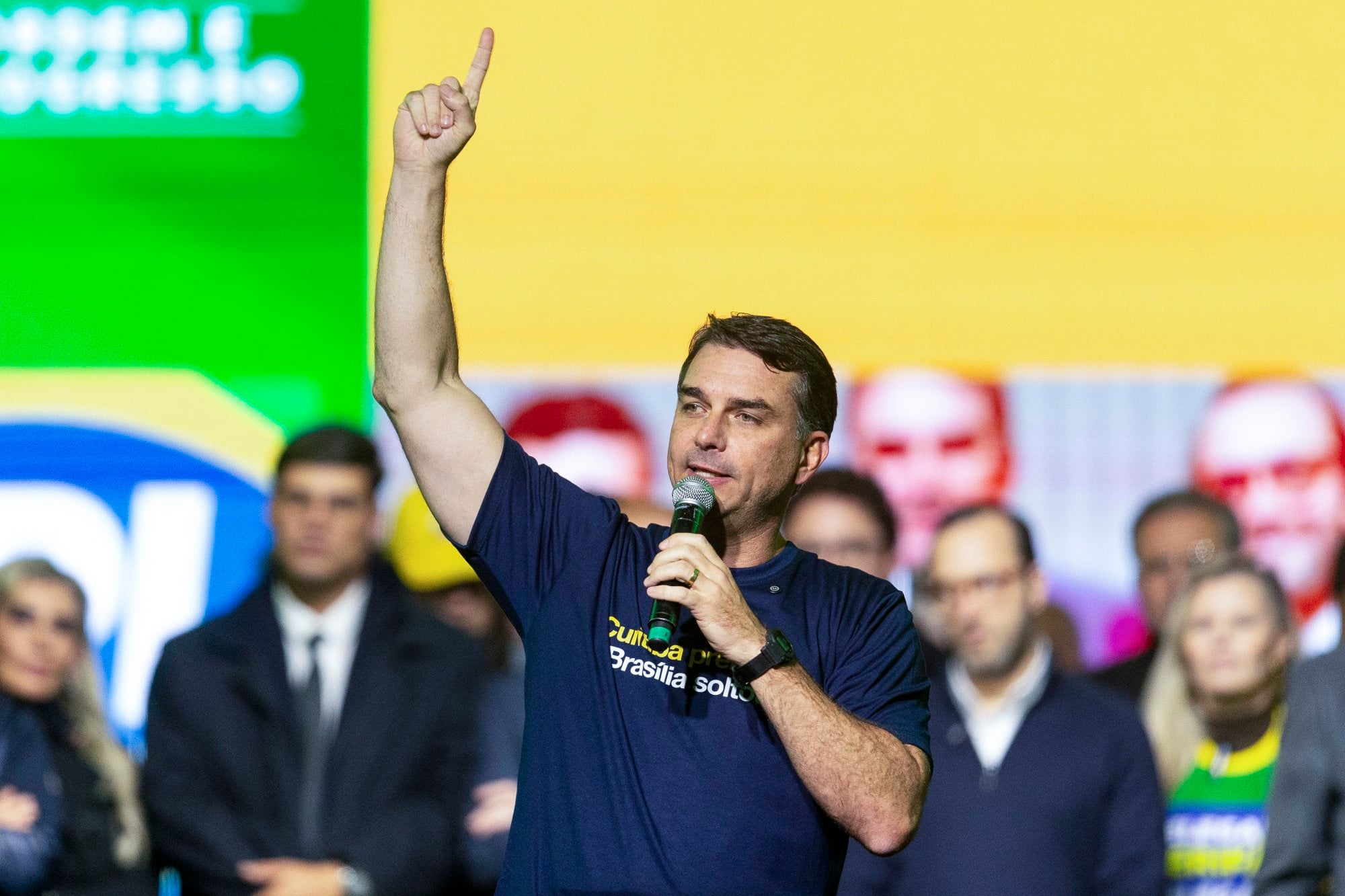
He proposed a bilateral negotiating mechanism with a fixed deadline covering the six areas under investigation, and floated a hemispheric free trade agreement he called Afta, which could include Argentina, reviving an idea Washington abandoned two decades ago.
Coca-Cola, Tesla and eBay were among the American companies that filed comments against the tariff before a July 1 deadline.
Coca-Cola asked for exemptions on Brazilian orange and lemon inputs, noting that Florida’s orange crop fell from 242 million boxes in the 2003–2004 season to 12 million in the latest one.
Tesla asked the agency to spare Brazilian components needed for US manufacturing until domestic supply expands, while eBay argued that taxing second-hand goods punishes resellers rather than the manufacturers under investigation.
The Brazilian government declined to register for the hearings and sent embassy observers instead, arguing the forum is no substitute for direct negotiation between governments.
Foreign Minister Mauro Vieira told the agency in a written response last week that it had not shown any discriminatory practices by Brazil. Officials in Brasilia privately expect exemptions or a reduction rather than a full reversal, local newspaper Folha de S. Paulo reported on Wednesday. -- SOUTH CHINA MORNING POST