Landslides, floods, strong rainstorms and tornadoes have led to multiple deaths across China, with meteorologists warning the country faces “complex” disaster prevention challenges this year.
The annual flood season, which officially began on July 1, would be affected by global warming and El Nino, they said.
President Xi Jinping ordered “all-out” emergency rescue and relief efforts, medical treatment for the injured and resettlement for affected residents, state broadcaster CCTV reported on Tuesday.
“All local governments should tighten accountability for disaster prevention and relief, thoroughly check rivers, lakes, reservoirs and other regions prone to geological disasters, strengthen early warning, prevention and relief work and ensure the safety of people’s lives and property,” he said.
In southern China’s Guangxi Zhuang autonomous region, the flood alert was upgraded to red, the strongest in a four-tiered system, on Monday midnight. Water levels at 70 monitoring stations on 55 rivers were above the warning level, authorities said.

A central government task force was sent to the scene to monitor the typhoon’s passage and flood prevention efforts. It also called for volunteer teams with inflatable boats and storm boats to aid rescues.
There were also reports of a collapse at a snake farm in Hengzhou, causing around 900 of the reptiles to escape. A viral video showed people standing in waist-deep flood with bamboo sticks, trying to capture the escapees.
Village official Wu Zhi told Red Star News that most of the snakes were not venomous and a team of 10 had been organised to capture them with fish nets and stun guns. He warned villagers not to try to catch snakes by hand if they found any in their homes.
By Tuesday afternoon, heavy rainfall had caused 62 rivers across the country to rise above flood warning levels, central authorities said, with the Qingshui River in Guangxi recording the biggest flood in its monitoring history.
In the neighbouring province of Guangdong, the first flooding red alert was issued on Tuesday for parts of the West River in Zhaoqing.

The water level was expected to rise to 22 metres (72 feet) by Wednesday morning – higher than the dam in the neighbouring county – and keep rising, the government said. As of Tuesday afternoon, a total of 128 rainstorm alerts had been issued across the province.
A landslide at a village in Longnan in the northwestern province of Gansu buried 33, state broadcaster CCTV reported on Tuesday morning. At the time of the report, 21 people had been rescued, including five who later died.
The local weather station had warned of heavy rain and wind on Monday evening, cautioning that flooding and geological disasters were possible.
The official Gansu Daily also warned about land and mudslides on Monday, telling the public to watch out for signs, including thundering sounds in valleys and rivers changing to a muddy colour.
In central China, 11 people died and one was reported missing after rainstorms and tornadoes hit the region.
Parts of the central province of Hubei were hit with strong winds and rain on Monday night, according to the province’s emergency management department.
In its easternmost city Huanggang, 173 people were injured, while 269 were evacuated to hotels or relatives’ homes. Rooftops, roads, trees and farms were damaged, the local government said.
Videos circulating on social media show residents desperately trying to keep shop doors closed, while umbrellas, chairs and tree branches fly across the road in what meteorologists said was the first tornado to hit the province in several years.
The emergency management department said more than 3,500 rescuers were deployed across the province to provide disaster relief.
Meteorologist Wang Xiaoling told Hubei Daily on Tuesday that tornadoes were rare in the province, with the last one recorded in 2021.
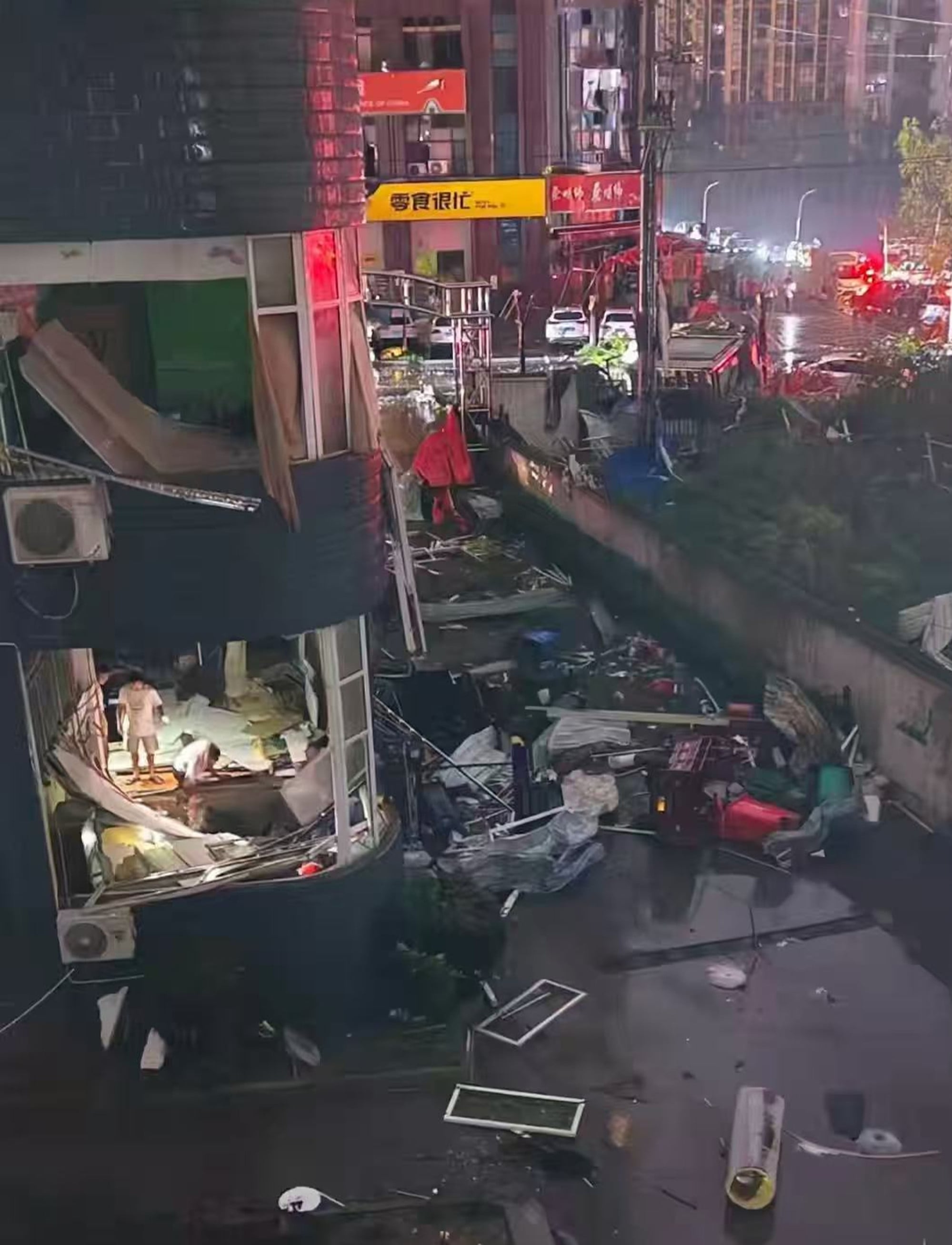
This one was caused by remnants of Typhoon Maysak meeting a local rainstorm and cold air from the northeast, creating strong vertical winds, she said.
The tornado’s wind speed was around 40 metres per second (131ft/s), and it had a powerful suction that could easily tip over cars and cause damage with the debris it picked up, Wang added.
As of Tuesday morning, the province still had 117 rainstorm and strong wind alerts, with authorities cautioning the public to be prepared for emergencies and to defend against other disasters.
Even northeast China is affected, with Jilin province issuing alerts on Monday night for several days of rain and strong wind, with high risk of flooding along the Songhua, Dongliao and Yalu rivers.
On China’s social media platforms, many people pleaded for help.
One post on the popular app RedNote said that a number of pregnant women were trapped in a hospital in Guigang, eastern Guangxi, and asked if there were boats that could send in more medical staff to assist.
Another post said that in the previous 24 hours, Binyang county had had as much rainfall as it normally reported in six months. Many were without water, electricity and food. “We hope that help can arrive soon, I pray for my hometown.”
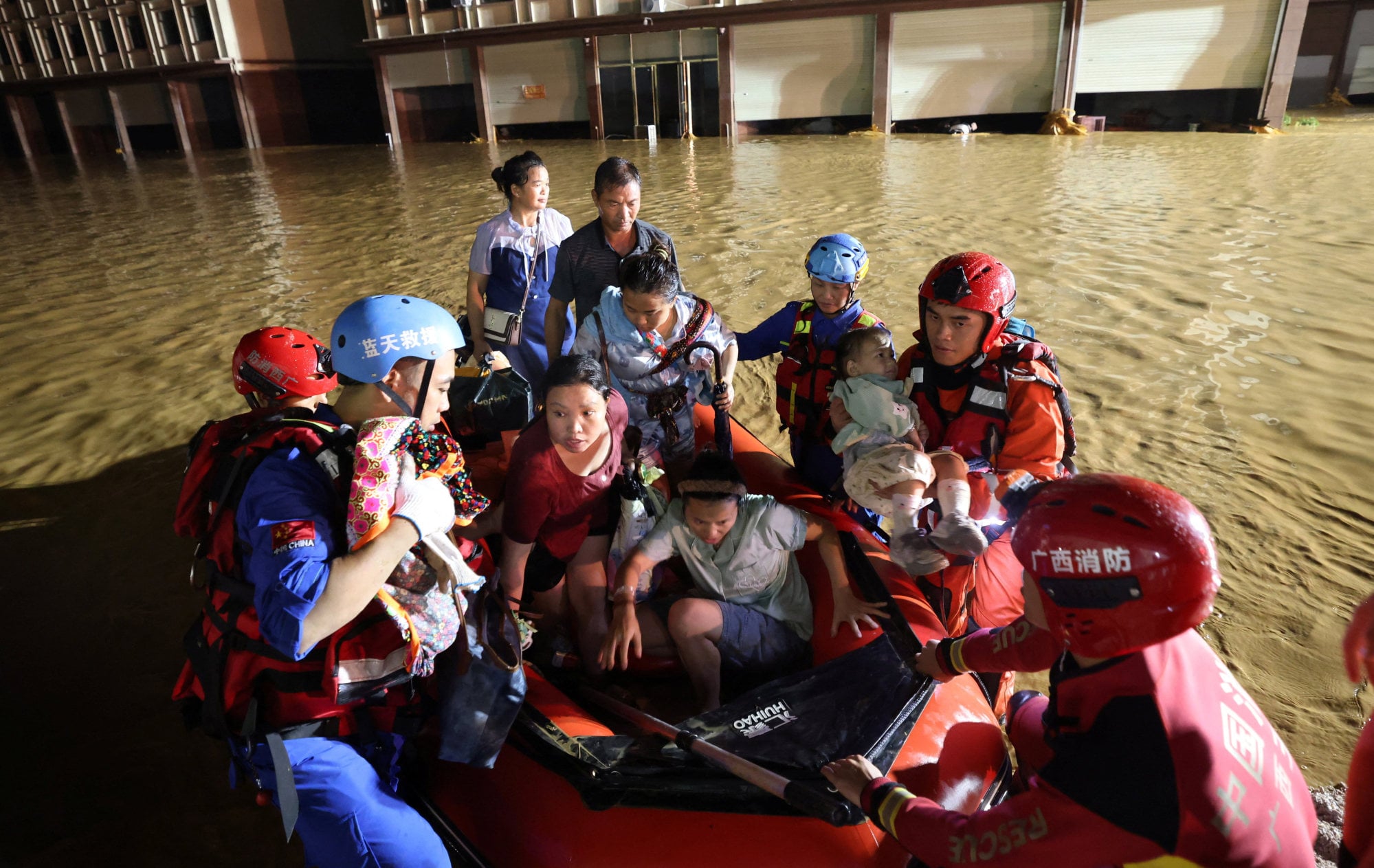
Grass-roots organisations, such as the non-profit Zhuoming Disaster Information Service Centre, have been collating distress calls and calculating what help will be needed.
According to its live map, at least 4,000 people in Guangxi had asked for help as of noon on Tuesday.
An earlier assessment by the Ministry of Water Resources predicted multiple rain belts in southern China, while northern China faced a higher risk of flooding, with powerful typhoons tracking north and affecting inland regions.
Liu Changjun, director of the Research Institute of Flood Control and Drought Disaster Reduction at the China Institute of Water Resources and Hydropower Research, said the country faced a “complex and severe” situation this year.
With global warming and the possibility of a stronger El Nino event in the Pacific, China was experiencing meteorological disasters it had not had in the past, he told news portal The Paper.
“The defence mindset must shift, from flood control based on historical experience to flood control based on extreme scenario planning,” he said.
“The focus must expand beyond major rivers and large reservoirs to include medium and small-sized rivers, minor reservoirs, mountain torrent channels, urban drainage systems, and grass-roots evacuation and early-warning protocols.”
Super Typhoon Bavi, which is ravaging the US Pacific islands, is predicted to land in China on Sunday, according to CCTV. -- SOUTH CHINA MORNING POST