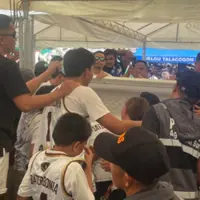
The government is rethinking school safety measures and looking to expand civil defence planning to cover gun violence, officials said, a day after a deadly attack at a high school shocked a nation where such incidents are rare.
At least three students were killed and 20 others injured when two of their schoolmates, aged 14 and 15, opened fire at a public high school in Tacloban City, southeast of Manila, on Monday.
The teen attackers used a 9mm Glock pistol and a .38-calibre revolver. The youngest among the injured was a 12-year-old.
Philippine President Ferdinand Marcos Jr has called for an investigation.
“This will change how we prepare our schools for safety, not just for earthquakes,” senior civil defence official Rafaelito Alejandro said.
“We need to fast-track preparedness, not only for natural disasters but also for human-induced, crime-related incidents.”
The school, which has close to 2,000 students, was not prepared for such a situation, said Lt Evalyn Diaz, a police spokesperson.
Some panicked students went running and inadvertently exposed themselves to the shooters, instead of taking cover under tables, she said.
Police said at least 40 empty shells were recovered at the scene.
“We really don’t prepare for this kind of incident,” Diaz said.
“They didn’t really know what to do, so they ran in different directions.”
School shootings are considered rare in the Philippines, which has relatively strict gun ownership regulations, including background checks and psychological evaluations.
Civilian ownership is limited to small arms, while automatic and other high-powered weapons are restricted, and carrying firearms in public also requires a separate permit.
Still, illegal firearms remain in circulation.
The shooting occurred weeks after schools in the Philippines reopened following a two-month summer break.
Health Secretary Teodoro Herbosa said he would meet with education and health officials to update emergency measures and better prepare teachers and students to respond to shooting-related incidents.
“It is all about training people when there are emergencies so they know what to do,” he said. — Reuters