SINGAPORE: Barely six months after trading his uniform at Mandai Wildlife Group for a job at conservation charity Free the Bears, Singaporean Karthiriish Chandra found himself coordinating its most ambitious rescue yet, the extraction of 27 bears from an illegal bile farm in Laos.
Rescued in May, the moon bears were freed from a foreigner-run facility operating under the guise of a zoo. Such farms feed the regional demand for bear bile, an ingredient used in traditional medicine that is banned in Singapore.
After the Laotian government shut down the illicit operation, it gave the Australia-based NGO about two weeks to plan and transport the animals to the Luang Prabang Wildlife Sanctuary, a 12-hour drive north of the farm.
When the 37-year-old operations manager and his team first stepped into the compound, the sight of the distressed bears was overwhelming.
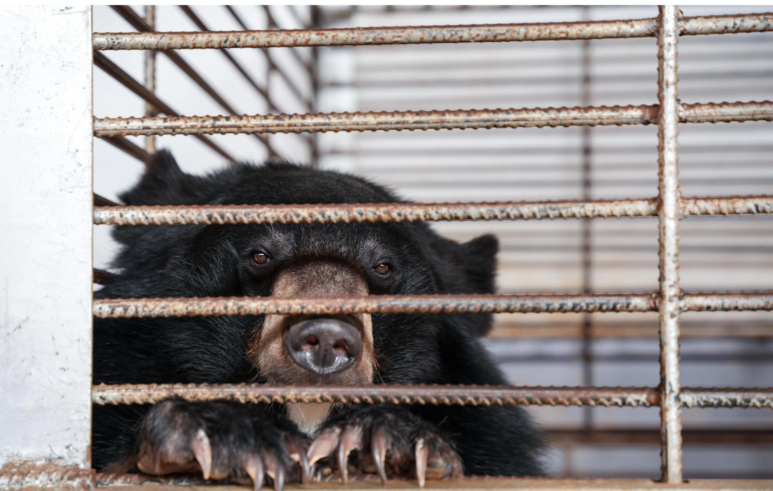
“There was a lot of pacing and constant head weaving,” he recalled, noting that both are signs of psychological damage.
“We poured water when we arrived and they drank it all. They were so thirsty.”
The bears, estimated to be aged between one and three years old, were likely poached from the wild as cubs, said Free the Bears. The scale of the cruelty could have been much worse, however, as rescuers had uncovered enough infrastructure at the site to hold up to 200 bears.
A childhood passion
For Karthiriish, the high-stakes rescue was the fruit of a lifelong passion for animals.
Growing up near the Singapore Zoo, he often visited the park before volunteering at the Night Safari at age 13. On top of a two-year stint at the former Jurong Reptile Park, he spent a total of 14 years with the Mandai Wildlife Group as an animal keeper and senior veterinary keeper, working with a range of animals from elephants to kangaroos.
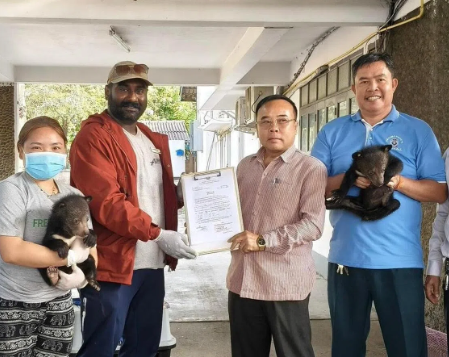
A desire to take conservation further was unlocked when he met several non-governmental organisations (NGOs) at an international wildlife rescue conference in Laos. When an operations manager role became available at Free the Bears, he saw it as a sign.
“I wanted to challenge myself, put myself out there,” Karthiriish said. “I’ve lived in Singapore all my life, and there’s an opportunity to come to Laos, and I said, ‘why not?’”
Since joining, he has helped rescue 30 bears, with the latest operation proving the most challenging.
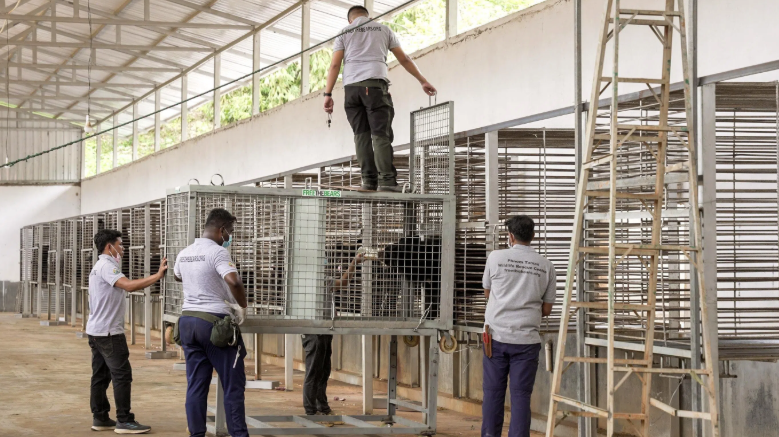
The team transferred the bears into crates over 10 gruelling hours – a process Karthiriish was somewhat familiar with from his days quarantining animals for Mandai Wildlife Group. “They were very stressed; some of them were crashing into the cages,” he recalled.
The ongoing rainy season exacerbated the danger, raising the risk of landslides and downpours stalling the convoy in the Laotian mountains. “A heavy storm would have severely slowed us down, which was a major worry since the crated bears were loaded into massive, heavy 24-wheeled trailer trucks,” said Karthiriish.
Tension mounted as he and a few others arrived ahead of the convoy to prepare the sanctuary to receive the bears. As night fell, his phone buzzed. A supervisor in one of the trucks had texted that its alarm was beeping as it struggled up a slick, unlit slope filled with potholes and loose gravel.
“Knowing a truck full of bears was struggling on a steep mountain incline – that was the one moment that truly made me worried,” said Karthiriish.
“My mind immediately started racing, questioning what could go wrong next and calculating what the emergency backup course of action needed to be.” Fortunately, the driver managed to manoeuvre his way out of danger.
The 27 bears were unloaded safely into cages where they are being quarantined, joining another 315 bears living in the sanctuaries owned by Free the Bears in Laos, Cambodia and Vietnam.
Singapore plays a key role in funding the protection of moon bears and sun bears.
Fighting the illegal wildlife trade
Calling themselves a zoo has allowed illegal farms to take advantage of loopholes in legislation and enforcement, said Free the Bears chief executive Matt Hunt, noting that the trend began with tiger farms concealed as petting zoos in Thailand.
Such farms exist across the region, propelled by demand from international tourism and greater connectivity between South-east Asia and the world, he added.
Said Hunt: “Stepping inside a bile farm is something that never leaves you. The smell, the filth, the rows of bears trapped in cages so small they can barely move – it’s horrific.”
He urged travellers to be vigilant, noting that unaccredited facilities keeping multitudes of the same valuable species are warning signs that they could be players in the illegal wildlife trade.
“If you think it wouldn’t be allowed back home, don’t do it when you’re on holiday,” he said.
While physical bear bile products are rarely encountered in Singapore today, the Animal Concerns Research and Education Society (ACRES) warned against complacency.
“Many wildlife crimes, including the trade in animal parts and products, have increasingly moved online,” said ACRES chief executive Kalaivanan Balakrishnan, stressing that reducing consumer demand is one of the most effective ways to disrupt and diminish the illegal wildlife trade.
Singapore also plays a key role in funding the protection of moon bears and sun bears.
Mandai Nature, the conservation arm of Mandai Wildlife Group, has supported Free the Bears since 2015. Its head of terrestrial species and conservation planning Roopali Raghavan said the funding helped in the construction of the sanctuary where the 27 bears are housed, and supports its daily care.
“Beyond financial support, the veterinary teams from Mandai Nature and Mandai Wildlife Group are available to provide technical advice and consultation when required,” she said.
In 2024, a team of seven staff members from the group visited the Luang Prabang Rescue Centre to help with husbandry and animal enrichment activities.
A lifelong commitment
The charity plans to expand its capacity, as the bears cannot be released into the wild after being raised in captivity. Each requires lifelong care for up to 30 years.
Today, the 27 bears are in quarantine and eating well. For Karthiriish, seeing them settle in made the operation worthwhile.
“We need to build facilities that would allow bears to be bears,” he said. “This would definitely positively impact them, because they have been denied so much.”
The NGO is raising about US$300,000 (S$385,000) to purchase land, build enclosures and hire more staff. Caring for each bear over its lifetime can cost more than US$150,000. Those who would like to make a donation can do so at this website. - The Straits Times/ANN