VIENTIANE: Laos has become one of the latest Asean countries to secure broadcast rights for the 2026 FIFA World Cup, but the deal is drawing attention because it shifts the country’s football viewing model away from traditional free-to-air television and into a digital-platform strategy.
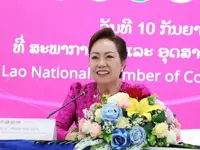
Star Telecom Co Ltd, better known by its Unitel brand, has announced that it has won exclusive rights to broadcast the FIFA World Cup 2026 in Laos. The announcement was made at an event at Supatra Hotel in Vientiane on Monday (June 8).
The deal means football fans in Laos will be able to watch all 104 matches from the expanded 48-team tournament, which will run from June 11 to July 19, 2026.
However, the headline promise of “free viewing” comes with an important condition. The matches will not be shown through conventional free TV via antenna. Instead, viewers will have to watch through the LaoTV application, making the tournament part of Unitel’s wider digital and telecom strategy.
World Cup rights become a digital tool
Lt Gen Saichay Kommasith, chairman of Unitel’s board of directors, said the rights deal was part of the company’s mission to give back to Lao society as Unitel marks its 16th anniversary.
In business terms, however, the move is also seen as a major step in positioning LaoTV as a national digital entertainment platform.
Unitel is a joint venture between Laos and Vietnam-linked telecom interests. The company is backed on the Lao side by Lao Asia Telecom State Enterprise, a telecom state enterprise under Laos’ Ministry of National Defence, which holds 51%. The Vietnamese side is Viettel Group, a major telecom company linked to Vietnam’s Ministry of National Defence, which holds 49%.
By securing the World Cup rights before several neighbouring countries, including Thailand, Myanmar and Brunei, Unitel is using one of the world’s biggest sporting events to draw users into its digital ecosystem.
‘Free’ viewing tied to data packages
Although the tournament is being promoted as free to watch, Lao football fans will still need to access the matches through Unitel’s internet or data packages.
The viewing model effectively turns ordinary football viewers into LaoTV users and, in many cases, long-term Unitel data customers.
For mobile users, Unitel has introduced World Cup-related data packages. These start from the TV55 package, priced at 55,000 kip with 15,000 MB of data, and rise to the TV125 package, priced at 125,000 kip with 55,000 MB of data. These packages grant access to watch the tournament through LaoTV.
For higher-end 5G users, packages range from 150,000 kip to 300,000 kip. These offer larger data allowances, reaching up to 140,000 MB, along with access to the World Cup and free use of some social media services.
For home internet users who want to watch on a larger screen, Unitel’s FTTH packages require subscriptions to MAX or MESH plans priced between 4,000,000 and 4,500,000 kip for 600 Mbps speeds to receive free viewing rights through the app.
There are also LaoTV box-linked packages for viewers who still prefer watching on television. These include special packages such as MAXTV50, priced at 175,000 kip, which is among the limited options allowing viewing on a TV screen.
A new model for sports broadcasting
The Unitel deal highlights how premium sports rights are increasingly being used to support digital-platform growth rather than simply to fill free-TV schedules.
In the past, World Cup broadcasts were widely associated with national free-to-air access. The Lao model shows a different direction, where “free” content is tied to telecom subscriptions, data use and app adoption.
The strategy gives Unitel a chance to increase data usage, strengthen customer loyalty and expand LaoTV into a broader entertainment platform.
At the same time, it changes the way fans access one of the world’s biggest sporting events. Instead of turning on a free-TV channel, viewers must enter a telecom-controlled digital environment.
Laos joins Asean countries with World Cup rights
Laos has now become the eighth Asean country to secure rights for the 2026 World Cup.
The other Asean markets that have already closed rights deals are Cambodia, Indonesia, the Philippines, Singapore, Timor-Leste, Vietnam and Malaysia.
Thailand, Myanmar and Brunei remain among the Asean countries that had not yet secured the rights, according to the report.
The development has sparked interest in Thailand because Laos has moved ahead in closing its World Cup rights deal, while Thai viewers are still waiting for clarity over whether and how the tournament will be available domestically.
The Unitel deal therefore marks more than a sports-broadcasting agreement. It reflects a wider shift in how major global events are being monetised through telecom platforms, apps and data packages and how the idea of “free viewing” is being redefined in the digital age. - The Nation/ANN