
SINGAPORE: For years, many Bangladeshis paid middlemen up to two years’ worth of their salaries to secure construction jobs in Singapore, often arriving heavily indebted and vulnerable to exploitation.
This was an issue that Asia Philanthropy Circle (APC), a network of philanthropists in Asia who work together to tackle social challenges, wanted to address.
So APC has been working with international development organisation BRAC, social enterprise BOP Hub and another Singapore partner to recruit, train and place Bangladeshi workers directly with employers here. This approach cuts out the middlemen, whose fees can cost between S$12,000 and S$15,000 for each worker placed.
Under the Alternative Entry Pathway project, workers pay less than $5,000 for training, medical screening, flights and other costs, said APC’s chairman Laurence Lien.
“(When you are) under a heavy debt, your employer tends to have a lot more power over you,” he said. “Anything their employer asks them to do, even if it’s unreasonable, they would just do.”
Since the project began in late 2023, over 150 workers have found jobs in Singapore. The aim, he said, is to come up with a recruitment model that can be scaled up to benefit many more.
The project reflects both APC’s approach and how Lien views philanthropy: not simply giving money away, but as a way to address root causes of social problems, collaborate with others and find new ways to solve challenges.
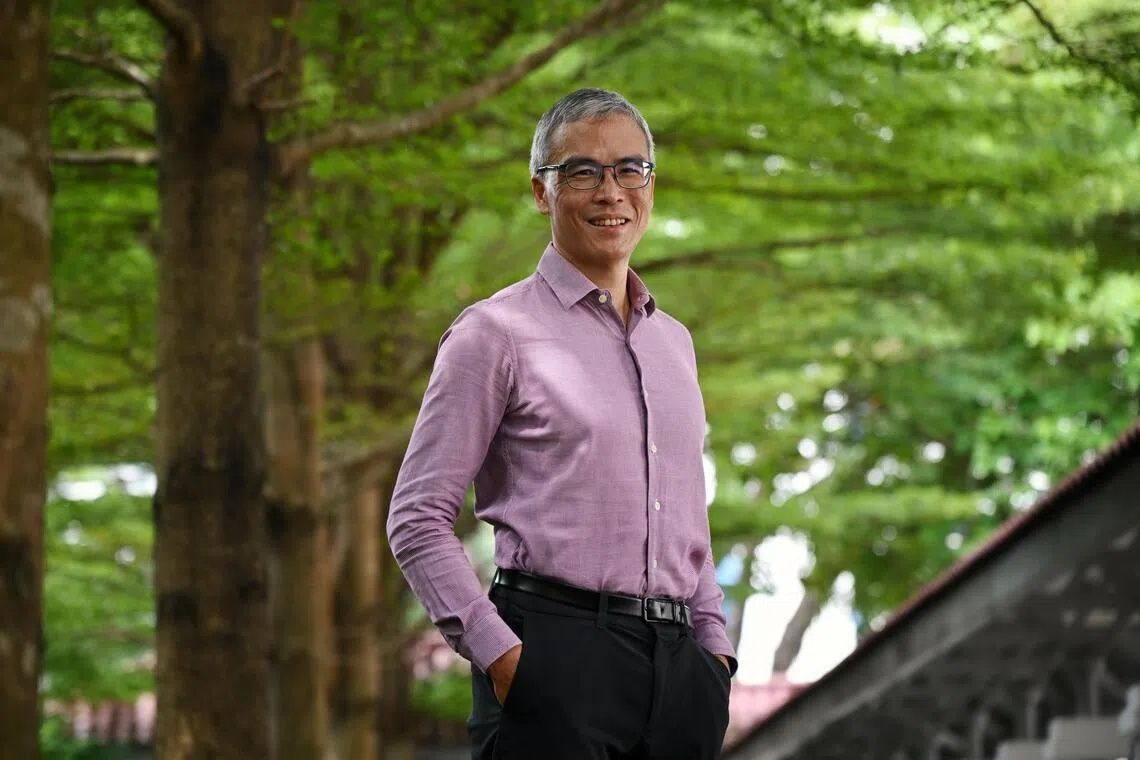
Lien, 55, was recently named one of the world’s 100 most influential people in philanthropy by Time magazine. He is the only Singaporean to make the 2026 list that was released in its May 25 issue.
“It’s nice to get the recognition,” he said in an interview with The Straits Times. “I’m not into the recognition for myself, but I recognise the value of putting the spotlight on Asia, where we tend to be under-represented on such platforms.”
He joins the ranks of the founder of Dell Computers, Michael Dell, and his wife, Susan, who pledged to give US$6.25 billion (S$8 billion) to seed government-administered investment accounts for 25 million American children, who will each get US$250.
Others on the Time list include pop star Rihanna, whose Clara Lionel Foundation has distributed over US$100 million to climate, women’s entrepreneurship and other causes, and BRAC’s executive director Asif Saleh. BRAC operates in 14 countries to tackle poverty and inequality.
Perhaps best known as chairman of Lien Foundation – which was established by his grandfather Lien Ying Chow, founder of Overseas Union Bank – Lien spent nearly the past two decades working full-time to promote philanthropy.
After joining Lien Foundation’s board in 2002, he helped steer it towards what it calls “radical philanthropy” – moving beyond giving grants and scholarships to getting to the roots of social problems and finding innovative ways to tackle the issues.
For example, Lien Foundation and its partners piloted an early detection and intervention programme for children with developmental needs in mainstream pre-schools that has been since scaled up nationwide by the Government.
Together with the Duke-NUS Medical School, it also started Asia’s first research centre for palliative care, among its pioneering work to spark more conversations and programmes on end-of-life issues.
In 2024, Lien Foundation was Singapore’s fifth-largest private donor, giving $24.4 million to causes including eldercare, children and palliative care.
A former civil servant and also a former Nominated MP, Lien found himself increasingly drawn to philanthropy.
“I felt I could contribute to this work more, since it was under-developed and so few people were doing it,” he said of his early years in the philanthropy sector. “And because it allows me the creativity, as it’s more of a blank canvas.”
That desire to amplify impact also led him to co-found APC with businessman and humanitarian Stanley Tan. The pair believe philanthropists, who often work in isolation, could learn from one another and achieve more by working together.
Today, APC has 64 members across Asia and has supported projects ranging from research into early childhood development gaps to climate-related initiatives.
In 2023, Lien, Tan and fellow APC member Francesco Caruso launched the Asia Community Foundation (ACF), which connects donors with causes across the region.
The idea emerged from a recurring observation.
They often meet people who want to donate, but do not know which organisations to give to. They often end up not giving.
The foundation enables people to set up donor-advised funds with a minimum of $1 million over five years. It provides them advice on various societal needs and disburses donations according to their wishes. Since its founding, ACF has disbursed over $48 million in grants.
Lien said that Singapore has become a hub for philanthropy, with more wealthy individuals wanting to give, and some wanting to give more of their fortunes to various causes.
Younger donors are also a lot more engaged than the older generation when it comes to the process and impact of their giving, he said.
Even so, he believes Singaporeans have the capacity to give more.
Donations to charities in Singapore in 2024 amounted to about 0.5 per cent of Singapore’s gross domestic product that year, compared with about 2 per cent in the United States.
Asked about being born into wealth and about philanthropy, Lien points to his Catholic faith and a moral obligation to give. His work also gives him a sense of joy and satisfaction.
“I always go back to the Catholic social teaching about solidarity,” he said. “That if others have little and you have a lot, there is from my viewpoint an obligation to see to the needs of the poor and marginalised.”
The father of three sons intends to give away a “significant” portion of his wealth.
“I see wealth as an opportunity to do a lot of good,” he said.
“It shouldn’t lead to an entitlement, like since it’s yours, you can spend whatever. At the end of the day, my philosophy is to give more to society than what you take for yourself.” - The Straits Times/ANN