Hong Kong should harness the excitement sparked by the city’s first astronaut to set up a dedicated office to foster local aerospace technology and development, experts and a top government adviser have said.
Professor Zhang Peng, programme leader for aerospace engineering at City University, urged the government to expand funding for programmes, create dedicated internships and establish a local aerospace technology hub to build on the momentum from Sunday’s historic flight involving home-grown astronaut Lai Ka-ying.
“Lai Ka-ying’s success boosts public aspiration, but without sustained funding, industry links and the commercial translation of research, talent will leak to other sectors or regions,” Zhang said on Monday.
“Prioritising these steps will turn short-term excitement into a long-term talent pipeline and innovation ecosystem.”
Lai, a police superintendent and mother of three, joined the Shenzhou-23 space mission on Sunday evening as China’s first female payload specialist.
The three-person crew entered China’s Tiangong space station at 5.13am on Monday after their spacecraft blasted off from the Jiuquan Satellite Launch Centre in northwestern China’s Gansu province at 11.08pm on Sunday.
Lai, 43, was selected from among 120 applicants from Hong Kong after China’s space agency said its recruitment drive for two payload specialists would include the city and Macau for the first time.
While Lai’s achievement has generated pride and interest across the city, seven of Hong Kong’s universities have also taken part in the country’s aerospace programme by supplying equipment or experimental samples.
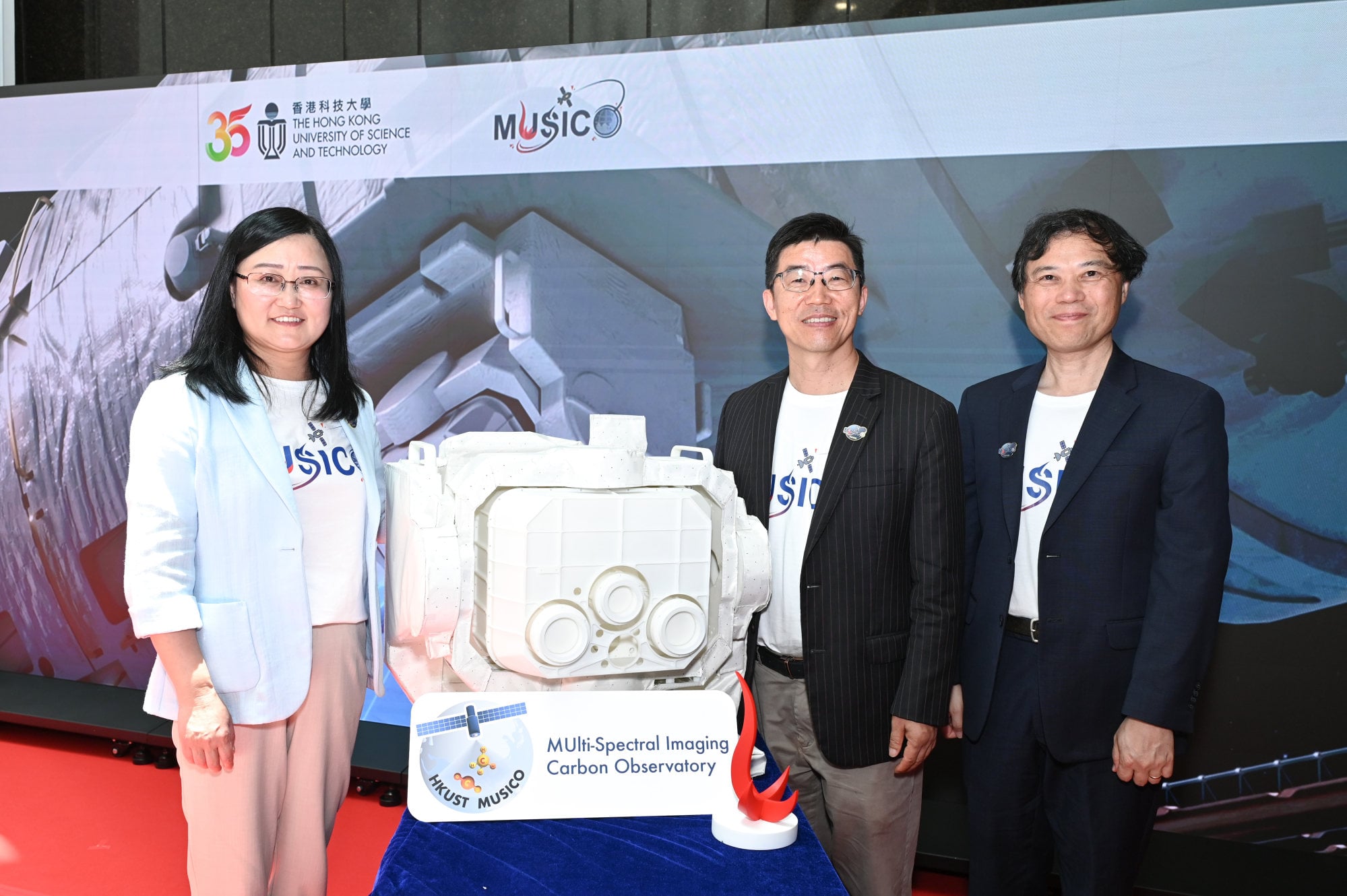
The Multi-Spectral Imaging Carbon Observatory, also known as the Tianyun camera, is one such example. The project was led by researchers from Hong Kong University of Science and Technology, with the device already installed on the Tiangong space station.
The camera is imaging equipment capable of pinpointing the location and intensity of emissions to provide data for carbon reduction efforts on the mainland.
The university is also co-leading the Hong Kong Space Robotics and Energy Centre to build a multifunctional lunar surface operations robot for the Chang’e-8 mission.
The country’s 15th five-year plan, covering 2026 to 2030, calls for Hong Kong to develop the “NewSpace” industry, including private firms involved in satellite manufacturing, launch services, space law, tourism and other commercial ventures focused on low Earth orbit.
The Chief Executive’s Policy Unit held a high-level meeting with academics, investors and experts from the mainland and overseas in January this year to discuss the city’s strategic positioning and opportunities under the national development plan.
Technology sector lawmaker Duncan Chiu said a dedicated office or officials overseeing local aerospace projects could help foster long-term participation in the national space programme.
Chiu said existing aerospace projects at local universities were “scattered” and one-off, often arising from professors’ personal connections. However, given the research talent available in Hong Kong, the city could explore longer-term participation in these national projects, he said.
“When asking for projects from the mainland, it would be more helpful to have a bureau leading the discussions,” Chiu said.
He added that while the Innovation, Technology and Industry Bureau had maintained regular contact with mainland aerospace authorities, having a dedicated office could push forward more policies and lay out a clearer road map for the city.
Regina Ip Lau Suk-yee, convenor of the city’s top advisory body, the Executive Council, agreed the government should set up an office to oversee space-related policies.
“The government needs to conduct open recruitment to search for an expert with the right credentials to head up the office and draw up a road map for the development of Hong Kong’s space economy,” Ip said.
The veteran politician said the city should eye the “space economy”, including financing tech firms, helping mainland players go global, nurturing start-ups that applied space technology to other areas, and conducting satellite data analysis.
Chiu said Hong Kong companies could operate low Earth orbit satellites, which operate at an altitude of 2,000km (1,240 miles) or less, host firms that sold satellite data and potentially participate in satellite design.
The Innovation and Technology Support Programme Special Call on Aerospace Technology allocated over HK$100 million to support six university research and development projects, according to 2025 Policy Address.
Su Hui, chair professor of civil and environmental engineering at Hong Kong University of Science and Technology, said having the first Hong Kong astronaut operating apparatus developed locally recognised the city’s capabilities and promoted its aerospace technology development.
“[We should] leverage this kind of international and open environment to promote global cooperation. At the same time, we can cultivate high-level scientific talent with an international perspective and supply fresh talent for the country’s aerospace endeavours,” Su said.
Professor Wu Bo of Polytechnic University’s Research Centre for Deep Space Explorations said Hong Kong had entered a new phase for aerospace development as its first home-grown astronaut embarked on her mission.
“Hong Kong’s participation in the national manned space mission has entered a brand-new, more in-depth stage,” said Wu, who was a member of the city’s delegation to Jiuquan to watch the Shenzhou-23 launch.
He said Hong Kong’s contributions to the national space programme lay in providing talent and connectivity and fostering research applications by capitalising on areas of strength.
“Capitalise on precision manufacturing, new materials, algorithm software and artificial intelligence – fields with an advantage,” Wu said. -- SOUTH CHINA MORNING POST