



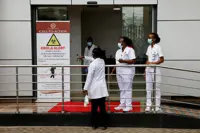
JAKARTA (Bernama): Indonesia has intensified surveillance and tightened coordination with global health networks, after the World Health Organisation (WHO) declared the Ebola outbreak in the Democratic Republic of Congo a public health emergency of international concern.
Indonesia Health Ministry’s Head of the Communication and Public Information Bureau, Aji Muhawarman, said the government has increased monitoring at international entry points and enhanced coordination with hospitals and public health agencies to improve early detection and response capabilities.
"We are closely monitoring travellers, particularly from outbreak-affected countries. Suspected cases will be referred to designated hospitals and reported through the national emergency response system,” he said, as reported by ANTARA News Agency on Monday.
Aji said the ministry is also expanding public education and risk communication efforts through the ministry’s official Ebola information portal to curb misinformation and prevent panic.
He urged the public to avoid contact with infected individuals, animals, or contaminated objects. Travellers returning from affected countries are advised to seek medical attention if symptoms appear within 21 days.
Aji said that although the outbreak had not been classified as a pandemic, the WHO declaration issued on May 17 underscored the need for global vigilance.
"The declaration reflects cross-border transmission, high mortality rates, and continuing uncertainty over the outbreak’s scale and development,” he said.
He said no widely available specific treatment currently exists, and that patient care focuses mainly on intensive supportive treatment. "Existing vaccines remain limited and are primarily deployed to contain outbreaks in Africa,” he added. - Bernama

