MANILA: The 2026 Festival de Cannes is in full swing. For many of those involved in film production, having an entry in the prestigious festival is not only a career milestone but a lifelong dream come true.
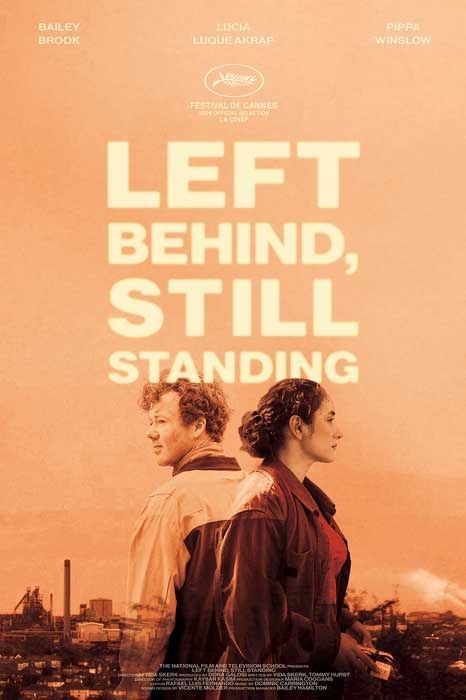
Such is the case for young Filipino film editor Rafael Luis “Rafa” Fernando, who is set to attend the 79th edition of the competition as editor of the short film Left Behind, Still Standing (2026).
But the road to Cannes is no stroll in the park for the Manila-born and raised film aficionado; it has been one of detours and reroutes, with quite a few unexpected stops along the way.
In an interview with Asia News Network (ANN), Rafa talks about his not-so-straightforward route to Cannes and the importance of loving your craft.
An early calling—then a long and winding detour
“I’ve always had a love for filmmaking,” Rafa tells ANN, recounting how, back in middle school, he made digital animations using sprites of his favourite video game characters.
Despite this enthusiasm, he did not think of it as a hobby. It never occurred to him that it could be a viable career path growing up.
“I thought the only way into the industry would be to work at one of the big TV stations, and I felt that ship had already sailed for me by the time I got out of university," he said.
"I felt people who studied film and media had a leg up over me in terms of experience.”
Rafa then set his eyes on becoming a doctor instead, as he wanted to do something that would positively impact people’s lives.
This dream saw him finishing a degree in molecular science and biotechnology at the country’s premier state university, University of the Philippines Diliman.
After college, with filmmaking still relegated to the back of his mind, Rafa went for a “safe” job in sales and marketing.
His love for filmmaking didn’t wane, however, as he found himself incorporating some form of video production into his work, whether through a reel for a product launch or helping his boss pitch his team’s success with an animated video presentation.
It was during a stint at Cadbury’s marketing department that he realised he wanted to do more and that there was more than one way to get into film production.
It also dawned on him that filmmaking was his true calling, especially since he could still touch people’s lives through stories.
“After I realised I could make my own way into film, I saved up some money, then left my corporate job and took some courses in film production.”
For Rafa, the most pivotal moment came when he did a course in documentary filmmaking at the School of Slow Media (SoSM), a film training programme that conducted workshops in Bangladesh, Cambodia, Japan, the Philippines and Vietnam.
“The course was an intensive three-day experience that gave me a new perspective on filmmaking," he said.
"While the other classes I took were more technical, this one was philosophical, emphasising the need to humanise the people we make films about, and also ourselves as those who make films. Doing things their way made creating feel even more fulfilling and hooked me in further.”
At a certain point after he finished the course, Rafa began working with SoSM - first as an editor for their workshop outputs, and eventually as an editing teacher.
When SoSM later founded a media production arm called TÁPI, he came on board and made films for the impact and NGO sphere, including esteemed clients such as Unesco, UNEP, The Asia Foundation and APEC, among others.
After a few years, they branched out into doing independent documentaries, creating films about social issues in Texas and South-East Asia.
Eventually, their film La Cosecha (2023) premiered at South by Southwest (SXSW) in Texas, TÁPI’s first major festival.
After working in the field for six years, Rafa felt the desire to expand beyond documentary editing.
In 2024, he enrolled at the United Kingdom’s esteemed National Film and Television School (NFTS). It was during his time there that he encountered a diverse range of film professionals from all aspects of production, deepened his understanding of editing and accrued more than 10 film editing credits, among which is the Cannes-bound project Left Behind, Still Standing.
Produced at the NFTS, the film is among the 19 films chosen out of 2,750 submissions from film schools worldwide for the 29th edition of the La Cinef section.
La Cinef — formerly known as Cinéfondation — is one of Cannes’ most distinguished competitive sections dedicated to student films.
It shines the spotlight on emerging voices and serves as a launchpad for filmmakers who often go on to shape the future of international cinema.
Left Behind, Still Standing explores themes closest to Rafa’s heart: loss, purpose and exploitation.
Humanising people on both sides of the lens
Asked what his impetus is as he further hones his craft, Rafa, who is now 34, says it is to humanise people on both sides of the lens.
With documentaries as his entry point into the world of filmmaking, he shares how the very first people he cut together on film were “real humans sharing true stories filmed on the streets of South-East Asia.”
“In doing this, I ensure that we construct truthful stories that capture the essence of the encounter with the contributor,” he adds.
“Film always distills, and you have to remove a lot of details, but you can do this in a way that respects the multi-faceted individual you have made the story about,” he further explains.
“This same depth extends to fiction films. Audiences connect better when a character has depth and ‘feels’ real. We can do this in the edit by subtly emphasising details—fidgeting nails, a lingering look, a sound in the distance. The edit is not just about choosing takes; all of this allows you to shape tone and build characterisations.”
Love your craft
Filmmaking may seem like a distant dream for those who grew up in the global south, like Rafa, who calls the Philippines home.
So, when asked for advice for those who want to pursue a career in filmmaking yet are hindered or discouraged by the harsh realities of living in the Third World, Rafa tells ANN it is to love your craft.
“I would say that passion for filmmaking, not just passion for film, is a necessity," he explains. "If you’re coming to this field solely for prestige or money, it is possible, but it is easier to achieve those goals in other industries.”
Rafa emphasises that loving your chosen career is a must as you will be doing it for the rest of your life—if you’re lucky, that is.
He recognises, however, that if your passion is also your source of living, it means working on films that are not always up your alley.
“This is why you have to enjoy the craft," he claims. "I love cutting scenes and putting footage together in the edit. I find the act of doing this inherently enjoyable. Even if I’m not a fan of a certain script or source material, I enjoy my craft enough to make the experience worthwhile.”
Life is long
Through Rafa’s long and winding journey to filmmaking, with his latest stop at the Cannes Film Festival no less, the biggest lesson he learned is that life is long.
“Things can come and go, and then come back again," he notes. "I met people in my life who I’ve lost touch with as I’ve pursued new careers, only for them to come back later on.”
“This mindset allows me to make the most of opportunities, not being afraid to pursue new things even if it means reinventing myself,” Rafa enthuses. “On the other hand, it also allows me to take setbacks and losses on the chin. ‘Not today, but maybe next time,’ I tell myself. So I persevere and look for the next chance.”
Rafa’s five must-watch films:
After Life (Hirokazu Koreeda, 1998)
Dune Part 2 (Denis Villeneuve, 2024)
Jinpa (Pema Tseden, 2018)
Writing Hawa (Najiba Noori, 2024)
In The Mood for Love (Wong Kar-Wai, 2000)
The 79th Cannes Film Festival runs until 23 May 2026, in Cannes, France. - ANN