The country issued an advisory for northern coastal areas for an increased risk of a possible mega-quake induced by a major quake earlier in the day.
The Cabinet Office and the Japan Meteorological Agency said there is 1% chance for a mega-quake occurring on the northern Japanese coast in the next week or so following the powerful quake earlier yesterday near the Chishima trough.
Officials said the advisory is not a quake prediction but urged residents to raise their preparedness, such as emergency food and their grab bag just in case, while continuing their daily lives.
The advisory for the region is the second in recent months. One was issued following another major quake in December. No major subsequent quake occurred.
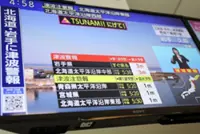
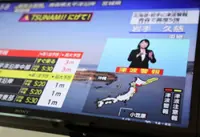
A powerful earthquake struck off the northern Japanese coast earlier yesterday, and the Japan Meteorological Agency issued a tsunami alert in the region, sending residents to rush over to safer grounds.
So far, no major injuries or damages have been reported.
The quake registering a preliminary magnitude of 7.5 occurred off the coast of Sanriku in northern Japan at around 4.53pm, at a depth of about 10km, the agency said.
A tsunami of about 80cm was detected at the Kuji port in the Iwate prefecture within one hour of the quake, and a smaller tsunami of 40cm was recorded at another port in the prefecture, the agency said.
The tsunami alert and advisory were still in place in Japan, with warnings of a wave of up to 3m, but the US-based Pacific Tsunami Warning Center said the tsunami threat from the quake “has now passed”.
The Japanese agency urged residents in the region to immediately stay away from the coast or along rivers and take shelter on higher ground. It also cautioned people in the area against possible aftershocks for about a week.
Footage on NHK television showed many people driving up to parks and other facilities on higher ground. In the town of Tomakomai in Hokkaido, a resident came to a hilltop park after picking up his child at a cram school and said he planned to stay until the alert is lifted.
Iwate and three other northern prefectures issued non-binding evacuation advisories to more than 128,000 residents, according to the disaster management agency.
The Fire and Disaster Management Agency said officials are assessing the situation but so far no damage or injuries have been reported, including at power stations and other facilities.
The Nuclear Regulation Authority said nuclear power plants and related facilities in the region were all intact and no abnormalities were detected.
Another 7.5 magnitude quake in December left dozens injured.
It’s 15 years since a magnitude 9.0 earthquake and tsunami on March 11, 2011, ravaged parts of northern Japan, caused more than 22,000 deaths and forced nearly half a million people to flee their homes, most of them due to tsunami damage.
Some 160,000 people fled their homes in Fukushima because of the radiation spewed from the tsunami-hit Fukushima Daiichi nuclear power plant.
About 26,000 of them haven’t returned because they resettled elsewhere, their hometowns remain off-limits or they have lingering concerns about radiation. — AP