
Israeli and Lebanese ambassadors held rare face-to-face talks, facilitated by Washington, on Tuesday, with all sides agreeing to launch “direct negotiations at a mutually agreed time and venue”.
“Israel expressed its commitment to engage in direct negotiations to resolve all outstanding issues and achieve a durable peace that will strengthen security, stability and prosperity in the region,” as per a readout issued by the US State Department.
The statement said that Lebanon called for a ceasefire and “concrete measures to address and alleviate the severe humanitarian crisis that the country continues to endure as a result of the ongoing conflict”.
The trilateral was seen a tentative step towards broader negotiations to end hostilities involving Hezbollah, which have added strain to an already delicate ceasefire with Iran.
Despite the optimistic language and historic milestone, chances of a lasting Israel-Lebanon agreement are limited, analysts said.
Key obstacles include Israel’s demand that Hezbollah fully disarm and withdraw from the border area while Lebanon’s weak central government possesses limited capacity to enforce disarmament, and Beirut’s demand for a full Israeli withdrawal amid disputes over contested border demarcations.
After a ceasefire deal in 2024, the United Nations reported over 10,000 violations by both sides.
During the talks, Israel said it supports disarming “all non-state terror groups” and dismantling “all terror infrastructure in Lebanon”, in coordination with Beirut.
As the discussions were held on Tuesday, US President Donald Trump declared that “they have to get rid of” Hezbollah, an Iran-backed militant group based in Lebanon, even as he signalled a possible new round of peace talks with Tehran as early as this week to ease tensions in the Middle East.
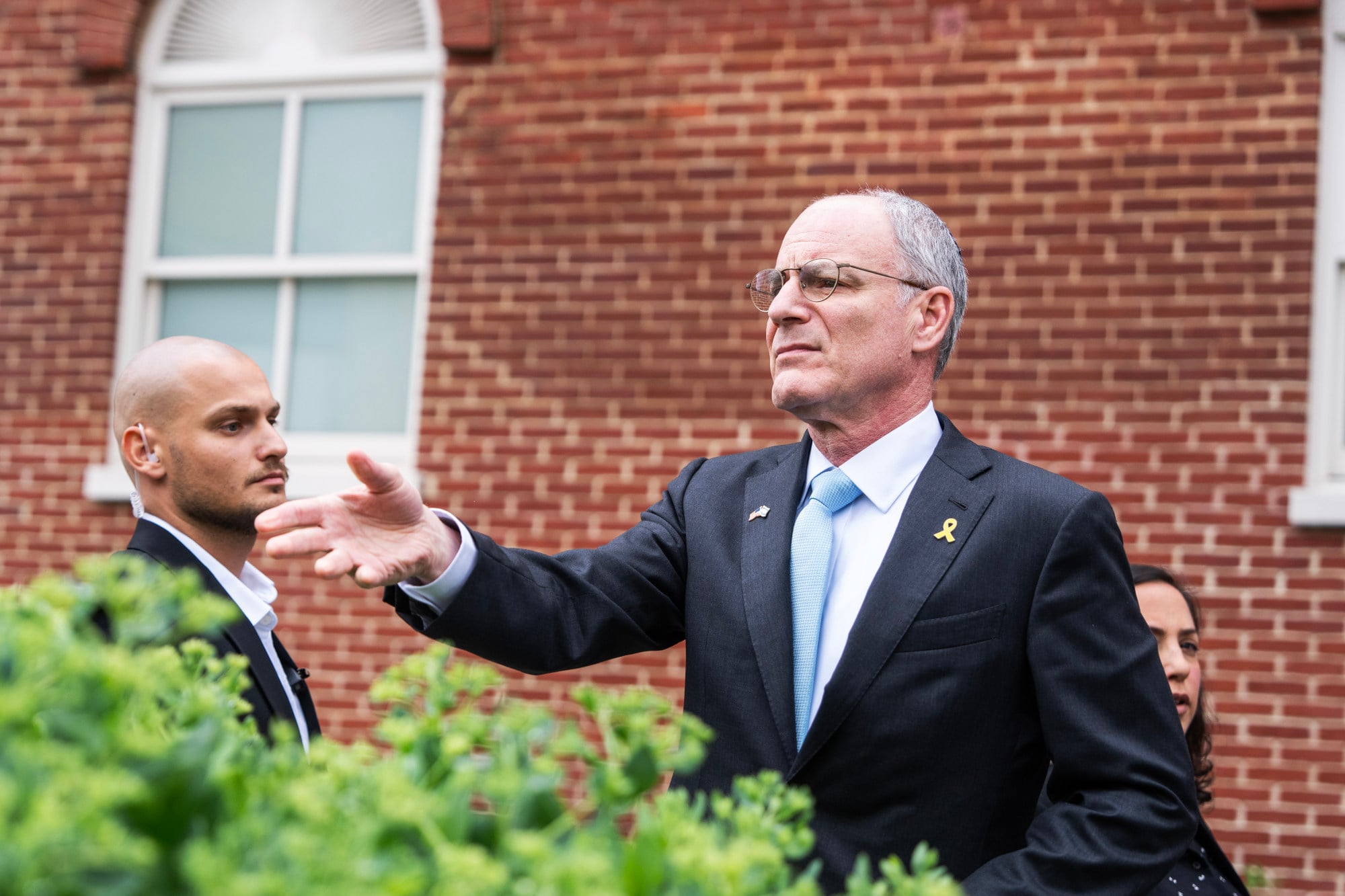
Yechiel Leiter, Israel’s envoy to the United States, met his Lebanese counterpart, Nada Mahadeh, at the State Department on Tuesday morning in talks mediated by US Secretary of State and national security adviser Marco Rubio.
Earlier, Rubio sought to temper expectations of Tuesday’s negotiations, noting in brief remarks that complexities would not be resolved in the coming hours and that the talks were “a process, not an event”.
“This will take time but we believe it’s worth this endeavour, and it’s a historic gathering that we hope to build on. The hope today is that we can outline a framework upon which a permanent and lasting peace can be developed,” he said.
Leiter told reporters after concluding “wonderful” talks – which lasted over two hours – that the two countries were “on the same side of the equation” and stood united in liberating Lebanon from Hezbollah.
He said the talks also touched on a long-term vision of a clearly defined border where cross-border travel would be limited to “business suits” or “bathing suits”, describing a future of normalised relations.
Leiter said the rare meeting came at a time when Iran has been weakened by US and Israeli forces, which presented an opportunity to “degrade its proxies” and “move into an era where Lebanese and Israelis can live side by side in peace”.
“It’s not a pipe dream. It’s a reality that can really happen in our lifetime,” he added.
Ahead of the talks, the Israeli and Lebanese envoys to the US held their first known direct phone call on Friday. Leiter said Israel had agreed to begin formal peace negotiations but “refused to discuss a ceasefire with Hezbollah”, calling the group “the main obstacle to peace between the two countries”.
Lebanon and Hezbollah diverge over Israel relationship
Lebanon’s government and Hezbollah, which also holds seats in the country’s parliament, have increasingly diverged over the talks, with Beirut pushing for a diplomatic solution and Hezbollah rejecting any negotiations with Israel.
Hezbollah leader Naim Qassem on Monday urged Lebanon to call off the planned meeting with Israel in Washington, saying his group “reject negotiations with the usurping Israeli entity”.
“We call for a historic and heroic stance by cancelling this negotiating meeting,” he said.
Will Todman, a senior fellow at the Centre for Strategic and International Studies, a think tank in Washington, contended the talks reflected the Lebanese government’s efforts to marginalise Hezbollah and the enormous pressure they were under from Israeli attacks.
But a lasting agreement between the two sides “remains far away”, he said, adding that they have to work through significant challenges and were starting from a “severe trust deficit”.
Israel has continued to strike Lebanon, despite Trump’s calls to scale back its military attacks, with the Israeli military saying it was targeting Hezbollah.
Israel’s conflict with Hezbollah has been a key point of contention in Trump’s ceasefire with Iran – which expires on April 22 – with Tehran insisting that the truce should be extended to Lebanon, a position Washington has rejected.
As discussions to resolve key sticking points got under way, with Washington’s top diplomat in the room, Trump spoke with select media outlets from the Oval Office.
“We’re going to make a success out of it. They have to get rid of Hezbollah – Hezbollah’s the trouble,” he told German news outlet Deutsche Welle.
In a call with the New York Post, the US president indicated that talks with Iran could resume in Pakistan within the next two days.
“You should stay there, really, because something could be happening over the next two days, and we’re more inclined to go there,” Trump was quoted as saying.
He said Pakistan’s Army chief, Field Marshal Asim Munir, was doing a “great job” on the talks.
Trump also spoke by phone with Indian Prime Minister Narendra Modi, with both leaders discussing the ongoing tensions in the region.
New Delhi has been wary of Islamabad’s involvement in the peace efforts, as the two countries remain at odds over long-standing territorial disputes and continue to court Trump’s support.
Pakistan does not have diplomatic ties with Israel, underscoring the wider regional complexities surrounding the talks.
On Saturday, Israeli Prime Minister Benjamin Netanyahu said his country was “still active” in its campaign in Lebanon, adding that he was “determined to return security to the residents of northern Israel”.
According to media reports, Lebanese President Joseph Aoun expressed hope, but said “this cannot be a unilateral solution. Israel must respond to Lebanese, Arab and international calls to halt its assaults against Lebanon and start negotiations”.
Trump’s blockade of Strait of Hormuz continues
Amid the whirlwind of diplomacy spanning East to West, US Naval forces’ blockade of the Strait of Hormuz, targeting vessels from and to Iranian ports, entered a second day.
The US Central Command in a statement on Tuesday said the measure is being enforced by over 10,000 US sailors, marines and airmen along with over a dozen warships and dozens of aircraft.
“During the first 24 hours, no ships made it past the US blockade and six merchant vessels complied with direction from US forces to turn around to re-enter an Iranian port on the Gulf of Oman,” it read.
The US Treasury Department also announced that it would not be renewing the short-term authorisation for the sale of Iranian oil if it expires on April 19.
The temporary licences were granted last month after the joint US-Israel strikes against Iran disrupted transits in the Strait of Hormuz, which carried nearly 25 per cent of global oil consumption before the war, to stabilise energy prices.
It had permitted sales of oil already loaded onto vessels, amid concerns over secondary US sanctions. -- SOUTH CHINA MORNING POST