THE economy minister said the South-East Asian nation can outlast the impacts of Middle East war-fuelled oil price hikes for as many as 10 months without cutting fuel subsidies.
Minister Airlangga Hartarto told foreign media in Jakarta his government “is ready for five, six, or even ten months” on current projections.
“Diesel, as well as ... propellant, will be subsidised until the end of the year,” he said.
“And the government has sufficient funds for it.”
Global crude prices have soared to more than US$100 (RM397) per barrel since the United States and Israel unleashed a series of strikes on Iran on Feb 28, sparking a region-wide conflict and the effective closure of the crucial Strait of Hormuz.
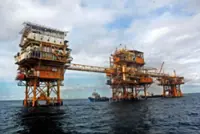
Indonesia is an oil producer but nevertheless a net importer, and heavily subsidises fuel consumed domestically.
The subsidy covers about 30% to 40% of the cost for consumers and absorbs over 5% – some 210 trillion rupiah or US$12bil (RM47.6bil) – of the annual budget in South-East Asia’s most populous nation and largest economy.
Jakarta’s 2026 fuel subsidy calculation was premised on a global oil price of US$70 (RM278) per barrel, and the government is legally required to keep the fiscal deficit at no more than 3.0% of GDP.
Airlangga said on Monday that every US dollar increase in the global oil price adds a burden of about 6.8 billion rupiah (RM1.59bil) on the state budget.
The country imported between a fifth and a quarter of its oil from the Middle East, but is seeking alternatives in Africa, the United States and Venezuela, he added – though the details were being finalised.
“Some of the other (Middle Eastern) oil can be substituted by these multiple sources,” he said.
Much government planning depends on “how long the war will be,” said Airlangga, and accused US President Donald Trump of “playing yo-yo” with “war and peace.”
Last month, the government announced fuel rationing and mandated a day-per-week work-from-home policy for civil servants to conserve energy stocks.
President Prabowo Subianto was in Moscow on Monday for talks on oil with counterpart Vladimir Putin, for which Airlangga would not give details.
Prabowo is aiming to raise Indonesia’s economic growth rate from 5.1% last year to 8% by 2029, powered by high public spending.
The World Bank last week lowered the country’s 2026 growth projection to 4.7% from 4.8% it had forecast last October.
According to Airlangga, the government expects 5.3%.
He added Indonesia was partly hedged from the global economic fallout from rising commodity exports, listing coal, rubber, nickel, copper and aluminium. — AFP