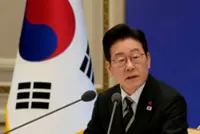
President Lee Jae-myung said rising tensions around the Strait of Hormuz made it hard to be optimistic about the fallout from the Iran conflict, warning that high oil prices and supply-chain strains were likely to persist.
Lee told a Cabinet meeting yesterday the government should treat prolonged disruption in global energy and raw materials markets as a given and reinforce its emergency response system.
“For the timebeing, difficulties in global energy and raw materials supply chains and high oil prices will continue,” Lee said.
“I ask that we pursue the development of alternative supply chains, medium- to long-term industrial restructuring and the transition to a post-plastic economy as top-priority national strategic projects.”
Lee also urged ministries to move quickly to deploy a supplementary budget passed in response to the conflict.
At the meeting, ministers outlined steps to contain the economic shock from the conflict, including support for crude imports, controls against hoarding of petrochemical feedstocks and medical supplies, and expanded financial assistance for affected companies.
Industry Minister Kim Jung-kwan said disruptions to shipping through the Strait of Hormuz were still affecting supplies and that even if the passage normalises, it could take around 20 days for Middle Eastern cargoes to reach South Korea.
The government is prioritising support for the passage of seven South Korea-bound oil tankers stuck in the Gulf region, a document shown during the cabinet meeting said.
Foreign Minister Cho Hyun told the meeting that the ministry had sent officials to the Congo, Algeria and Libya in a bid to secure energy supplies, in addition to presidential Chief of Staff Kang Hoon-sik travelling to countries such as Kazakhstan since last week.
“I also urge the parties to this war to take courageous steps toward the peace the world so desperately wants, based on the principles of protecting universal human rights and the lessons of history,” Lee said. — Reuters