




Whether the US-Israeli war on Iran wraps up quickly or drags on, the repercussions will be felt for years, reshaping warfare, geopolitics and energy security as well as how the world sees the United States and its tactical and strategic capabilities. In the final instalment of a three-part series, we look at the move away from precision strikes on limited military assets.
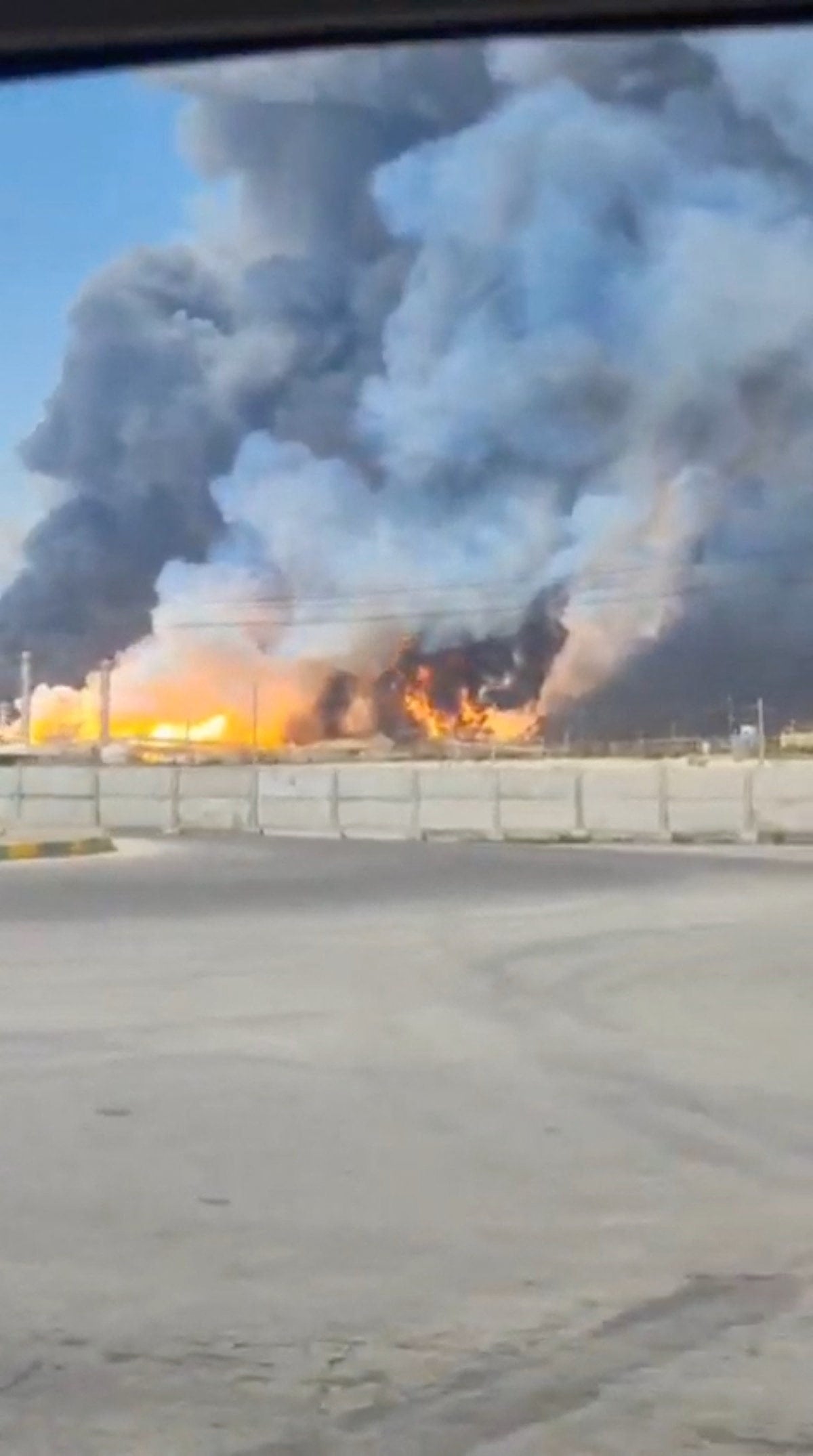
When Iran’s South Pars gas field was hit at the start of the US-Israeli war on the country, Tehran retaliated with attacks on energy infrastructure across the Gulf. And as the conflict has escalated, more energy and civilian sites have been targeted.
In Iran, the destruction includes pharmaceutical company Tofigh Darou, the Pasteur Institute, a century-old medical research centre, and a major bridge near Tehran which was said to be one of the tallest in the Middle East.
Before a two-week ceasefire was agreed on Wednesday, with negotiations for a peace deal to start on Friday, US President Donald Trump had threatened to destroy bridges, power plants and other civilian facilities in Iran if it did not agree to reopen the Strait of Hormuz.
So far, more than 67,000 civilian facilities in Iran have been attacked – including nearly 500 schools and more than 200 health centres, according to data released last week by the Iranian Red Crescent Society.
Analysts said the conflict – as well as the Russia-Ukraine war – appeared to be moving away from precision strikes on limited military assets towards a broader approach targeting energy and civilian sites.
They warned of the humanitarian impact of the attacks and said strikes on energy infrastructure could also threaten global economic stability.
“Once the red line of striking civilian infrastructure on the battlefield has been crossed, operational constraints are progressively weakened,” said Yang Shu, dean of Central Asian studies at Lanzhou University.
He added that the distinction between civilian and military targets had become increasingly blurred.
Headed for ‘total war’?
Precision strikes and weaponry, along with intelligence and reconnaissance, have given the US a battlefield edge for more than three decades, in some cases allowing a quick defeat at low cost by eliminating the adversary’s senior leadership with a small number of munitions and well-trained troops. This approach has meant it could avoid sending in ground troops and mitigate the political backlash.
The Gulf war in 1991 marked the first real test of modern precision strikes, which were widely adopted by the US military and followed by its allies, such as Nato’s air strikes in the Kosovo war.
More recent examples are the abduction of Venezuelan leader Nicolas Maduro by US special forces in January and the US bombing of Iranian nuclear facilities in June last year.
But since the conflict in Iran began on February 28 with US and Israeli strikes that killed its supreme leader, Ali Khamenei, civilian infrastructure has increasingly been hit. That reportedly includes energy facilities, power plants, factories producing steel, aluminium and chemicals, as well as bridges, water desalination plants, civilian airports and universities.
Yang argued that the dispersed military structure in Iran limited the use of a more rapid and decisive Gulf war-style strategy against it. As a result, he said the US and Israeli attacks had expanded to a broader range of targets as they tried to weaken Iran’s capacity for a prolonged conflict.
“There is no longer a strict distinction between military and civilian targets,” he said. “Apart from barracks and frontline positions, most sites are difficult to clearly define ... for example, if the electricity is cut off, military-industrial production will also have to stop.”
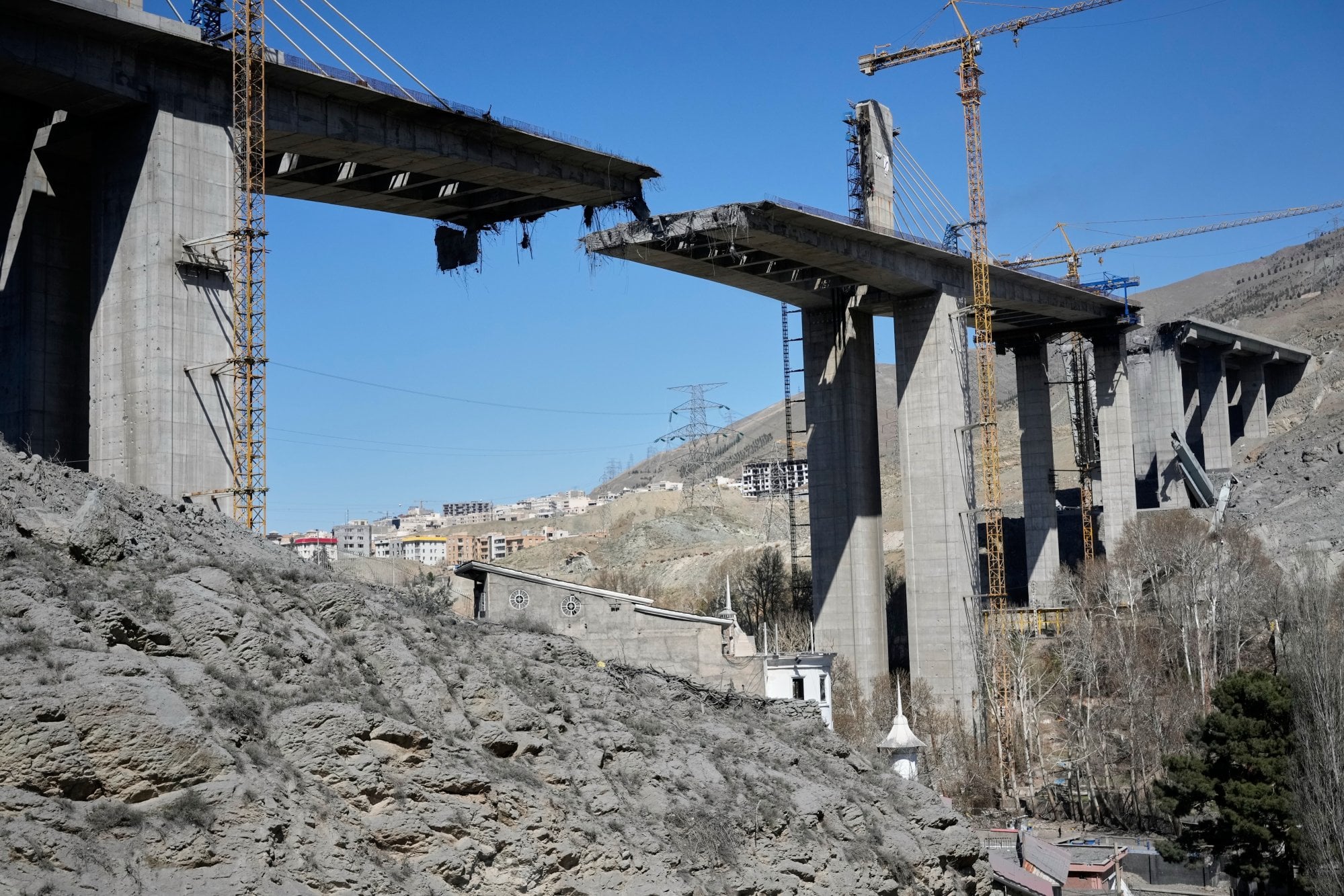
US defence officials claimed the strike on the B1 bridge near Tehran – which had not yet opened to traffic – was conducted for military purposes to prevent the Iranian armed forces from moving weapons across it. Iranian state media said eight people were killed and 95 wounded in the attack.
Iranian Foreign Minister Abbas Araghchi said striking civilian structures “including unfinished bridges” would not convince Iran to surrender, and that the country would rebuild after the war.
According to Yang, the conflict in Iran has so far been characterised by the use of precision weapons against specific targets. He said that was far from a shift towards “total war” – where vast resources are mobilised, warfare is prioritised and a wide range of targets are attacked.
“It is still a precision strike approach aimed at minimising personnel involvement while maximising effectiveness,” Yang said. “It is the lowest-cost, most efficient method.”
He said refineries and oilfields – being vast and difficult to defend – were natural targets in modern conflict, and Iran’s oil infrastructure was its economic lifeline.
But military commentator and retired Chinese colonel Yue Gang said attacking energy infrastructure could escalate and drag out the war.
“Striking power and oil infrastructure could risk turning limited, localised military actions into a full-scale conflict – one that is prolonged and highly escalatory,” Yue said. “That outcome runs counter to Trump’s preference for a quick, controlled victory.”
Lyle Goldstein, a senior fellow at the Watson Institute for International and Public Affairs at Brown University, said energy systems had become highly attractive targets as long-range drones and missile warfare matured.
“At a minimum, they can make for impressive video footage with impressive explosions, but they can also potentially weaken the war machine of the adversary by causing adverse economic consequences too,” he said.
“They can raise awareness of the conflict as well, since global markets are closely attuned to damage that is done to energy systems.”
Zhu Zhaoyi, a Middle East professor at Peking University, said strikes on energy infrastructure had proven highly cost-effective in modern warfare, with relatively cheap systems like drones or missiles damaging critical assets worth billions.
“The strategic advantages of traditional military powers are being gradually eroded by these ‘low-cost but lethal’ forms of attack,” Zhu wrote in an article published on the China.com news site on March 27.
Strategic risks
Analysts noted that US military action in the conflict had been largely constrained by the risk of Iranian retaliation and political pressure at home.
They argued that strikes on civilian or dual-use infrastructure had significant strategic risks and could prove to be a double-edged sword, potentially backfiring by escalating and widening the conflict.
In March, Trump claimed US forces had “totally obliterated” targets on Kharg Island – Iran’s key oil export hub – but the US military had held off targeting Iran’s oil infrastructure.
“Striking civilian infrastructure is a high-threshold decision,” said Hu Bo, director of the South China Sea Strategic Situation Probing Initiative, a Beijing-based think tank.
“Within the Trump administration, there were still internal constraints ... From the US perspective, the situation had not escalated to that level for such interventionist warfare – there is generally no need to go that far,” he said.
According to analysts, Iran has appeared more willing to exploit energy infrastructure vulnerabilities in the Gulf and the strategic importance of the Strait of Hormuz, through which roughly 20 per cent of global oil flows.
“For the Iran regime, it’s an existential war, so they are willing to consider more drastic measures such as widely attacking neighbours, and targeting energy infrastructure in particular,” Goldstein said.
“Tehran surely understands that a higher price for energy will likely cause embarrassment to Washington and maybe even cause the Trump administration to rethink this war of choice.”
Chinese military analyst Fu Qianshao urged both sides to act with restraint.
“If [they] were to escalate freely and target each other’s energy and power infrastructure, it would cause severe suffering for the civilian population,” he said. “This is not something that can be sustained indefinitely.”
Russia and Ukraine
Similar patterns have emerged in the Russia-Ukraine conflict, which is now in its fourth year.
CNN reported on March 29 that the Ukrainian military had intensified strikes on Russian energy infrastructure, claiming around 10 major attacks that month, including some deep inside Russian territory.
While the overall impact remains unclear, reports suggest Russia has considered restricting gasoline exports.
Analysts noted that while energy strikes could weaken the opponent, they were unlikely to be decisive and could instead prolong and escalate a war.
“Such attacks are primarily aimed at constraining, exhausting and imposing costs rather than achieving a decisive outcome,” Hu said, adding that their effects were cumulative rather than immediate.
According to Goldstein, targeting energy systems “reflects a kind of indirect strategy and thus is perhaps a symptom of frustration or lack of capability on the battlefield itself”.
“Put another way, if one is able to win a quick victory through direct military action on the battlefield then there is no need to resort to such indirect energy attacks, which may be seen as a classic aspect of attrition warfare,” he said.
Energy supplies
The world – and China – is observing how these conflicts are unfolding and drawing lessons on the need to protect energy infrastructure.
Zhu from Peking University said traditional energy systems prioritised efficiency through centralised, large-scale networks, but the model had become a strategic vulnerability.
“States must shift from tree-like centralised grids to networked, distributed systems, expanding microgrids, distributed solar, and storage capacity to reduce the risk of cascading failures,” he wrote.
He also called for stronger physical protection of critical energy nodes, including hardened or underground facilities, active defence systems, and improved emergency reserves.
Fu echoed that view, saying recent conflicts highlighted the need for stronger protection of energy infrastructure.
“Energy facilities are fixed and often large, making them easy to locate and vulnerable to air or missile strikes. Even partial damage can trigger cascading failures. Recovery is often slow and costly,” he said.
According to Goldstein, one long-term consequence of the current conflicts could be that states placed greater emphasis on securing energy supply chains, given their increasing use as coercive tools in wartime.
Energy systems could also play a role if Beijing were to attack Taiwan, with the People’s Liberation Army simulating attacks on the island’s energy supplies during blockade drills. -- SOUTH CHINA MORNING POST


