The world’s largest stadium, South-East Asia’s biggest exhibition hall and hundreds of major road, aviation and energy projects.
Vietnam is building faster than ever in its self-proclaimed “era of national rise”.
The country broke ground on more than 550 infrastructure projects last year alone in a staggering spree that will cost around US$200bil (RM806bil).
And it is planning hundreds more projects, including its first nuclear power plants and a 1,500km high-speed railway.
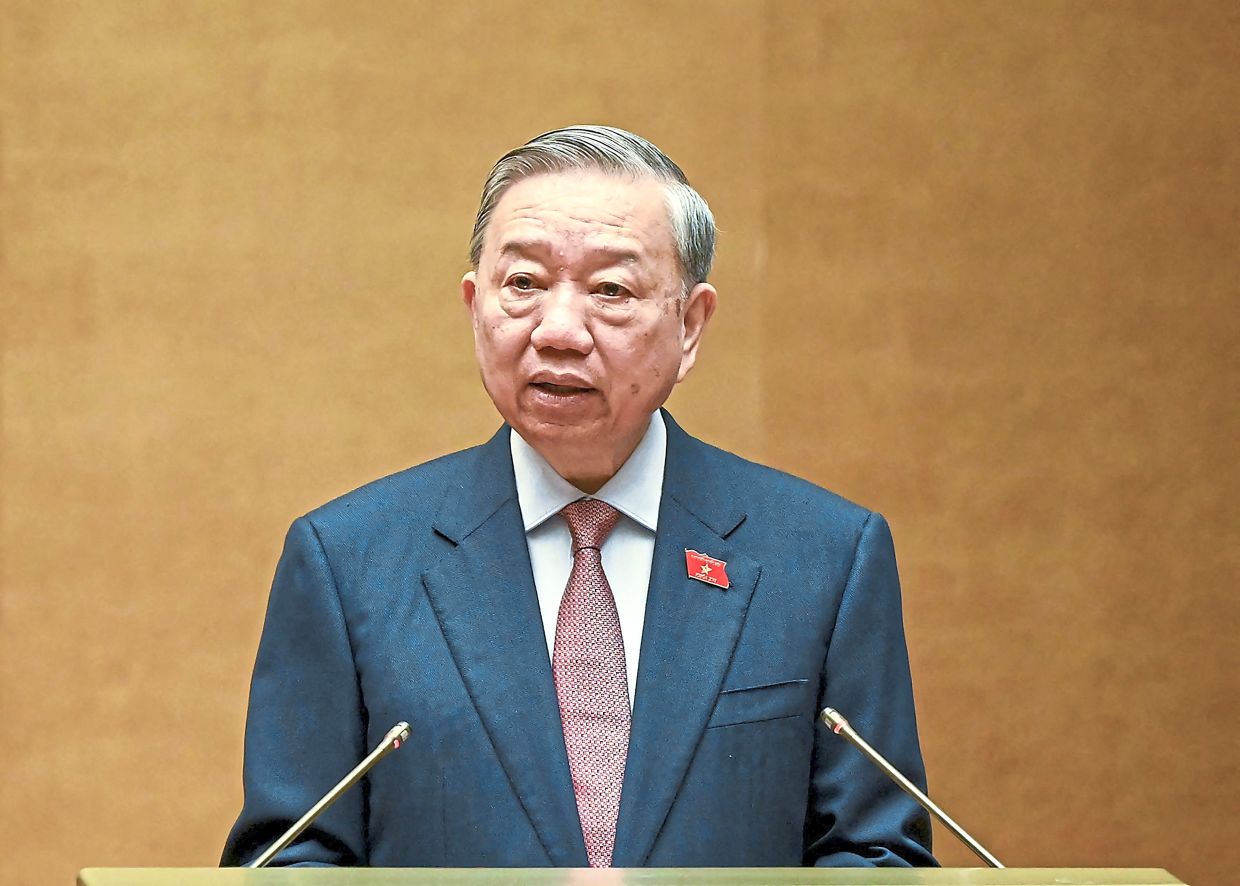
Overseeing the construction drive is the country’s most powerful leader in decades, Communist Party General Secretary To Lam, who on Tuesday was named president as well.
Once among the poorest and most isolated countries in Asia, Vietnam has transformed itself into a thriving export economy, supplying consumer electronics, machinery and clothing to Western nations.
Many mega-projects have been in the pipeline for years. But under Lam, they have suddenly moved forward.
Others are being built on accelerated timelines, including a new US$8.1bil (RM32.6bil) airport that will serve the capital region.
The government is borrowing heavily to finance the construction, also courting private investors, such as mega-conglomerate Vingroup.
Better infrastructure could boost long-term growth, Vietnam analyst Le Hong Hiep said, but poor management of the projects “could overheat the economy, leading to inflation, higher public debt, fiscal strain, and ultimately macroeconomic instability”.
Another Hanoi-based analyst, speaking on condition of anonymity, likened the government’s pursuit of pricey projects to “a poor household trying to buy a luxurious Ferrari at all cost”.
This concern resonates with 62-year-old Chung, who was forced to give up much of his farmland outside Hanoi to make way for a complex that will include a 135,000-capacity stadium.
“I don’t think Vietnam can host a World Cup, so what’s the use of the world’s largest stadium here?” he said.
Developer Vingroup paid him almost two billion dong (RM305,972) in compensation, a fortune for most farmers in Vietnam but not enough to ease his fears about what will happen to his community.
“We can never benefit from that huge stadium.
“There will be no jobs there for us,” he said.
About 40km southeast of Hanoi in Lam’s native Hung Yen province, farmer Dong voiced similar complaints after being evicted to make way for a US$1.5bil (RM6bil) golf course being developed by the Trump Organization.
A luxury resort for the super-rich cannot replace farmland that has sustained the community for generations, she said.
“In just over a year, they quickly took all our land.” — AFP