
BANGKOK: Retail assistants sat idly on stools outside their stores, scrolling on their mobile phones, while hotel receptions fell silent, with barely any guests checking in.
This scene in Nana, a downtown Bangkok neighbourhood popular among Middle Eastern tourists, was a telling snapshot of the toll the US-Israel strikes on Iran had taken on Thailand’s vital tourism sector.
The conflict that began on Feb 28 sent booking cancellations soaring and foot traffic plummeting, not only in establishments catering to Middle Eastern visitors but across the broader industry.
Thailand’s Tourism Ministry said Middle Eastern visitor numbers more than halved in February alone, from 32,831 the previous year to 16,080.
The region does not rank among Thailand’s top 10 source markets. However, the sudden absence of Middle Eastern visitors – combined with airspace disruptions that pushed European travellers onto costlier alternative routes – has laid bare how vulnerable the kingdom’s tourism sector, which contributes 12 per cent to GDP, is to geopolitical shocks.
Meanwhile, neighbouring Malaysia and Indonesia – also top destinations for Middle Eastern tourists – have similarly been affected.
Malaysia’s Tourism Ministry said on March 31 that arrivals from the affected region fell 40.3 per cent in March 2026 compared to the same period in 2025. Its Indonesian counterpart also said on April 1 that the country had lost an estimated 60,000 foreign tourists from the conflict.
Grace Hotel, which has operated in Nana for at least 60 years, has three properties with more than 700 rooms. Roughly 90 per cent of its guests come from Middle Eastern nations such as the United Arab Emirates, Saudi Arabia and Qatar.
Booking cancellations are up 30 to 40 per cent, as guests deemed the situation too unstable for international travel. Many who typically visited Thailand for medical treatment had also postponed their appointments, said Sararutl Laocharoen, the hotel group’s sales and marketing director.
“Normally, many guests would be queuing up at the front desk to check in. It would be crowded with families, with the elderly. But this is abnormal for us,” he said, referring to the empty hotel lobby.
Lost revenue for the hotel group has reached one million baht (S$39,160). Sararutl plans to woo Chinese, Indian and European visitors with room upgrades and flexible check-in and check-out times, but admitted it would be difficult to fully replace the Middle Eastern segment.
“Even bird flu, Covid or even the red shirt, yellow shirt political demonstrations – they have never affected the Middle East market. But this is within their countries this time,” he told The Straits Times.
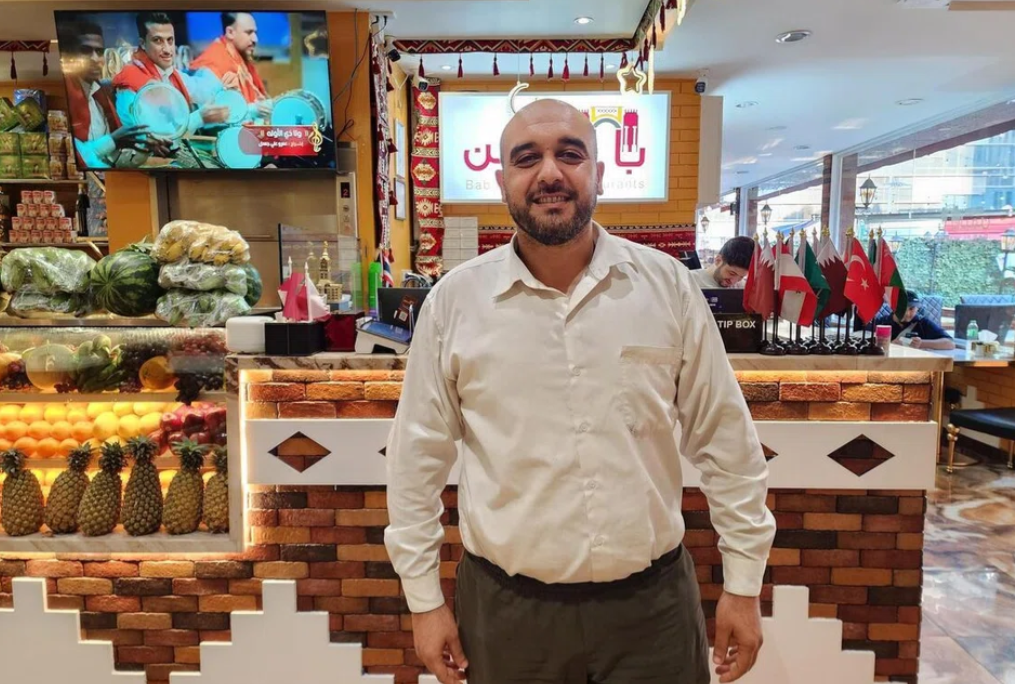
Down the street, Bab Al-Yemen Restaurant – a 24-hour Arab dining venue with 120 employees – had seen its daily patronage collapse. Supervisor Salaheldin Mohammed Ibrahim Abdelraouf said the restaurant used to serve 200 to 500 customers a day.
“Before, we had no room. It was always full. But now, five, 10 customers only per day,” he said, gesturing around the near-empty restaurant.
The restaurant has begun trimming its menu, buying fewer ingredients and switching off the lights in private rooms. The kitchen cooks only when the previous batch is sold.
“We were reducing rice, chicken, lamb, everything. Before, we were 100 per cent sure there would be many customers. But now we don’t know how many will come, so we have to reduce as much as we can,” Salaheldin said.
Hit by Middle East transit disruption
The conflict has also disrupted long-haul travel to Thailand, with most Middle Eastern flights now grounded and limited operations in the region’s airspace.
Bangkok has the second-highest volume of international passengers connecting through Middle Eastern hubs, according to McKinsey Thailand.
Its associate partner Voramon Sucharitakul said: “For the Thailand-Europe corridor specifically, analysis shows that four million passengers travelling between Europe and Thailand currently connect through Middle Eastern airports. These passengers would require alternative routing options.”
Thailand received 33 million visitors last year, of which 7.6 million were Europeans.
Travel agency Boarding Pass’ chief executive Ratiya Thongtamlung said a group of 120 German tourists had just cancelled their five-day golf trip to Thailand in late April.
It was a double whammy for Ratiya, whose 20-year-old agency counts on the Middle Eastern market as its main client base.
“Right now, I tell you, I don’t know,” the 56-year-old said when asked how she planned to make up for the lost income.
She has considered conducting tours for the domestic market, but noted that rising fuel costs were squeezing margins, too.
“People also think, before, a Khao Yai day trip with you costs only 1,000 baht, but now, why do you charge more?” she added.
Between January and March 11, the kingdom recorded some 7.5 million international arrivals – a 4.4 per cent decline on the same period the previous year.
The drop was visible on the Chao Phraya River. Sutee Supaporn, secretary-general of the Thai Boat Association, said trips that previously carried 100 to 150 tourists were now averaging just 30 to 40 passengers.
His association has more than 40 members operating over 200 vessels, including cruises, passenger ferries and longtail boats.
“During Covid, we stopped (operations) but had savings. Now it feels worse than Covid because money has been depleted,” he told ST.
Longtail boat operator Anan Parita, who has ferried passengers along the river for 37 years, reported a 60 per cent drop in income. His woes are compounded by fuel shortages that left boats stranded at the pier.
“After the war started, fuel has been inconsistent – sometimes available, sometimes not. Even if tourists come, without fuel I cannot do anything,” the 57-year-old said.
Industry eyes long-tem diversification
Ms Voramon said the crisis presented an opportunity for Thailand to diversify its tourism value proposition.
It can grow its wellness tourism, which she noted is projected to reach US$2 trillion globally by 2030, as well as its medical tourism, which is estimated to hit US$100 billion by the same year.
“Thailand has over three million medical tourists annually and ranks No. 1 in South-East Asia for medical tourism, with procedures costing approximately 75 per cent less than in Western countries such as the US, Canada, Spain and Germany,” she said.
Thailand can also develop “curated luxury experiences, premium accommodation and experiential travel packages” designed specifically for younger luxury travellers who tend to be willing to spend more.
She also urged the country to strengthen its position as a regional aviation hub by improving route offerings and transfer incentives to capture diverted passenger flows.
Hotelier Thienprasit Chaiyapatranun, who is president of the Thai Hotels Association, remained cautiously hopeful the conflict would end before the July high season. But he was critical of the government’s response.
Although the tourism authority activated its Tourism Crisis Monitoring Centre on March 1, Thienprasit said the industry had yet to receive any concrete strategies for generating new tourism markets.
“I don’t think they have any impact. They just receive all the information and help some people who need to extend their visa,” he said. “I think we have to help ourselves.”
He advised hotels to use the downturn as an opportunity to upgrade to more sustainable systems, noting that labour and electricity account for 10 to 15 per cent of operating expenses.
He planned to install insulated glass and lower air-conditioning settings at his three properties in Bangkok and Khao Yai – changes he said could cut electricity use by over 50 per cent.
“In the future, energy costs will be higher and higher,” he said. - The Straits Times/ANN