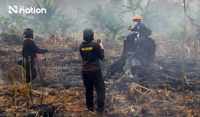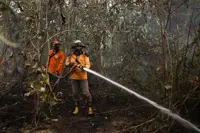
HANOI (Bloomberg): The number of fire hotspots across Indonesia and Malaysia is at the highest in seven years, raising the risk of severe haze conditions across the region in the coming months.
There were 825 smoldering hotspots in March across key palm-oil growing regions of the two countries, according to the Asean Specialised Meteorological Centre.
The agency looked at satellite imagery which can detect heightened levels of infrared radiation. A fire detection algorithm then parses the dataset to identify the points associated with a blaze.
Forest and land fires, and the choking haze they cause, are a near-annual problem across Southeast Asia, disrupting tourism, causing respiratory illnesses, and costing local economies billions of dollars.
The most severe crisis in recent memory came in 2015, when widespread fires triggered a regional haze emergency, causing $16 billion in damages, leading to school closures, flight disruptions and sparking diplomatic tensions between neighboring countries. Dryness this year could lead to a similar scenario, forecasters warn.
The fires can occur naturally or result from land clearance for various crops. In Indonesia and Malaysia, the world’s biggest producers of palm oil, large swathes of wild vegetation are set ablaze to make room for new plantations. While both countries have banned using fire to clear and manage acreage, enforcement has been challenging.
The issue is often most acute during the dry season, typically from April through September, when peatlands become highly flammable and fires can smolder underground for weeks, making them difficult to detect and extinguish.
In Malaysia, the northern part of the Johor state as well as Sarawak and parts of Sabah have seen below-normal rainfall throughout March, according to the US Climate Prediction Center. Sarawak in particular has seen unseasonal dryness, with some areas seeing precipitation levels as much as 210 millimeters below normal, data from the center show.
Indonesia is also experiencing drought, with vast stretches of Sumatra, as well as west and central Kalimantan, recording below-normal rainfall, data show.
Arid conditions may persist for some of those areas in the coming weeks and months, according to seasonal outlooks from a major European forecasting center. Below-normal rainfall is expected across much of Malaysia and parts of Indonesia’s Kalimantan in April, and while May is set to bring more seasonal rainfall, June through August are very likely to be drier than normal across maritime Southeast Asia.
--With assistance from Ishika Mookerjee and Anuradha Raghu. -- ©2026 Bloomberg L.P.