




Beijing’s long-standing geopolitical playbook – stay in your lane, avoid military entanglement, prepare exhaustively and issue bland “win-win” statements about the UN charter and calls to talk not fight – could see China emerge favourably from the Iran war, said economists, analysts and former US officials, as the conflict enters its fourth week with little end in sight and the US barrelling ahead.
“People always say that China doesn’t understand the Mideast,” said Jeremy Chan, senior analyst with the Eurasia Group. “Maybe China understands it wants to stay as far away from this as possible.”
The second-largest economy on Earth is hardly immune as Middle East shipping grinds to a halt, oil prices spike and instability reigns. The Asian giant has its fingers on one out of every US$6 worth of goods traded globally. And over two-thirds of China’s oil is imported, half through the blocked Strait of Hormuz, including a good chunk from Iran and feedstock essential for fertiliser.
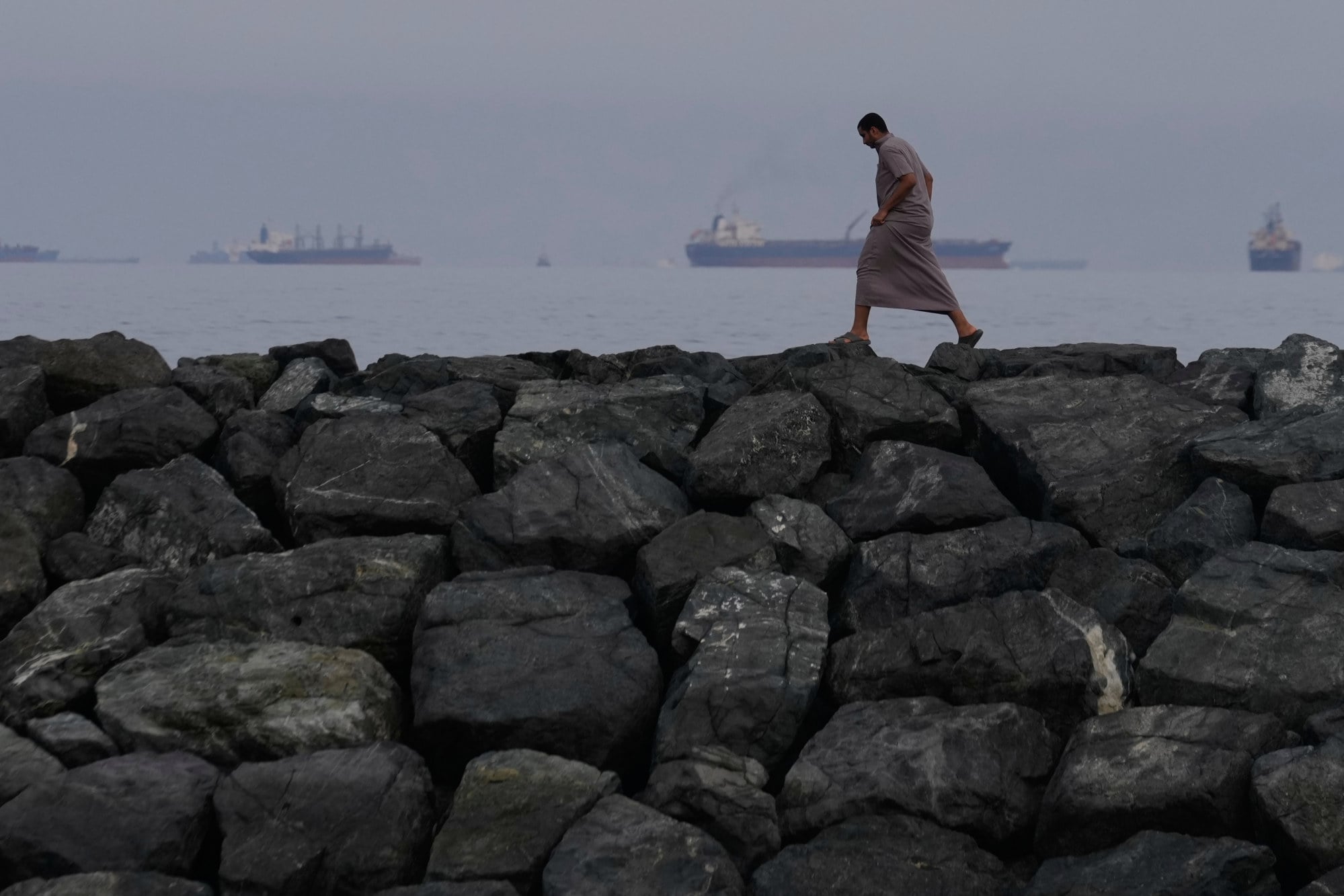
While Beijing’s close ties with Iran may allow more Chinese cargo to transit the narrow strait, it is hardly invulnerable in a war zone that has already seen dozens of vessels hit. And its bid to remain on the sidelines is being tested by US President Donald Trump’s insistence that China and others provide ships to help clear the strategic waterway.
But planning-obsessed Beijing has, over the years, put safeguards in place, crafted in large part to withstand any future conflict over Taiwan, that are reducing its vulnerability in this crisis.
“Short of a major conflict that engulfs the region, I don’t think China is going to be seriously damaged,” said William Figueroa, a leading China-Iran scholar with the University of Groningen in the Netherlands.
These include oil pipelines to circumvent maritime chokepoints such as the Strait of Malacca; massive underground oil reserves in Zhejiang, Shandong, Guangdong and Fujian that are largely immune to satellite surveillance or bombing; energy diversification; and partially successful food self-sufficiency goals.
Even as the US has let its petroleum reserves decline since 2010, China’s are flush, helped by opportunistic purchases of discounted, sanctioned Russian and Iranian oil. China can also tap more Russian petroleum through their joint pipeline.
China’s healthy oil reserves give it breathing space
China’s oil reserves are a state secret. But commercial satellite images and public data indicate Beijing has amassed the world’s largest cushion against energy shocks. Government and state-owned company storage is estimated at around 1.3 billion barrels, some six months of consumption or, with rationing, up to a year.
“This argument that China’s oil security is coming under threat, I don’t see that happening. And they have large strategic reserves,” said Yun Sun, China director at the Stimson Centre. “And if it’s a long-term conflict, it’s not just a problem for China. It’s a problem for everybody.”
Although the US has added around 200 million barrels since its 40-year low in 2024, depleted by budget manoeuvres and the war in Ukraine, it currently holds a little over half of its 726 million-barrel capacity. An effort to refill them in 2020, when prices were low, was blocked by Democrats as a “bailout for big oil”.
That said, the US is also less exposed than China, despite this month’s announced drawdown of 172 million barrels, given its position as the world’s largest producer, a status helped by fracking.
China’s rapid shift to renewable energy has also reduced demand, even as Trump has ranted against bird-killing windmills and the “hoax” of climate change, falsely accusing Beijing of promoting environmental technology it does not use.
Transport is an economy’s thirstiest energy user, and some 60 per cent of China’s new vehicles are EVs, according to the China Passenger Car Association, twice Europe’s and six times the US pace.
And while 12 to 15 per cent of China’s inbound and outbound goods by value sail through the Strait of Hormuz, it is in good company.
The world’s deep dependence on Chinese-linked supply chains; the likelihood that worst-case scenarios will inflict pain worldwide; and the authoritarian government’s relative insulation from public opinion and civil unrest – even as gas prices and returning military corpses weigh on Trump – suggest China is not likely to suffer significantly more than most other countries.
It also has a safety valve. Even as China slowly weans itself off coal, it remains a major source, especially for petrochemicals. That allows Beijing to ramp up mining if the economic pain intensifies.
“Coal is still close to 60 per cent. There’s definitely room for more coal at the margin,” said Houze Song, economist with consultancy 22V Research. “If you count all those factors, China is marginally less impacted than the global average.”
Dark clouds could still be on horizon for Beijing
But the war has also dealt Beijing some bad cards.
The world’s second-largest economy is weaker than its US or European counterparts, as it grapples with a swooning property sector, ballooning local government debt, dispirited consumers, and the lowest GDP growth target since 1991, all of which undercut its resilience.
In response, China was likely to open its investment taps if the war lasted, Song said, front-loading infrastructure spending and some consumer programmes outlined in the latest five-year plan. “There’s definitely room so they can move some of those investments forward,” he added.
And Beijing’s reputation in the Global South hardly benefits from having two of its closest partners, Venezuela and Iran, attacked and their leaders supplanted by the US military.
China has invested some US$105 billion in Venezuela and has roughly US$10 billion in outstanding loans amid a reported US$400 million 25-year investment deal with Iran tied to discounted oil. Huawei and ZTE have helped build Iran’s telecommunication network while Tiandy, according to its website, has assisted with facial-recognition software.
Particularly embarrassing was having US special forces seize former Venezuelan president Nicolas Maduro while China’s representatives were in Caracas – with Chinese intelligence apparently caught unaware.
“They clearly had no idea this was going to happen,” said Rana Mitter, China relations professor with the Harvard Kennedy School.
China’s relatively tepid defence of Iran in recent weeks, echoing its mild condemnation after last year’s US bombing, also undercuts its apparent cautious bid to take a larger global relations role. Hints of that were seen in 2023, when it announced a rapprochement between long-time rivals Iran and Saudi Arabia.
“That’s clearly no longer operative,” Mitter added. “China is not currently in the running to become a major international diplomatic player.”
While Iran and Venezuela have relied heavily on China, they are not core interests for Beijing and are not part of any military alliance.
“China already has stronger and much bigger ties with the Gulf states in the Middle East compared to Iran,” Sun said. “The stakes are not that high.”
How China could benefit in the medium and long term
Looking further out, China could benefit from some medium- and longer-term repercussions, analysts said.
If the conflict and its after-effects are protracted, tying down the Pentagon in the Middle East, Washington will have fewer ships, aircraft and mental focus for the Taiwan Strait and the South China Sea.
“They are likely focused on mitigating damage and navigating the aftermath,” Figueroa said, “and may view the situation as more likely to draw the US into another quagmire – thus, better to wait it out”.
The systemic shock to oil markets – even if the crisis wraps up relatively quickly – could also accelerate the global transition to renewable energy, bolstering China’s solar, wind, rare earth and EV industries. This will be tempered by spreading accusations of Beijing’s “dumping” goods overseas amid foreign concern over growing dependence on Chinese supply chains.
And the Iranian regime’s longer-than-expected survival and long-standing tilt towards China – which has bought four-fifths of Tehran’s oil exports – could give Beijing an outsize role in rebuilding the region’s ports, highways and other infrastructure once the dust settles.
“The regime may not be skilled at defensive strategy,” said Irina Tsukerman, president of strategic advisory firm Scarab Rising. “But it’s very good at surviving.”
In addition, China’s improving soft power under Trump 2.0 – the use of persuasion over coercion – could well see a further boost. While Washington maintained its top ranking in the 2026 Global Soft Power Index, bolstered by Hollywood and other cultural exports, its lead over Beijing narrowed to less than 1.5 points as China overtook Washington for the first time in the “global reputation” category.
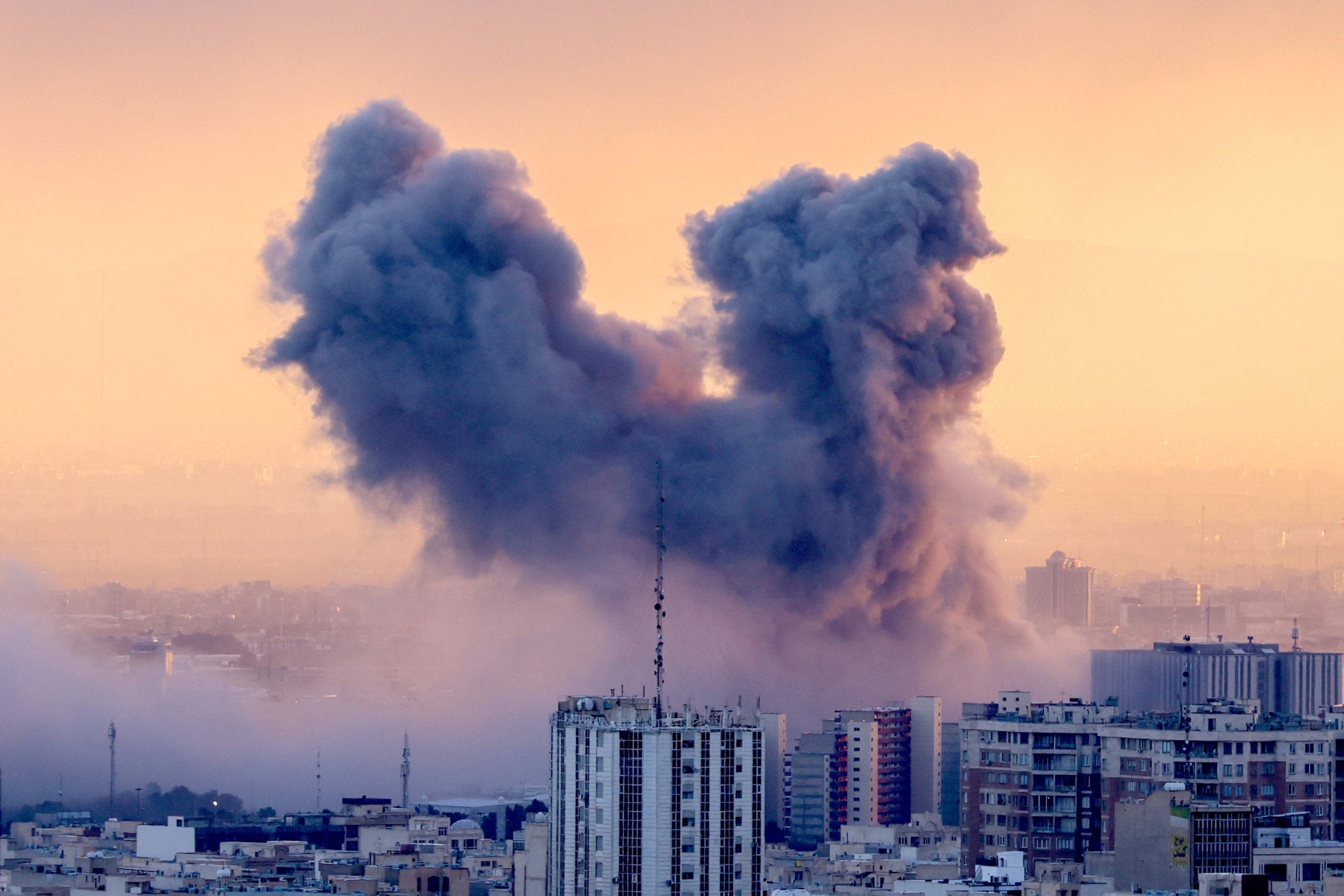
This comes as the war’s US price tag approaches US$20 billion, deaths mount, oil flirts with US$120 a barrel and Trump entreats China, Nato and other allies he never consulted for help amid confusing objectives and limited end-game clarity, even as more warships and US Marines head to the region.
The war would end “when I feel it in my bones”, Trump said earlier this month.
China’s thinking, according to a source familiar with Beijing’s views, is that the longer the conflict lasts, the worse it will be for the US. And the tougher Tehran’s resistance is, the more difficult it will be for Washington to declare victory and walk away, on the principle that, if your adversary is inflicting self-harm, do not interfere.
Analysts added that Trump’s chest-thumping, erratic policies, killing of a foreign leader and missile strike on a school were likely to scare other countries and undercut global trust in Washington – to China’s benefit.
“With the cast of characters in the cabinet, it’s not likely to end very well,” Tsukerman said. “They’re performing very well on a tactical military level. In terms of narrative warfare and long-term strategy, I don’t really see the clear objectives.”


