JAKARTA: Several political parties in the governing coalition and cabinet members have voiced support for a proposal to cut executive and legislative officials’ salaries as part of broader austerity measures to mitigate the economic impact of the ongoing United States-Israeli war on Iran.
President Prabowo Subianto floated the pay cut idea in his speech at a plenary cabinet session on March 13, one week before the Aidil Fitri holiday, in which he stressed the need for Indonesia to take proactive measures to mitigate growing uncertainty in global energy markets, triggered by the war in the Middle East.
He cited austerity measures adopted by Pakistan in response to the crisis as an example, including salary cuts for officials, remote working policies for both the public and private sectors and delaying non-essential state spending.
The proposal has received some support from parties within Prabowo’s ruling coalition, such as the Golkar Party, which holds the largest number of cabinet portfolios among those allocated to political parties. The party also commands the second-largest bloc of seats in the House of Representatives.
“If the country requires it, Golkar is ready for its members serving in the cabinet and the legislature to have their salaries cut,” Golkar secretary-general Muhammad Sarmuji said on Tuesday (March 24).
The pay cut, he added, would signal the country’s responsiveness to the situation and “our willingness to adapt”.
Sarmuji also suggested the government review less effective programmes and improve budget efficiency to ensure meaningful savings, but stopped short of specifying which programmes.
Another pro-government party, the National Mandate Party (PAN), whose chair
ulkifli Hasan and eight other members serve in the cabinet, said it would support the move should Prabowo decide to go ahead with the plan.
“[We] will not only support the President’s directive, but also stand at the forefront in ensuring that it will be widely and positively accepted [by the public and other coalition members],” PAN deputy chair Eddy Suparno said.
The Indonesian Democratic Party of Struggle (PDI-P), the only party with representatives in the House that is not in Prabowo’s coalition, said it did not object to the plan, but insisted that any austerity measures should begin with the country’s highest offices.
“If there are cuts or savings to be made, they should start with the top, from the President and Vice President down to ministers and other state officials,” PDI-P lawmaker Andreas Hugo Pareira said, as quoted by Kontan.
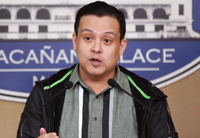
A number of ministers have also signalled openness to Prabowo’s austerity measures, including Human Rights Minister Natalius Pigai, who said that he is willing to have his paycheck reduced as long as it benefits the nation.
“I am the poorest minister in the current cabinet,” Pigai wrote on X on March 20. “However, if it is for the greater good or interest of the people and the nation, [...] even if I don’t receive a salary as a minister, I am willing.”
Finance Minister Purbaya Yudhi Sadewa said last week the government was reviewing details of the possible cuts, noting that cost-cutting efforts should begin within government institutions themselves, including ministries and state bodies.
Public policy expert from Trisakti University, Trubus Rahardiansah, urged the government to focus on trimming additional allowances for the officials rather than base pay, noting that ministers’ salaries represent only a small fraction of their total compensation.
Under prevailing regulations, a minister earns at least Rp 5 million (US$295) per month from base salary and Rp 13.6 million from positional allowances, excluding other perks.
Every minister also receives operational funds of up to Rp 120 million designated for official expenses, but their use is often criticised for being vague and loosely monitored.
“Such cuts should also not only target top officials in the central government, but also across all levels of government, including regional officials and executives of state-owned enterprises [SOEs], to have a meaningful fiscal impact,” Trubus said on Tuesday.
He also called for structural reforms within government institutions, including reducing the current total of 49 ministries and state agencies in President Prabowo’s cabinet, the largest since one formed by then-president Sukarno in 1966, as a temporary austerity measure that could be reversed once economic conditions improve. - The Jakarta Post/ANN