The bombs have been falling in the Middle East for over a week, but a nondescript tea stall in Kolkata is among those feeling the aftershocks rippling through Asia since the conflict began.
The stall’s owner, Abhijit Chakraborty, 45, is worried that rising cooking gas prices could hurt his earnings.
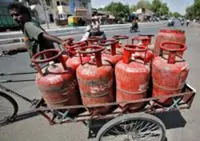
Indian state-run oil marketing companies raised the price of domestic cooking gas by 60 rupees (RM2.55) for a 14.2kg liquefied petroleum gas (LPG) cylinder from March 7, pushing rates to their highest level in over two years.
The country imports roughly two-thirds of its LPG requirements, mostly from the Middle East. About 90% of these imports transit through the Strait of Hormuz, a critical shipping line linking the Persian Gulf to the Indian Ocean, now effectively closed by the conflict.
Chakraborty uses up one cylinder of LPG each month, and he fears further price hikes could trim his monthly take-home earnings of around 12,000 rupees (RM511).
“A price rise will hit everyone. If someone had three cups of tea a day, he will now have just one,” he said. “I will be the one to lose.”
Families and businesses across Asia are feeling the pinch as US-Israeli attacks on Iran and its retaliatory actions across the Persian Gulf, including on oil fields, have significantly disrupted fuel production and supply.
Around a fifth of global crude and natural gas supply is already suspended, throwing oil markets into turmoil, especially in Asia, which buys close to 90% of West Asian oil exports.
There are concerns that the fuel shortages could also mean higher inflation and rising interest rates.
In the Philippines transport groups say the impact of rising global oil prices is already being felt by drivers despite the government rolling out measures to cushion the blow.
Mar Valbuena, chairman of Manibela, a group representing about 50,000 jeepney drivers and operators, said drivers’ earnings have already been squeezed.
“This week alone, drivers have been losing about 300 pesos (RM19.88) in daily income,” he said, adding that many now take home only about 400 pesos (RM26.50) after 12 to 15 hours on the road.
Bangladesh has introduced fuel rationing at petrol stations to stop panic buying.
On March 9, Dhaka said it will also close all universities from Monday, bringing forward the Hari Raya Aidilfitri holidays as part of emergency measures to conserve electricity and fuel.
Pakistan produces only a small fraction of the oil it consumes, jacked up petrol and diesel prices on March 6 by about 20%. This is one of the sharpest single increases in recent years.
Panic buying and long queues have been reported at petrol stations in the country, where the steep increase in pump prices has been dubbed a “petrol bomb”.
In India, farmers have started hoarding diesel ahead of the wheat harvest and paddy sowing season, fearing a price hike even though the government has said there are no such plans.
Long queues have also been reported at petrol and gas stations in India and Bangladesh, as customers stock up in anticipation of price hikes.
Similar scenes have unfolded ahead of the Hari Raya Aidilfitri travel rush in Indonesia, which has just over 20 days of fuel reserves.
Long queues were seen at petrol stations in the country, particularly in the provinces of Aceh and North Sumatra.
In Aceh’s Bener Meriah and neighbouring Aceh Tengah, videos circulating online show residents flocking to petrol stations carrying jerry cans to stockpile fuel.
In South Korea, many car owners are also flocking to stations to fill up their tanks before prices rise further, with some petrol stations reporting a 20% increase in sales.
Prices there have jumped more than 10% as at March 7.
The government is even considering doing something it has not done in more than 30 years – mandating a fuel price ceiling.
Several Asian economies have announced protectionist measures.
Thailand has already suspended its crude and petroleum exports, while China on March 5 ordered its largest oil refineries to halt diesel and petrol exports.
On March 10, petrol and diesel prices in China rose for the fourth consecutive time this year, marking the largest increase since March 2022.
Videos on Chinese social media showed long lines at some petrol stations the night before pump prices were set to rise.
Uncertainty is rife with no end in sight for the conflict, potentially forcing Asian economies – big and small – to absorb further shocks.
Taking a cautious long-term view, Asian countries have been diversifying their energy sources away from the Middle East.
“This conflict will impact Asia’s energy security considerations and deepen the need for energy independence, especially through renewables,” said Aarti Khosla, founder of Climate Trends, a consultancy focused on sustainability and environmental issues.
“Many countries in the region have massive import dependence for crude oil and LNG, and are now looking at making power generation adjustments and diversifying supplies,” she added. — The Straits Times/ANN