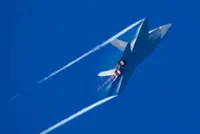
The simmering war in the Middle East fractured Europe on Monday, as allies clashed, tempers flared and the shock waves from the US and Israeli bombing of Iran threatened to reverberate through the continent.
The crisis exposed a familiar European fault line: while leaders insist they are the last guardians of the rules-based international order, they remain split over how to respond when allies bend or break those rules.
With oil price spikes threatening to compound the European economic malaise, EU member state Cyprus was attacked by a retaliatory Iranian drone strike, with British military bases on the island thought to be the target, underscoring how directly exposed Europe is to the fallout.
A cacophony of voices responded – some calling for restraint, others for regime change, while more still squabbled over who should actually be speaking on behalf of the EU, showing how European micro-politics can eclipse even the most seismic global crises.
At a spiky press conference in Brussels on Monday, EU spokespeople were unable or unwilling to clarify whether the strikes – conducted without consulting the UN Security Council or the US Congress – were legal under international law, even as they urged all parties to play by the rules.
Nor could they clarify whether European Commission President Ursula von der Leyen – who has no strict authority on foreign policy – was calling for regime change, and under whose authority, when she said the attacks showed “why a credible transition in Iran is urgently needed”.
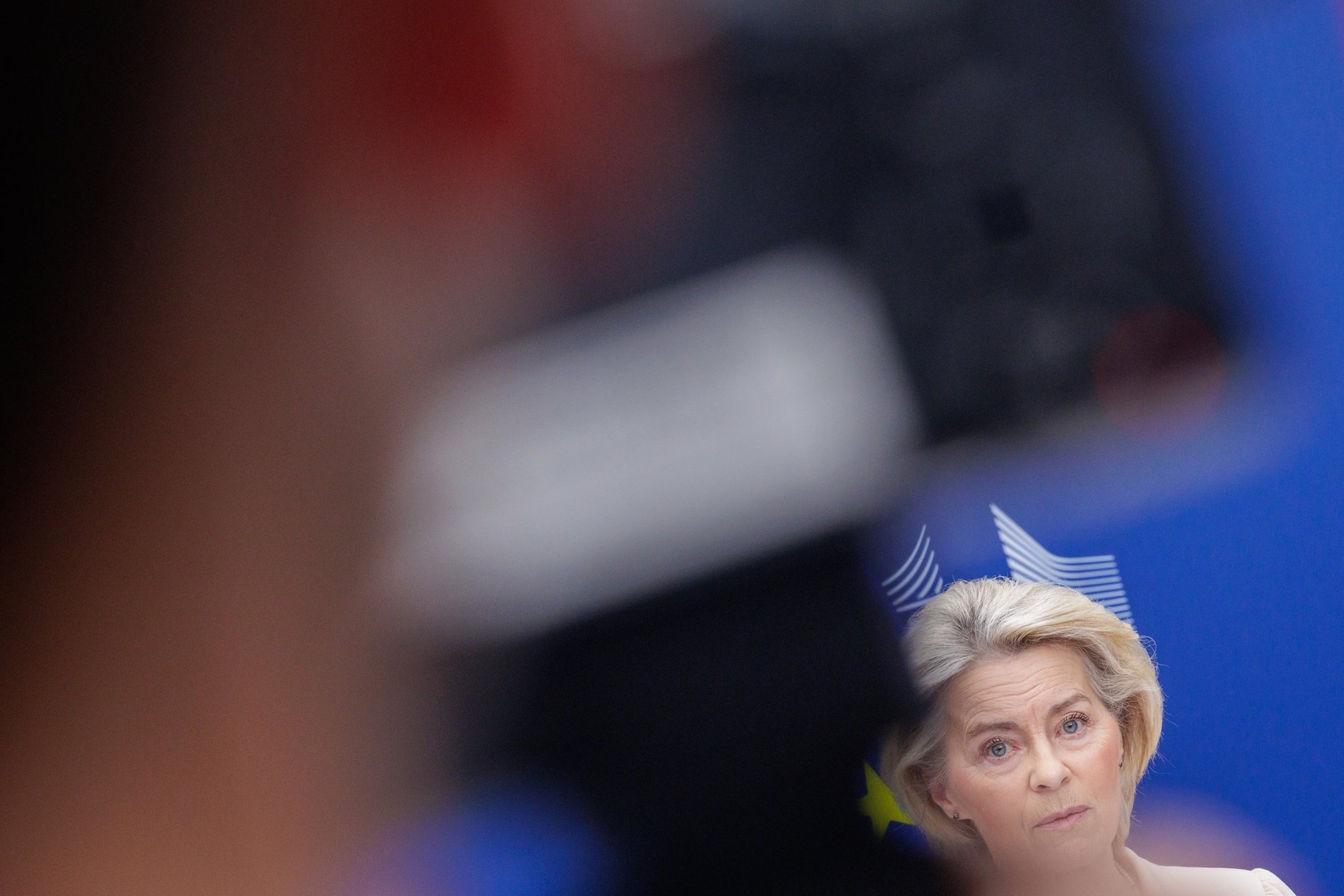
“As we’ve said this in English, French, whatever you like: The European Commission position has been finalised, and it’s not easy to have a common position, a joint position, on this kind of subject,” said spokeswoman Paula Pinho, pointing to a statement issued on Sunday.
For some, the crisis has brought Europe to a political crossroads. For months, its leaders have been calling time on the international rules-based order, using political speeches to present themselves as a predictable, legalistic force in a world turning to chaos.
On Sunday, German Chancellor Friedrich Merz said, “Legal assessments under international law will achieve relatively little in this regard ... that is why now is not the moment to lecture our partners and allies.”
“Despite all doubts, we share many of their goals, without ourselves being able to actually achieve them,” Merz said.
But in supporting US and Israeli action, critics said Europe undermined its own arguments when they criticise US President Donald Trump’s advances on Greenland or try to rally global support against Russia’s invasion of Ukraine.
“The most baffling thing about Europe’s support for regime change in Iran is that it contradicts its own interests,” said Alberto Alemanno, Jean Monnet professor of EU law at HEC Business School in Paris.
“American war leads to higher energy prices, an influx of refugees, an ensuing far-right surge, a further damaged rule-based order. If the US may get the geopolitical prize, Europe foots the bill.”
British Prime Minister Sir Keir Starmer confirmed it allowed the United States to use bases in the country to stage attacks on Iran – even as he refused to endorse the bombing campaign.
“We were not involved in the initial strikes against Iran, and we will not join offensive action now. But in the face of Iran’s barrage of missiles and drones, we will protect our people in the region,” Starmer told Parliament.
“President Trump has expressed his disagreement with our decision not to get involved in the initial strikes, but it is my duty to judge what is in Britain’s national interest. That is what I’ve done, and I stand by it,” he said, in response to US criticism over delayed approval for British launches.
Qualified support came from Berlin and Paris, while Nato Secretary General Mark Rutte told the BBC that “all of us in Europe are extremely glad with what the Americans are doing”.
“We will take steps to defend our interests and those of our allies in the region, potentially through enabling necessary and proportionate defensive action to destroy Iran’s capability to fire missiles and drones at their source,” read a statement of the E3 leaders comprising Britain, France and Germany on Sunday.
The view could scarcely have been more different in Spain, where Prime Minister Pedro Sanchez suggested that the joint attacks by Israel and the US launched on Saturday, to which Iran responded forcefully, were against international law.
“We reject the unilateral military action by the United States and Israel, which represents an escalation and contributes to a more uncertain and hostile international order,” Sanchez said.
“Today more than ever, it is essential to remember that one can be against a hateful regime, as is the case with the Iranian regime, as is the whole of Spanish society, and at the same time be against an unjustified, dangerous military intervention outside of international law,” the left-wing leader added.
Washington withdrew a dozen tankers from joint bases in Seville and Cadiz after the Spanish government refused to allow the refuelling of fighter jets launching sorties in Iran. Defence Minister Margarita Robles said any operations in Spain “must operate within the framework of international legality”.
On the day that French President Emmanuel Macron offered to put nuclear weapons in other European countries, his foreign minister vowed to defend Gulf allies targeted by Iran.
“We stand ready to contribute to their defence at their request, in a proportionate manner and in accordance with the principle of collective self-defence as provided for under international law,” Foreign Minister Jean-Noel Barrot said at a press conference on Monday.
Barrot, who confirmed an Iranian drone struck a French naval base in Abu Dhabi on Sunday, although no casualties were reported, also spoke with Chinese counterpart Wang Yi on Monday by phone.
In Paris, he acknowledged that the UN Security Council has been paralysed by the veto powers of certain permanent members – an apparent reference to Russia and China, which have traditionally supported Tehran in key diplomatic forums.
Emphasising the fine line European political figures are walking on the crisis, the top diplomat stressed that “the intervention unilaterally decided by Israel and the United States should have been debated in the appropriate bodies designated for that purpose”.
While few are suggesting wading directly into another Middle Eastern war, Europe will not be immune from its effects, analysts said.
“European actors, even those not taking a principled stand against this war, must recognise the pragmatic self-interested reasons to contain this conflict. The spiral of violence risks dragging European interests into the fray,” wrote analysts from the European Council on Foreign Relations. -- SOUTH CHINA MORNING POST