
YANGON (The Straits Times/ANN): Yangon is experiencing a property boom, with prices of some condominium units doubling in just five years, even as Myanmar’s economy struggles to regain its footing amid an ongoing civil war.
Myanmar property consultants told The Straits Times this is “not normal”, and even “crazy”.
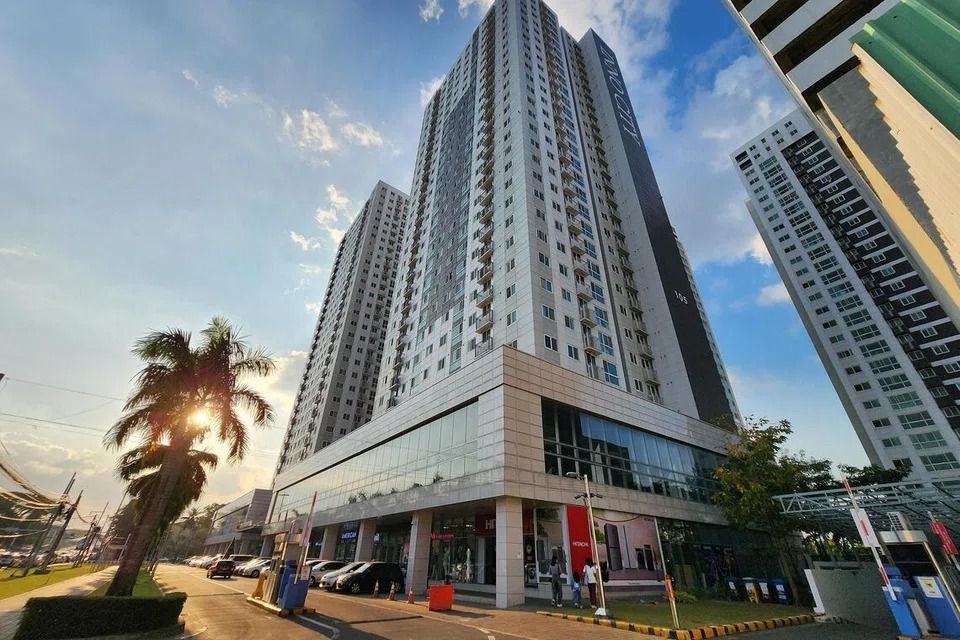
At Inno City, a mixed-use project by South Korean developers completed in 2023, a 130 sq m three-bedder costs about one billion Myanmar kyat or US$476,000 (S$610,000). Before the 2021 coup, a similar unit would have cost US$286,000.
“We’ve seen residential prices in major cities like Yangon roughly double since 2020, and in some outlying townships and secondary locations, prices have tripled or more,” said Mr Karlo Pobre, deputy managing director at Colliers Thailand. “This has happened even though economic fundamentals remain weak.”
The country continues to grapple with violent clashes between resistance forces and the junta army following a coup in February 2021 that also sparked an economic crisis. For the fiscal year ending March 2026, real gross domestic product is expected to contract by 2 per cent, based on the World Bank’s estimates. Inflation is expected to remain above 20 per cent in the near term.
The World Bank also noted in its December report that while Myanmar will see moderate signs of economic improvement, it still faces significant headwinds, as the country experiences persistent conflict and enduring structural challenges.
Mr Pobre therefore believes a major driver of high property prices is not income growth or investment returns but “risk hedging”.
Mr Thein Saw (not his real name) from Yangon told ST he started investing more seriously in property in 2022 – after the coup started – because his creative-sector job became unsafe.
“I realised that my foreign currency savings were rapidly gaining purchasing power against local assets that hadn’t yet adjusted to inflation. I noticed a ‘valuation gap’ where properties were priced at pre-2020 levels in kyat but were significantly undervalued in US dollar terms,” said Mr Thein Saw, who is in his 30s and declined to give his real name for privacy reasons.
“By acquiring these assets, renovating them, and timing the resale to market corrections, I found a way to preserve my capital and generate growth during a time of extreme currency volatility.”
As a property “flipper”, he observed that many of his friends are doing the same thing. “The market has shifted from a long-term ‘buy-and-hold’ model to a high-velocity ‘trading’ model.”
He added: “Before 2020, people invested for rental yield and steady growth. Today, the market is driven by liquidity and speculation.”
Moving away from conflict and earthquakes
Property agent Htay Myint pointed out that internal migration from conflict-prone areas in the north to the relatively safer areas of Yangon, Myanmar’s commercial hub, has also driven up demand, leading to soaring prices.
He has also seen how Yangon properties became more popular after a devastating earthquake hit central Myanmar but left the city relatively intact in March 2025. The quake damaged or destroyed more than 55,000 homes across multiple regions, including Mandalay, Sagaing and the capital Naypyitaw.
He noticed, too, that a number of Myanmar citizens who used to operate manufacturing and hospitality businesses have shut down their enterprises because of the coup as they felt it too risky to continue.
They have instead channelled their funds to purchase real estate, seen as having lower investment risks.
Mr Htay Myint said that based on his experience, middle- and upper-middle-class locals used to buy properties in countries like Thailand and Singapore, but have started to be more inward-looking owing to military-imposed banking policies.
In April 2022, a year after the coup, the military regime ordered the central bank to mandate that all individuals, companies and other organisations in Myanmar convert foreign-currency income received from abroad to kyat.
In June 2024, the central bank further tightened the rules on capital outflows. This prompted many citizens to look into buying real estate in Yangon.
‘Storage of wealth’
Property consultant Hsan Pyae described the purchases as “artificial demand” where buyers treat the units as “storage of wealth, not for actual living”.
He added that this is because citizens want to avoid parking their cash in a volatile and untrustworthy coup-administered banking system, calling it a “hedge against the depreciation of the Myanmar kyat”, which plunged from 1,330 kyat per US dollar in 2021 to 4,520 kyat in 2025.
Property consultant Matthew Tun said the general market sentiment on real estate is that “as long as it’s a fixed asset, the price will never go down”.
“Ever since we were young, when you look at land, they always say land is king,” he said.
Mr Tun also pointed out that demand is high since there is a limited supply of good-quality condominiums in Myanmar.
“That’s where the prices skyrocket,” he said. “And there is no valuation law here. So it’s always word of mouth. If I sell (the property) at one million and you’re my neighbour, you might think ‘oh, maybe mine is worth two million’, so the price climbs up to three million.”
Mr Thein Saw told ST that for 2026, he will continue to “buy affordable, below-market-value properties that allow for a quick turnaround”.
He regards himself as fortunate to be able to make his money work for him by flipping properties, while many other citizens are struggling with poor wages or unemployment, exacerbated by the coup.
“For me, this business (is) a way to responsibly manage the savings that I worked years to build, turning a survival instinct into a structured investment path.” -- The Straits Times/ANN