The country will outline this week how it plans to push the next phase of its technology race with the West, and convert a wave of high-profile breakthroughs in artificial intelligence, space and robotics into industrial scale and capital market momentum.
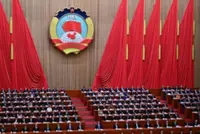
The top leadership will publish its annual government work report and budget plans at the opening session of the National People’s Congress (NPC), China’s rubber-stamp parliament, on Thursday, as well as the outline of its 15th Five-Year Plan for 2026-2030, a sweeping blueprint that sets priorities for industrial policy.
The reports spell out Beijing’s priorities and indicate which industries it will favour with generous funding and policy support.
Last year, AI models received a mention for the first time while embodied intelligence – the technology that powers humanoid robots – was also highlighted.
The NPC happens weeks before a planned meeting between Chinese President Xi Jinping and US President Donald Trump from March 31 to April 2, where technology controls and supply chains are expected to feature prominently.
It also marks a year since Chinese AI developers drew global attention for sudden leaps in capability despite tight US restrictions on access to advanced chips and chipmaking equipment.
DeepSeek, the Chinese startup whose viral AI model release last year triggered a global tech share selloff and reshaped assumptions for China’s technology competitiveness against the United States, is widely expected to roll out a next-generation model in the coming days.
“The shock is over,” said Alfredo Montufar-Helu, a managing director at Ankura Consulting in Beijing. “Now there is an expectation of what China can come up with next.”
The challenge for Beijing is how to turn individual breakthroughs into systematic, large-scale gains across manufacturing, logistics and energy.
Shujing He, a senior analyst at advisory firm Plenum China, said policymakers are likely to push “AI-plus manufacturing” by using large state-owned enterprises as anchor adopters, pulling startups and specialised suppliers into real-world deployment.
That strategy, however, is also expected to reshape China’s industrial structure.
Shin Nakamura, president of Japanese manufacturer Daiwa Steel Tube Industries, said China’s AI push is likely to favour large, capital-intensive producers able to absorb the cost of deployment, while smaller firms face structural constraints.
“The gap between large enterprises and SMEs in China will widen and consolidation will accelerate,” he said.
The five-year blueprint is also expected to double down on embodied intelligence.
The country showcased advances it had made in the arena last month by putting Chinese-made humanoid robots performing dancing and martial arts centre stage on China’s most-watched TV show, the annual CCTV Spring Festival gala.
But Chinese regulators are also warning about low differentiation among more than 150 domestic humanoid robot developers, and analysts say consolidation is likely to arrive faster than in earlier strategic sectors such as electric vehicles.
Space is another test case for Beijing’s drive to translate research into industrial strength.
Private launch firm LandSpace said it plans another recovery attempt this year for its reusable Zhuque-3 rocket, after becoming the first Chinese company to conduct a full test of an orbital-class reusable launcher in December. — Reuters