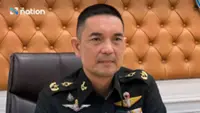
BANGKOK: Thailand’s Foreign Minister, Sihasak Phuangketkeow (pic), has warned that the conflict in the Middle East has evolved beyond a limited strike on nuclear facilities and is likely to become a "prolonged" engagement.
Speaking after a National Security Council (NSC) meeting at Government House on Monday (March 2), the Minister detailed urgent plans to repatriate Thai citizens as regional tensions soar.
The Minister revealed that any evacuation of Thai nationals from Iran would require a difficult 1,000-kilometre road journey to the Turkish border, from which they would board connecting flights.
"We are coordinating with Iranian authorities to ensure safe passage on humanitarian grounds," Sihasak stated. "The journey is arduous, and we require firm security guarantees for our citizens."
Regarding the United Arab Emirates, specifically Dubai and Abu Dhabi, over 1,000 Thai nationals have already expressed a desire to return home.
The Ministry plans to facilitate their transit via Muscat, Oman, where the international airport remains operational.
The two-hour journey from the UAE to Oman is currently deemed the most viable route for those seeking an immediate exit.
The Foreign Ministry provided a country-by-country breakdown of the current risk:
Israel: The Minister noted that Israeli authorities currently appear to have the situation under control, with missile defence systems successfully intercepting threats. No Thai nationals have yet requested repatriation from Israel.
Gulf States: Embassies in Bahrain, Qatar, and Kuwait are currently polling citizens on their intent to leave. Coordination is being prepared through neighbouring Saudi Arabia, where commercial flights continue to operate.
Sihasak offered a sobering assessment of the motivations behind the recent US and Israeli strikes.
He suggested that the objectives have shifted beyond the mere "elimination of nuclear threats," pointing towards a more fundamental and lasting confrontation.
"Iran appears committed to retaliating against nations hosting US bases in the region," the Minister observed. "This suggests a long-term conflict that requires Thailand to be prepared, not just for evacuations, but for domestic economic and security impacts."
Despite intermittent signal disruptions, the Thai Embassy in Tehran remains in contact with the Ministry.
Sihasak urged all Thais in high-risk areas to stockpile essential supplies, including water and dry food. He further issued a blanket advisory for all Thai citizens to avoid travel to the Middle East until further notice. - The Nation/ANN