
Taiwanese leader William Lai Ching-te’s rare reference to “mainland China” signals caution ahead of a highly anticipated Xi-Trump summit, according to analysts who say it is premature to declare a shift in his cross-strait policy.
Addressing a group of Taiwanese businesspeople operating on the mainland on Tuesday, Lai used the term “mainland China” multiple times, contrasting with his frequent use of “China” in major speeches since his 2024 inauguration as the self-ruled island’s leader.
During the annual gathering held to celebrate Chinese New Year with Taiwan’s business community, Lai also called for maintaining the status quo across the Taiwan Strait.
“We hope to exchange and cooperate [with the mainland] so that both sides of the Taiwan Strait can move towards peace and common prosperity,” he said, according to Taiwan’s United Daily News.
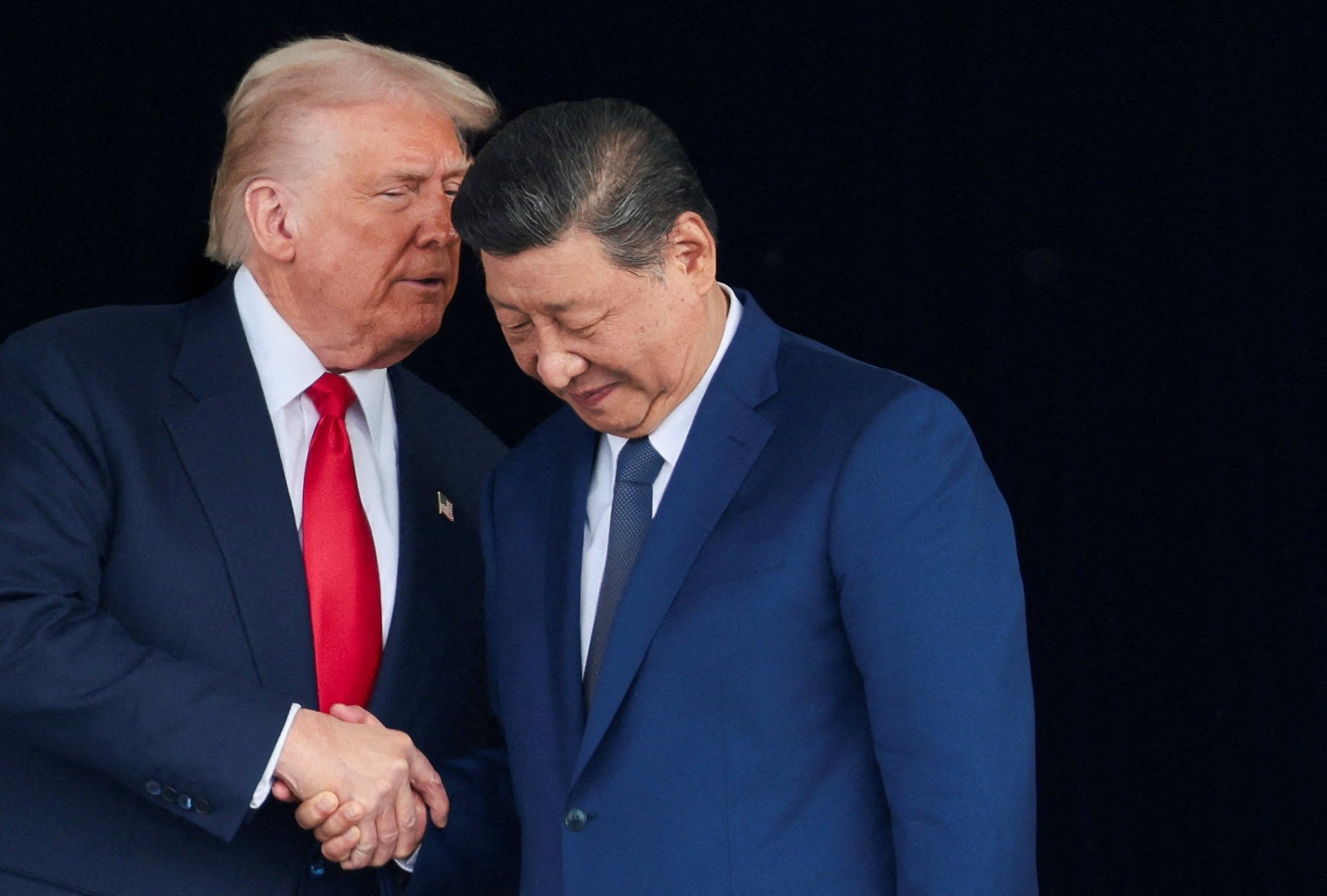
Analysts said the shift in wording indicated Lai was seeking to ease cross-strait tensions under pressure from Washington before US President Donald Trump’s scheduled visit to Beijing from March 31 to April 2, when Trump is expected to meet Chinese President Xi Jinping.
Beijing sees Taiwan as part of China to be reunited by force if necessary. Most countries, including the United States, do not recognise Taiwan as an independent state, but Washington is opposed to any attempt to take the self-ruled island by force and is committed to supplying it with weapons.
Taiwan is likely to be a focal point of the discussions between Xi and Trump.
“Trump will soon visit China, and the US is restraining Taiwan,” a mainland analyst said on condition of anonymity, suggesting a reason for Lai’s more cautious phrasing.
Wang Kung-yi, director of the Taiwan International Strategic Study Society, a Taipei-based think tank, noted that Lai had rarely used the term “mainland China” since taking office as the island’s leader.
Wang said a possible reason for the shift was that Lai “may be exercising greater caution under implicit pressure from Washington” ahead of the Xi-Trump meeting in Beijing.
He added that Lai uttered the reference at an event aimed at Taiwanese businesspeople operating on the mainland who were returning home for the Chinese New Year holiday, making the phrasing context-specific.
However, Wang and other analysts stressed that a single reference carried limited significance and should not be overstated, nor did it necessarily signal a shift in Lai’s broader cross-strait policy.
Another possibility was that Beijing refrained from holding large-scale military drills around Taiwan during Chinese New Year. In that context, Lai may have moderated his previously sharper rhetoric as a reciprocal gesture, Wang said.
In previous major speeches, including his inauguration address and Double Tenth holiday speeches, Lai used the term “China” to refer to the mainland and said the two sides of the Taiwan Strait “are not subordinate to each other”.
Beijing has criticised such remarks as promoting a “two-state theory” and undermining stability.
“The more important indicator is not a single instance of wording but Lai’s broader pattern of language,” Wang said.
“To assess whether he is genuinely easing his confrontational stance, we should examine how he refers to the mainland in major policy addresses.”
At a separate event at the island’s security agency later the same day, Lai reverted to using “China” when referring to Beijing. There, he warned that Beijing would ramp up efforts to interfere in Taiwan’s local elections later this year.
Wang Jianmin, a cross-strait expert at Minnan Normal University in Fujian province, said Lai’s decision to say “mainland China” was clearly intended to ease tensions and create a positive atmosphere during a Chinese New Year gathering attended by Taiwanese business representatives.
But he also said such phrasing did not mean Lai’s political stance had changed.
In particular, Lai’s refusal to accept the 1992 consensus – an understanding that both sides recognise there is only “one China”, while allowing each to maintain its own interpretation of what that means – remained a central source of tension and was not expected to be altered, Wang Jianmin added.
In recent months, Lai has conveyed other signals suggesting a softening in cross-strait issues.
In December, he visited a restaurant on the island run by a mainland-born woman married to a Taiwanese man after Taiwanese authorities tightened enforcement of residency regulations for mainland-born spouses, citing concerns over infiltration.
Wang Jianmin said Lai’s outreach efforts, including the restaurant visit, appeared aimed at easing tensions but did not represent a major policy adjustment.
Zhang Wensheng, deputy dean of the Graduate Institute for Taiwan Studies at Xiamen University, also in Fujian, added that Lai’s use of “mainland” deserved acknowledgement as a sign of de-escalation.
But Zhang also cautioned against reading too much into a single instance.
“It is not enough to focus on one statement at a particular moment,” he said. “We need to look at his consistent positions and behaviour over time.” -- SOUTH CHINA MORNING POST