




US President Donald Trump’s administration announced on Wednesday that it would rescind a rule rewarding electric vehicle production – eliminating the so-called “fuel content factor” – the latest in a series of actions rolling back federal support for EVs that analysts say could leave the US further behind in a global race increasingly shifting in China’s favour.
The move comes as the US struggles to compete with China’s rapid growth in the EV sector, marking another setback for America’s industry, which has also seen tax incentives slashed and emissions rules eased since Trump returned to office.
Some analysts argue that rolling back regulations, such as fuel economy standards, pushes the US further towards petrol cars, discourages EV innovation and gives China a competitive edge. Others are concerned about the uneven playing field during a transitional period for the industry.
The rule rescinded on Wednesday allowed manufacturers to count electric vehicles as having artificially high fuel-economy values when calculating fleetwide averages under Corporate Average Fuel Economy (CAFE) standards. Known as the “fuel content factor”, it was designed to incentivise carmakers to produce EVs by effectively crediting them with greater energy savings.
CAFE standards aim to “reduce energy consumption by increasing the fuel economy of cars and light trucks”, according to the US Department of Transportation.
In February, the Environmental Protection Agency rescinded the “endangerment finding”, which forms the basis of climate regulations in the US, and repealed tailpipe pollution standards.
“American families will suffer long-term harms so that giant auto and oil companies can pocket short-term profits,” said Dan Becker, director of the Centre for Biological Diversity’s Safe Climate Transport Campaign, in a statement on the company’s website.
“They’re popping champagne corks at the Opec and GM headquarters but also in Beijing, where China’s EV makers will face no competition from the US to dominate the world’s clean car market.”
The EPA was sued on Wednesday by a coalition of health and environmental groups over its rollback of the climate protections.
In December, Trump proposed significantly reducing the fuel economy standards set by the National Highway Traffic Safety Administration (NHTSA), which establishes a minimum average miles per gallon requirement for certain vehicles sold by manufacturers.
Sean Tucker, managing editor at automotive research company Kelley Blue Book, said there’s a little political gamesmanship going on here.
“The US enforces its fuel economy standards through fines to automakers who miss the target,” he explained.
“The Trump administration announced last June that it would no longer enforce those rules and waived fines going back to 2022. Changing the rules you don’t enforce only means so much.”
“Mostly, this serves to loosen the rules in case some future president tries to enforce them again.”
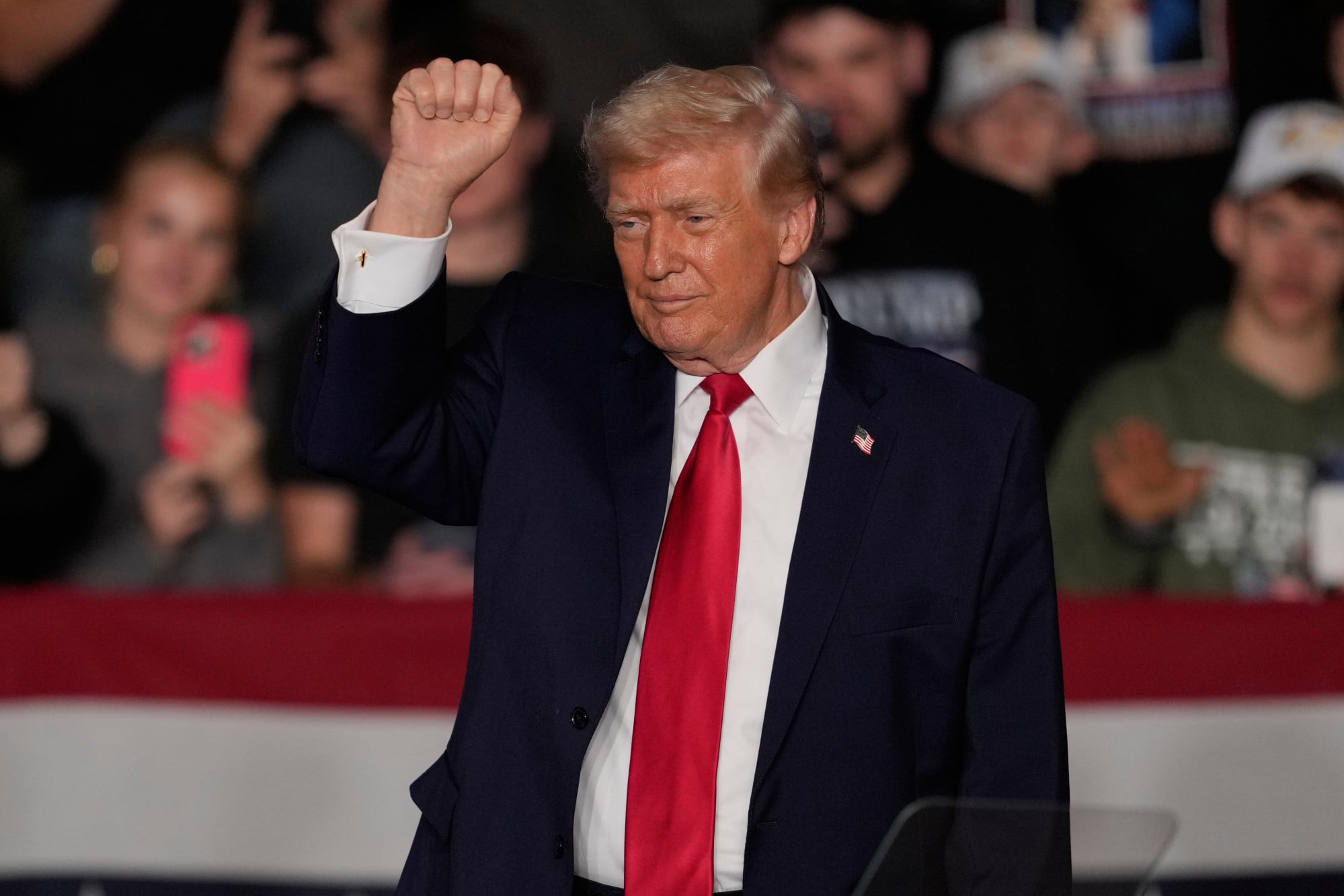
US car industry finds itself in tough situation
The Trump administration’s general approach to EV policy is putting the industry in a bit of a bind, according to Tucker.
The government’s policies in the short term encourage carmakers to focus on petrol-powered cars, but “in the long run, they’ll lose ground globally if they don’t keep up on EVs”.
The US was once a pioneer in EV innovation and adoption, with Tesla at the forefront globally, but in recent years, the focus has shifted to China.
The Chinese government has consistently provided incentives to support the development and innovation of EV technology, thereby encouraging the industry to grow rapidly both domestically and internationally.
The Trump administration has taken a different approach, scaling back EV incentives for both consumers and manufacturers, thereby further prolonging the dominance of the traditional petrol car.
David Hart, a senior fellow in climate and energy at the Council on Foreign Relations, said the fuel economy standards proposal puts more obstacles in place for US-based producers to respond to the explosive growth of Chinese EV exports.
“Without a growing domestic market, these producers don’t have as much of a chance to learn-by-doing, whether that leads to improving productivity or identifying new features or models through market signals,” he added.
Foreign markets are also increasingly at risk, further limiting opportunities for innovation, according to Hart.
“If the US doesn’t develop as a manufacturing base for EV production, its auto exports [currently worth about US$150 billion per year] are likely to erode as the rest of the world goes electric,” he said.
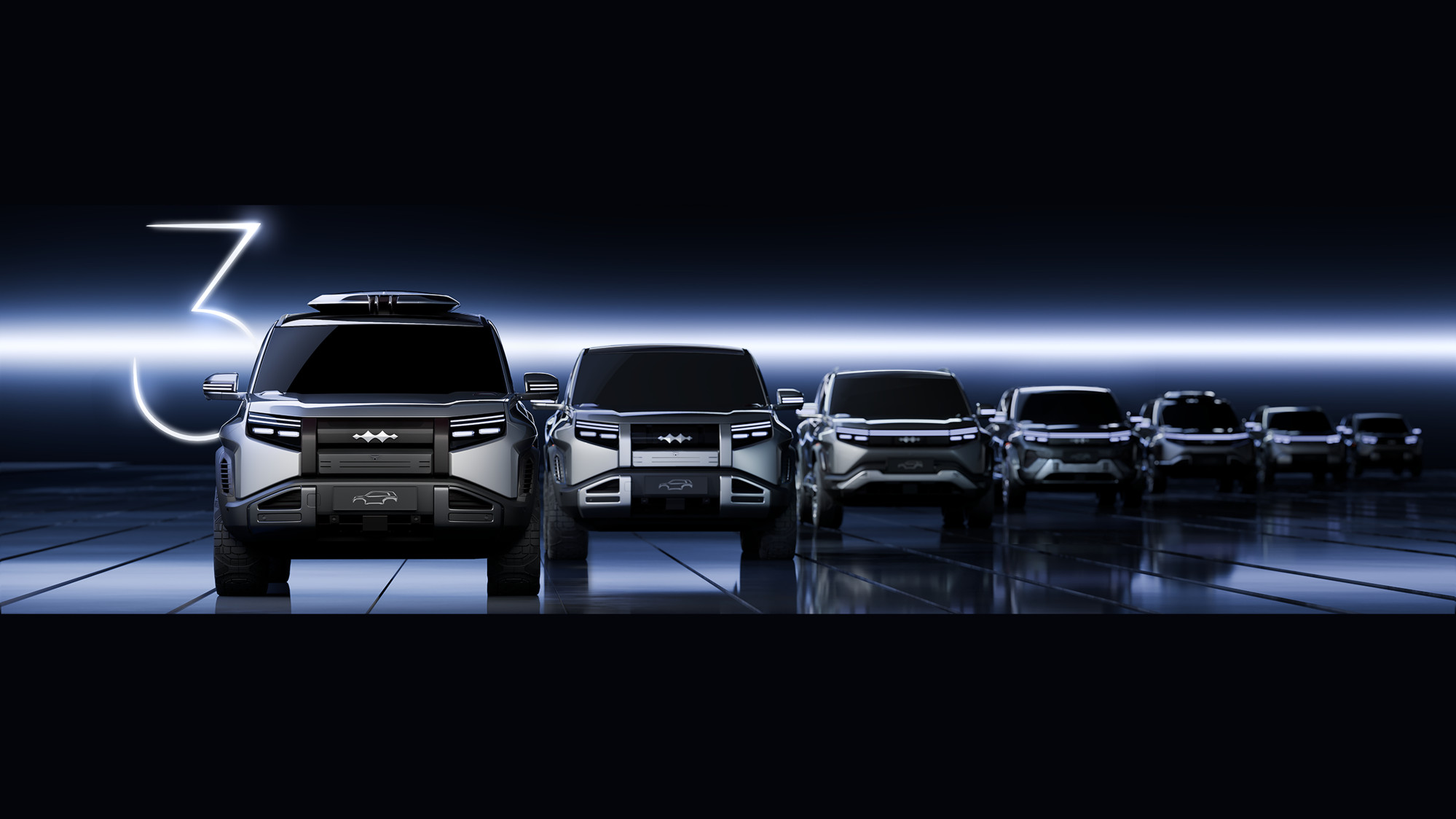
Global market positions shift for US and Chinese carmakers
In January, it was announced that China’s BYD stole Tesla’s crown as the world’s top-selling EV maker for the first time. Recently, there has been a shift in how US and Chinese carmakers view their positions in the global market.
They approach the EV industry from two distinct perspectives.
“Ford CEO Jim Farley called the industry ‘a regional business’ on a call with investors earlier this year. I don’t think Ford executives thought of their business as regional 10 years ago,” Tucker said. “I don’t think [major Chinese carmaker] Geely thinks of itself that way now.”
While Chinese brands like Geely have gone global, they are almost non-existent in the US. There is currently a 100 per cent tariff on Chinese-made EVs in the US, which largely means that the likes of China’s BYD, Xiaomi and Geely have been shut out.
While the US remains on this path, Canada has taken a different approach. It had initially followed the US with 100 per cent tariffs, but in 2026, Canada decided to change lanes. The country reached a bilateral agreement with China in January, under which up to 49,000 Chinese cars may enter the Canadian market annually at a preferential tariff rate of 6.1 per cent.
“Canadians can easily drive on US roads. They do it all the time,” Tucker said.
“Americans in northern states will soon see Chinese cars on the roads around them regularly, and some will no doubt research what they are.”
These concerns have left some US politicians and industry figures worried about the implications for the EV industry’s future.
In February, 80 Democratic lawmakers urged the government to abandon Trump’s proposal to scrap the standards that were finalised in 2024 by former president Joe Biden.
“Historically, strong CAFE standards have driven American innovation, from hybridisation and advanced power trains to aerodynamic breakthroughs,” wrote the lawmakers.
“We currently have widely available and well-proven tools to keep improving fuel economy, which save Americans money at the pump and deliver more affordable, efficient, cleaner vehicles.”
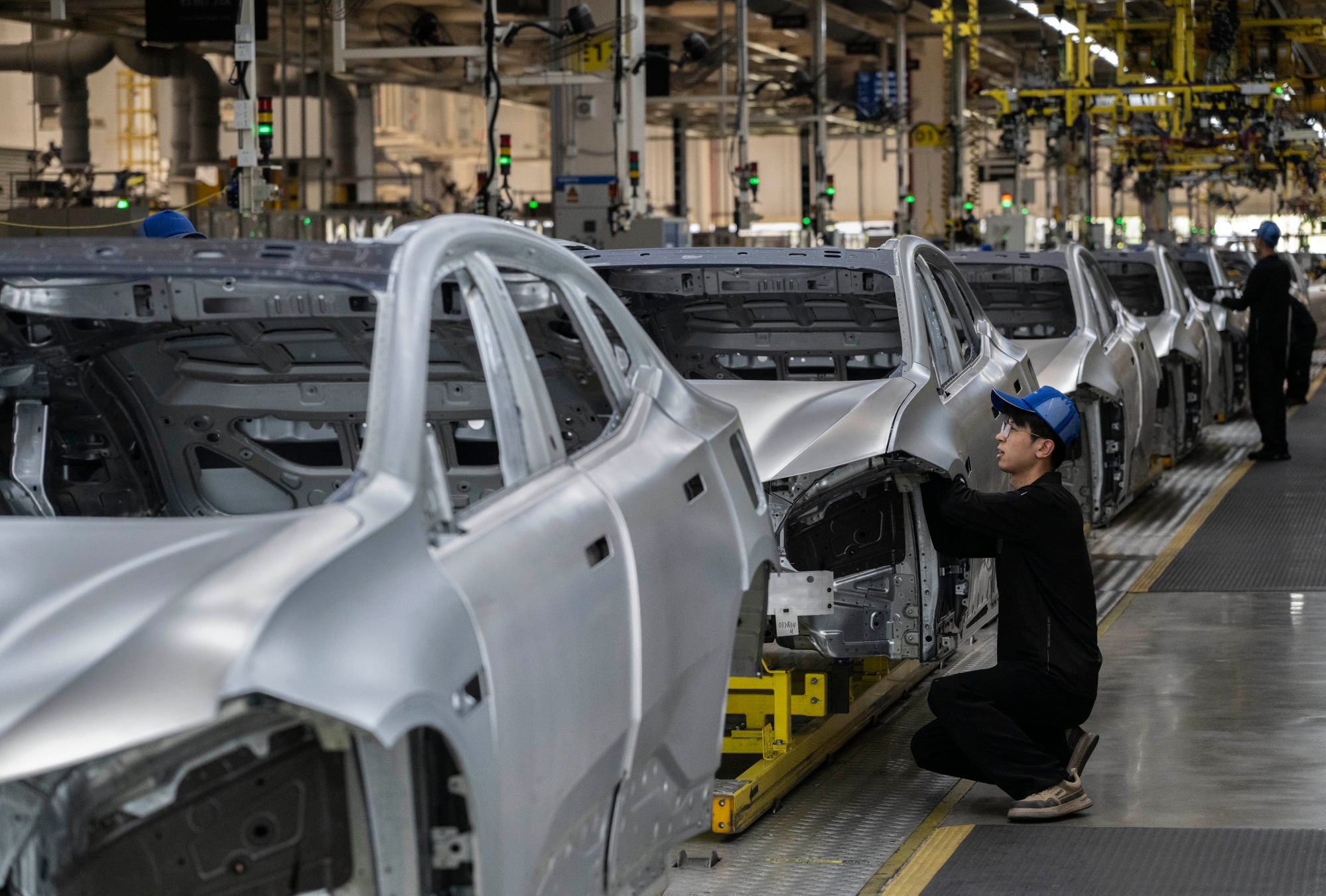
The industrial group Zero Emission Transportation Association (ZETA) also expressed concern, saying that a rollback of fuel-economy standards will harm affordability and advanced manufacturing in the US.
“This action also harms domestic manufacturers that have invested heavily in advanced technologies, the facilities needed to bring them to market, and the employees that have been hired to build them,” wrote executive director Albert Gore in a statement on ZETA’s website in December. Gore worked at Tesla for seven years before his current role.
“It also complicates further investment in domestic manufacturing and the upstream supply chain, as changing standards create uncertainty for businesses,” he wrote.
“Beyond the domestic market, this move will also make American-made vehicles less competitive globally, particularly in markets that continue to demand strong fuel economy performance.”
ZETA did not respond to two requests for comment from the South China Morning Post.
On the other hand, a key US automotive alliance argued that the current standards cannot be met, given the decline in US EV sales.
“Given the slowing growth of EV sales in the US and reduced government policy support, the previously issued CAFE standards are simply unachievable,” the Alliance for Automotive Innovation wrote in comments submitted to the NHTSA in February.
The alliance represents General Motors, Toyota Motor, Volkswagen, Hyundai, Ford and other carmakers.
Tucker countered this, claiming that carmakers are not truly trying to meet the standards because they are no longer enforced.
“I do think a future administration could find a middle ground between the tougher Biden-era standards and Trump’s approach,” he said.
“But I also think the industry will continue to evolve towards better fuel efficiency no matter what the government does.”
Future investments may be hampered if US policy changes again
The whipsaw effect of these two administrations on the industry might impede future investments if policy changes again, according to Hart.
“The US auto industry invested on the expectation that something like the previous policy [tax credits, supply chain investments, fuel economy regulations, etc] would stay in place and is now writing off massive losses as a result,” he added.
These policy changes are making it difficult for carmakers to achieve consistency, with Tucker citing the example of Ford’s new Universal Electric Vehicle Platform that “brings them much closer to the way China builds EVs”.
“Ford is now building it knowing they won’t recoup the costs for many more years than they originally projected,” he said.
Alan Taub, a professor of materials science and engineering at the University of Michigan, said governments worldwide should better align EV incentives and policies to ensure the global automotive industry continues to progress.
“Does the world do better with level playing fields and competition in a fast-changing industry? Yes,” he said.
History suggests the industry is unlikely to be dominated by a single country, Taub explained, although policy uncertainty and shifting incentives remain a challenge during the industry’s transitional period.
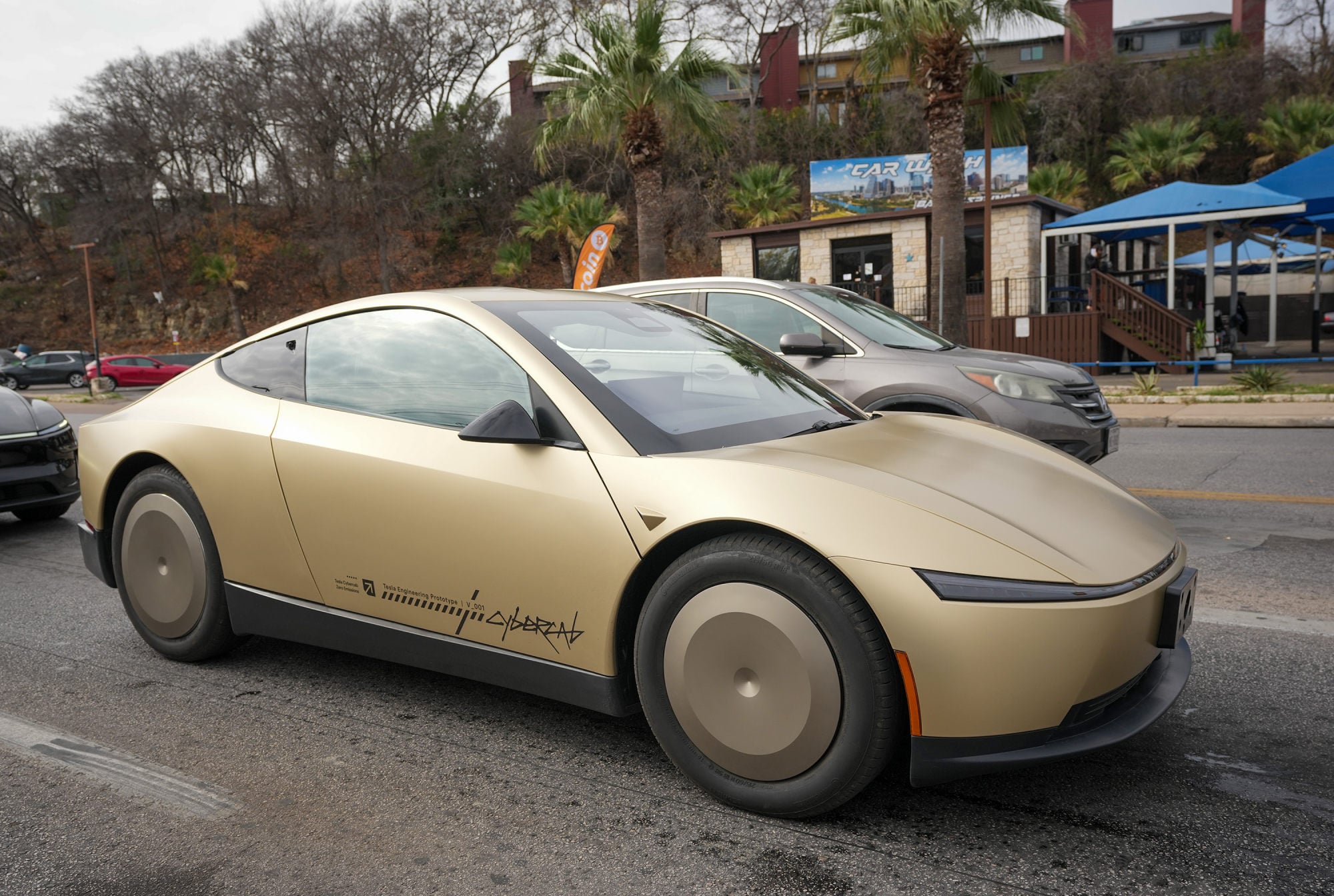
Taub, who is also the director of the university’s EV centre, said the gap between the US and China’s EV industries is more a matter of differences in real-world experience and manufacturing.
Countries with existing automotive industries recognise the importance of maintaining them, Taub added, while “new countries recognise the value of getting into it”.
“I hope the governments of the world allow a level playing field and the natural transition to electrification. It’s better for the consumer and better for the environment,” he said.
Taub believes that, government incentives or not, the future of driving still lies with electric vehicles.
Despite government policy, US carmakers continue to face pressure to adapt to EVs due to the international market.
Like Taub, Tucker agreed that the US will eventually transition to EVs.
“But they have to do it without much support,” he said. -- SOUTH CHINA MONING POST



