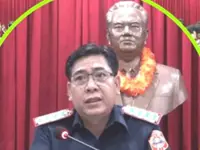
Decades after the guns fell silent, unexploded ordnance (UXO) remains a daily threat in Laos, so much so that President Thongloun Sisoulith is renewing calls to hasten clearance efforts and bring an end to the legacy that continues to claim lives and hinder national development.
In a special message, Sisoulith called for urgent national and international action on what he called the deadly remnants of the Second Indochina War (1964-1973).

“Even today, these problems remain a severe threat to the lives and livelihoods of the Lao people.
“After the war, we thought we would be safe but we are still not safe. This is the pain that people still suffer,” he said, as reported by the Vientiane Times yesterday.
The president said the horrific episode destroyed infrastructure, reduced the country’s population, and pushed back progress. And despite efforts to remove them, the buried explosives continue to kill and maim Laotians.
There were 15 accidents and 25 casualties last year, and so far this year, there have been two incidents and seven casualties.
He said Laos suffered massive aerial bombardment during the Indochina War. More than 580,000 combat flights dropped over two million tonnes of bombs on Lao territory, an average of one flight every eight minutes for nine years.
An estimated 270 million cluster munitions were dropped during the war, making Laos the most heavily affected country in the world per capita.
When accidentally struck, they explode, causing injuries, disability, and deaths every year.
Asean Parliamentarians for Human Rights co-chair Charles Santiago said Laos needs to address this issue more broadly at the United Nations General Assembly. He suggested taking inspiration from Vietnam’s approach after the war, which included a comprehensive campaign to eliminate UXO.
The number of people killed or injured has declined to about 300 annually in recent years, according to UXO Lao. — Bernama