
SEOUL: Gold has long been woven into the fabric of Korean life. The precious metal has traditionally marked key rites of passage, from births and marriages to other major milestones.
But soaring gold prices are reshaping customs, prompting cutbacks and substitutions in traditions once taken for granted.
The spot price of gold in Korea hovered at around 245,000 won (US$168) a gram as of Thursday (Feb 5), representing a roughly 80 percent increase from 138,000 won a year earlier, according to the Korea Exchange. Before a sharp sell-off earlier this week, the metal had peaked at 269,810 won.
Zooming out, the scale of the rally becomes even clearer. Gold prices have climbed more than threefold over the past five years and are now over five times higher than levels seen a decade ago.
As prices soar, Koreans are increasingly moving away from gold at key life events, rethinking long-held customs amid mounting costs.
Pressure of 3.75 grams
In Korea, a baby’s first birthday is celebrated in a significant way, with the custom of showering the child with gold jewelry — most commonly gold rings known as dolbanji.
Each ring typically contains 3.75 grams of 24-karat gold. But with today’s soaring gold prices, the 3.75 gram standard has become increasingly burdensome, costing roughly 1.1 million won — a hefty sum to spend on a ring for a 12-month-old who cannot even wear it.
“Ten years ago, the ring cost roughly 200,000 won, a relatively manageable amount for close family and friends to give to babies. Now it costs more than 1 million won which makes it overwhelming for both givers and recipients,” said a gild vendor at Jong-no, central Seoul — an area known for its jewelry shops.
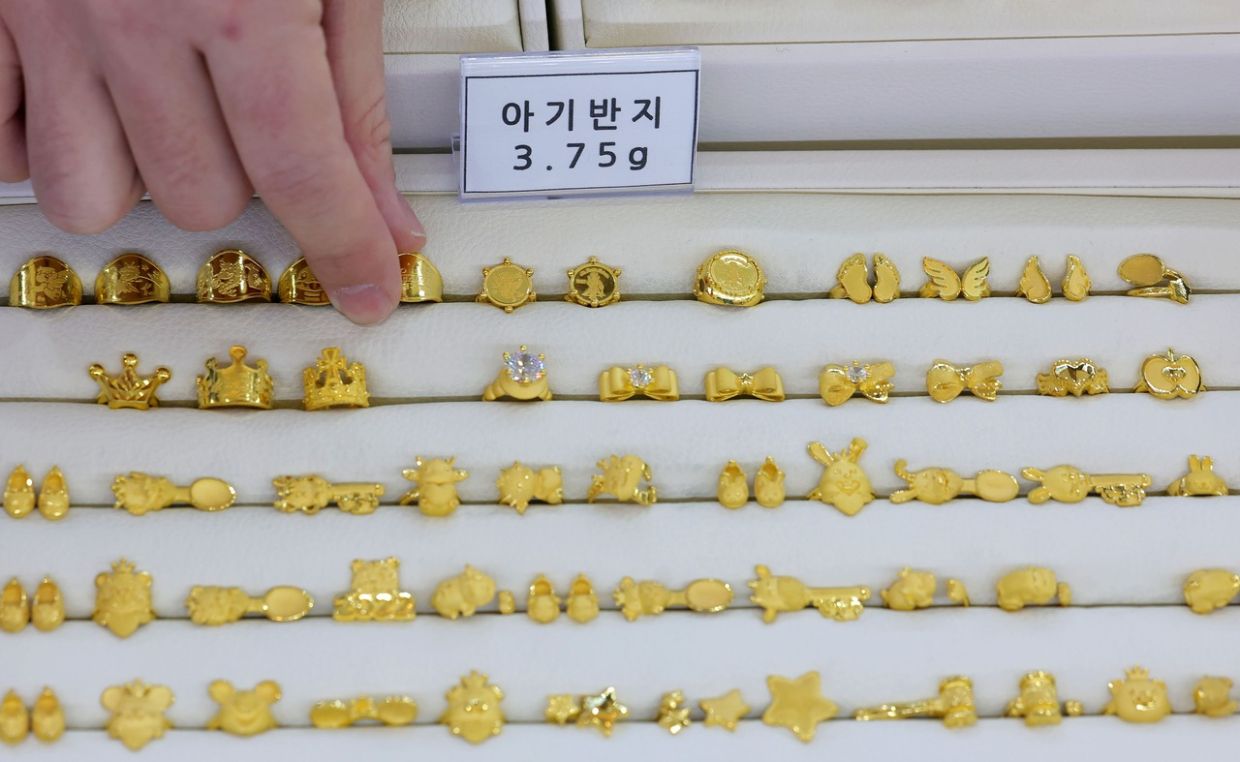
She said some people were even shifting toward 1.875-gram alternatives. Many stores offer the rings containing half the amount of gold — or sometimes even just 1 gram of gold, bearing the symbolic value.
“When I bought a ring for my nephew last year, I was surprised by how expensive it was. But now, with my friend’s son’s birthday coming up, the price has doubled. I will just gift cash instead,” said Kim Dong-hyun, an office worker in his 30s.
The dilemma is shared not only by those buying the rings, but also by those who once received them. With the price of gold rings having doubled or even tripled in recent years, some are debating how to reciprocate when the time comes.
Should they repay others based on the price at the time of gifting or at today’s prices? Simply returning the original ring also feels hard to justify.
“When I received a gold ring for my son's birthday, it was a gift worth around 500,000 won,” said a mother who celebrated her son’s first birthday last year. “To buy the same ring now, I would need to spend more than 1 million won. Now that I think about it, I wish I had not received the rings in the first place.”
Golden commitment
Even newlyweds are skipping gold. Like many other cultures, weddings in Korea have traditionally been a time to splurge — particularly when it comes to gold.
As part of the yemul tradition, the families of the bride and groom exchange gifts as a gesture of respect, often in the form of gold bracelets, gold bullion and even golden toads and turtles, symbols of wealth and good fortune. But soaring gold prices are increasingly pushing yemul into the past.
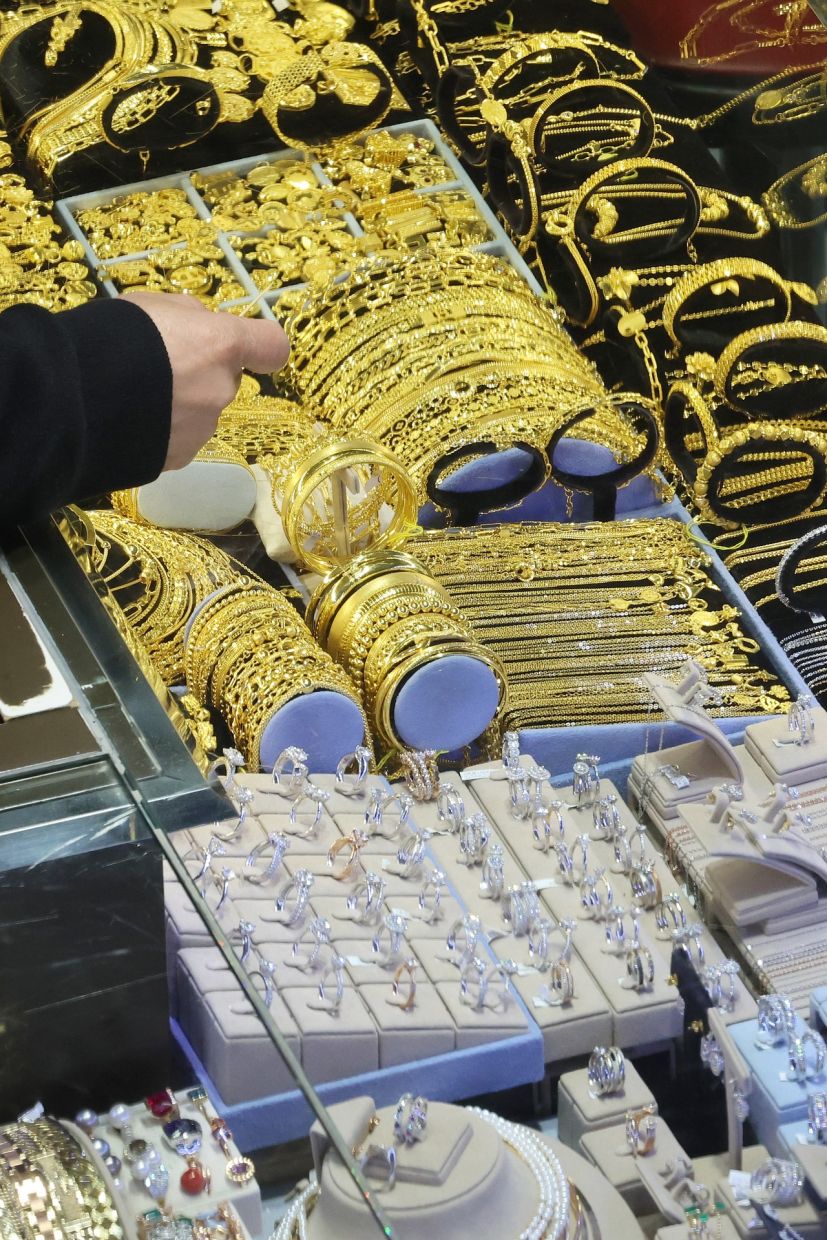
“The practice was already fading with changes in marriage culture, but with gold prices this high, we are planning to replace it with cash,” said Kim Eun-jeong, an office worker in her 30s, who is set to tie the knot in May.
She had originally considered preparing the so-called “three yedan musketeers.” Yedan refers to gifts traditionally offered by the bride’s family to the groom’s, similar to a dowry. The trio — bedding, tableware and silver cutlery — are considered a modernized version of the custom.
But along with the gold price hike, silver has also seen its value skyrocket.
“Some of my friends who married before me skipped yemul but still prepared the trio. But even silver prices have skyrocketed, and I am torn over whether to prepare the set or not,” she said.
Wedding bands — long seen as symbols of commitment — are becoming an increasingly heavy burden, too. Luxury jewelers such as Cartier, Bvlgari and Tiffany, popular picks among couples across the world, including Korea, have been hiking prices, citing the surge in gold costs and adding pressure to already tight wedding budgets.
Instead of turning to high-end brands, some couples are opting for lesser-known jewelers, choosing simpler gold rings valued not only as symbols of marriage but also as longer-term assets. When it comes time to sell, rings made of purer gold often fetch higher prices than those from fancy brands.
“Of course, we are not buying the rings with the intention of selling them,” one bride-to-be said. “But it still feels reassuring to own something that holds its value. After all, gold has always been the ultimate safe-haven asset.”
Token of appreciation
Gifting gold to long-serving employees was once a common practice as a token of appreciation and gratitude, but rising gold prices have put it beyond the budgets of many companies.
In the pharmaceutical sector, companies such as biopharmaceutical firm GC Pharma and molecular diagnostics firm Seegene have discontinued gifting gold to employees based on years of service, switching instead to flat cash payments, according to reports.
“Though not always tied to years of service, many companies occasionally expressed their gratitude to employees with gifts of gold,” said an office worker who had recently retired.
“Over my 30-year career, I personally received small gold items, such as business cards and pins. But that now seems to have become a fable of the past.” - The Korea Herald/ANN